In today’s digital-first world, businesses across industries are racing to build scalable products, automate operations, and launch innovative platforms. Whether you are a startup founder or enterprise leader, hiring the right technical talent is critical. That’s why searches for developers for hire, hire remote developers, and hire dedicated developers are rapidly increasing worldwide.
Why Businesses Are Actively Looking for Developers for Hire 💼
Technology is evolving faster than traditional hiring cycles. Companies now prefer flexible hiring models that allow them to scale quickly without long-term overhead.
Key benefits:
Faster product development
Reduced operational costs
Access to global talent
Ability to scale teams on demand
Specialized expertise
Hire Dedicated Developers vs Freelancers vs In-House Teams ⚖️
<img src=”https://images.unsplash.com/photo-1552664730-d307ca884978″ alt=”Team collaboration in office” style=”width:100%; height:auto; border-radius:10px;”>
Hire Dedicated Developers
When you hire dedicated developers, you get professionals who work exclusively on your project as an extension of your team.
✔ Full control over development ✔ Better product understanding ✔ Long-term reliability ✔ Scalable team structure
Hire Freelance Developers
Ideal for short-term tasks, quick fixes, or experimental projects.
In-House Hiring
Best for core operations but involves higher costs and longer hiring timelines.
Why Companies Prefer to Hire Remote Developers 🌍
Remote work has transformed global hiring. Organizations can now access talent worldwide instead of being limited to local candidates.
Lower development costs
Access to specialized skills
24/7 productivity cycles
Faster project delivery
Hire Developers in India — A Global Hotspot 🇮🇳
India has become one of the world’s leading technology hubs, offering highly skilled developers at competitive rates.
Large talent pool
Strong technical education
English proficiency
Experience with global clients
Hire AI Developers 🤖
AI is transforming industries, from automation to predictive analytics. Demand to hire AI developers is growing rapidly.
Chatbots & virtual assistants
Recommendation engines
Computer vision systems
Voice AI solutions
Hire App Developers & Mobile Experts 📱
Mobile apps remain essential for customer engagement. Businesses frequently hire app developers and Android experts to build scalable mobile solutions.
Hire Software Developers for Complex Systems 💻
Enterprise platforms, SaaS products, and custom solutions require experienced developers who understand system architecture and scalability.
Step-by-Step Process to Hire Developers Successfully 🛠️
Define project goals
Choose the hiring model
Identify required skills
Conduct interviews
Start with a pilot project
Scale the team
Final Thoughts 💡
Whether you want to hire dedicated developers, hire remote developers, or find software developers for hire, choosing the right talent strategy can accelerate innovation and reduce costs. With access to global expertise, businesses can now build world-class digital products faster than ever.
🚀 Ready to build your development team?
Now is the perfect time to hire expert developers and bring your digital vision to
In today’s hyper-competitive digital landscape, businesses face an increasingly complex challenge: how to differentiate themselves while operating efficiently at scale. The answer for many forward-thinking organizations lies in custom software development – the strategic creation of tailored digital solutions that align perfectly with unique business requirements.
While off-the-shelf software offers convenience and quick deployment, it often forces businesses into rigid frameworks that don’t match their specific workflows, industry requirements, or growth ambitions. Custom software development flips this paradigm, allowing organizations to build technology that serves their exact needs rather than adapting their processes to fit generic solutions.
This comprehensive guide explores every aspect of custom software development, from understanding core concepts and benefits to navigating costs, choosing development partners, and implementing solutions across various industries. Whether you’re a startup looking to build your first MVP or an enterprise seeking to modernize legacy systems, this guide provides the insights needed to make informed decisions about custom software investments.
Understanding Custom Software Development: Beyond the Basics
Custom software development is the process of designing, building, deploying, and maintaining software solutions tailored to the unique needs of a business or organization. Unlike commercial off-the-shelf (COTS) software, custom solutions are created specifically for a company’s workflows, industry requirements, and long-term strategy.
Rather than forcing businesses to adapt to generic tools, custom software ensures that technology works around the business, not the other way around.
The Custom Software Development Lifecycle
A professional custom software development company typically follows a structured development lifecycle to ensure quality, scalability, and long-term success.
1. Discovery and Requirements Analysis
This stage focuses on understanding business needs and defining project scope.
Key activities include:
Stakeholder interviews and workshops
Business process mapping
Technical requirements documentation
Feasibility studies and risk assessment
Project scope definition and timeline planning
2. Strategic Planning and Architecture
Once requirements are defined, the technical blueprint is designed.
This includes:
System architecture design
Technology stack selection
Database design and data modeling
Integration planning with existing systems
Security framework development
3. User Experience and Interface Design
A well-designed interface ensures high user adoption and productivity.
Design activities include:
User research and persona development
Wireframing and prototyping
Visual design and branding integration
Accessibility compliance planning
Mobile responsiveness optimization
4. Development and Implementation
The development phase transforms design concepts into functional software.
Common practices include:
Agile development methodology
Continuous integration and deployment
Code reviews and quality checks
Performance optimization
Security implementation
5. Testing and Quality Assurance
Testing ensures the software performs reliably under real-world conditions.
Testing processes include:
Unit testing
Integration testing
User acceptance testing (UAT)
Performance and load testing
Security penetration testing
Cross-platform compatibility testing
6. Deployment and Launch
After successful testing, the software is deployed into production.
Deployment tasks include:
Production environment setup
Data migration and system integration
User training and documentation
Go-live support and monitoring
7. Ongoing Maintenance and Evolution
Custom software continues to evolve after launch.
Ongoing support includes:
Security updates and patches
Feature enhancements
Performance monitoring
Scalability improvements
Compliance update
Why Custom Software Development Matters
Organizations increasingly view software as a strategic asset rather than just an operational tool.
Several key business drivers explain why companies invest in custom solutions.
1. Perfect Alignment with Business Processes
Off-the-shelf software is built for mass markets and often includes unnecessary features while lacking critical functionality.
Custom software ensures:
Every feature serves a business purpose
Workflows match internal operations
Industry-specific requirements are addressed
For example, a manufacturing company may require software that integrates directly with specialized machinery and generates regulatory compliance reports—capabilities rarely available in generic platforms.
2. Scalability and Flexibility
Custom software grows with the organization.
Benefits include:
Modular architecture for expansion
API-first development for integrations
Cloud-native infrastructure for global scalability
Microservices architecture for independent scaling
3. Enhanced Security and Compliance
Custom systems provide stronger security because they are designed specifically for the organization’s environment.
Security advantages include:
Reduced attack surface
Industry-specific compliance controls
Full control over data storage and handling
Customized security protocols
4. Competitive Differentiation
Custom software can create unique capabilities that competitors cannot easily replicate.
These advantages may include:
Superior customer experiences
Faster operational processes
Data-driven insights
Innovative digital services
5. Optimized Total Cost of Ownership
Although initial development costs may be higher, custom software often reduces long-term costs by eliminating:
Licensing fees
Integration complexity
Inefficient workflows
Workarounds for missing features
Industry-Specific Custom Software Development
Different industries require specialized solutions due to regulatory requirements, operational complexity, and customer expectations.
Custom Healthcare Software Development
Healthcare technology must meet strict compliance standards while supporting complex clinical workflows.
Custom healthcare solutions include:
Electronic Health Record (EHR) Systems
Advanced capabilities include:
Specialty-specific templates
Integration with medical devices
Population health analytics
Telemedicine capabilities
AI-powered diagnostic support
Hospital Management Systems
Integrated platforms manage:
Patient admission and discharge
Staff scheduling and resource allocation
Inventory management for medical supplies
Billing and insurance claims processing
Custom ERP Software Development
Enterprise Resource Planning (ERP) systems integrate multiple business functions into one platform.
Capabilities include:
Financial Management
Multi-currency accounting
Real-time reporting
Budgeting and forecasting tools
Compliance and audit tracking
Supply Chain Optimization
Demand forecasting
Supplier relationship management
Logistics coordination
Sustainability tracking
Human Resources Management
Recruitment and onboarding
Performance management
Payroll administration
Workforce analytics
Custom CRM Software Development
Customer Relationship Management platforms help businesses manage customer interactions and drive revenue.
Key features include:
Sales Pipeline Management
Lead scoring and qualification
Automated follow-ups
Territory management
Revenue forecasting
Marketing Automation
Campaign management
Customer segmentation
Marketing attribution tracking
Social media integration
Customer Service Tools
Omnichannel support systems
Knowledge bases and self-service portals
SLA monitoring
Customer satisfaction tracking
Custom Software Development Costs
Custom development costs vary widely depending on project complexity, technology requirements, and team structure.
Typical Cost Ranges
Project Type
Estimated Cost
Simple applications
$25,000 – $75,000
Medium complexity apps
$75,000 – $200,000
Enterprise systems
$200,000 – $500,000
AI-driven platforms
$500,000 – $2M+
Factors Influencing Costs
Project scope and complexity
Technology stack
Development team size
Geographic location of developers
Integration requirements
Custom Software Development Outsourcing
Many companies partner with external development teams to reduce costs and access specialized expertise.
Common Outsourcing Models
Dedicated Development Team
Long-term collaboration
Full control over development processes
Flexible team scaling
Project-Based Outsourcing
Fixed scope and timeline
Predictable budget
Best for clearly defined projects
Hybrid Model
Strategic roles onshore
Development offshore
Cost efficiency with strong oversight
Emerging Technologies in Custom Software
Modern software development increasingly integrates advanced technologies.
Artificial Intelligence
Intelligent automation
Predictive analytics
Customer service chatbots
Fraud detection systems
Cloud-Native Architecture
Auto-scaling infrastructure
Global content delivery networks
Containerized deployment
Internet of Things (IoT)
Real-time equipment monitoring
Smart device integrations
Supply chain tracking
Quality Assurance in Custom Software Development
Quality assurance ensures reliability, performance, and security.
The future of software development will be shaped by:
AI-assisted coding and automation
Low-code and no-code platforms
Sustainable software engineering
Cloud-first architecture
These innovations will enable faster development cycles and more intelligent applications.
Conclusion
Custom software development is a strategic investment that allows organizations to build technology aligned with their unique goals and operations.
Unlike generic tools, custom solutions offer:
Tailored functionality
Greater scalability
Enhanced security
Competitive differentiation
With careful planning, the right technology strategy, and experienced development partners, custom software can become a powerful catalyst for innovation and business growth.
Frequently Asked Questions (FAQs)
1. What is custom software development?
Custom software development is the process of designing, building, and maintaining software solutions tailored specifically to the needs of a particular business or organization. Unlike off-the-shelf software, custom solutions are built to match unique workflows, operational processes, and strategic goals.
2. How is custom software different from off-the-shelf software?
Off-the-shelf software is designed for a broad audience with general features, while custom software is developed specifically for a business’s unique requirements. Custom software offers greater flexibility, scalability, and integration capabilities compared to pre-built solutions.
3. What are the benefits of custom software development?
Custom software offers several advantages, including:
Tailored functionality for specific business processes
Greater scalability as the business grows
Improved security and compliance
Seamless integration with existing systems
Competitive advantage through unique capabilities
4. How long does custom software development take?
The timeline depends on the complexity of the project. Simple applications may take 2–4 months, while complex enterprise systems may require 6–12 months or more. The development process typically includes planning, design, development, testing, and deployment stages.
5. How much does custom software development cost?
The cost of custom software development varies based on project complexity, features, technology stack, and development team location. Projects can range from $25,000 for basic applications to over $500,000 for large enterprise platforms.
6. Which industries benefit the most from custom software development?
Many industries benefit from custom software, including:
Healthcare
Finance and banking
Logistics and supply chain
Retail and e-commerce
Manufacturing
Education and EdTech
Custom solutions help these industries automate processes, improve efficiency, and enhance customer experiences.
7. Can custom software integrate with existing systems?
Yes. One of the biggest advantages of custom software is its ability to integrate seamlessly with existing systems such as CRM platforms, ERP systems, payment gateways, and third-party APIs.
8. Is custom software scalable for growing businesses?
Yes. Custom software is designed with scalability in mind, allowing businesses to add features, handle more users, and expand into new markets without replacing their existing system.
9. What technologies are commonly used in custom software development?
Common technologies used in custom software development include:
Frontend: React, Angular, Vue.js
Backend: Node.js, Python, Java, .NET
Databases: PostgreSQL, MySQL, MongoDB
Cloud Platforms: AWS, Azure, Google Cloud
The technology stack is selected based on the project requirements and scalability needs.
10. How do businesses choose the right custom software development company?
When selecting a development partner, businesses should consider:
Industry experience and portfolio
Technical expertise
Development methodology (Agile, DevOps)
Communication and transparency
Post-launch support and maintenance services
Choosing the right partner ensures successful project delivery and long-term support.
These aren’t random keywords. They represent major behavioral shifts in how creators, businesses, and developers use AI daily.
Let’s break it down category by category.
AI Photo Editing Tools Everyone Is Talking About
The Core Search Terms Driving the Category
The AI photo editing space continues to dominate:
ai photo editing
ai photo editor
ai editing
ai photo
ai image generator
ai photo generator
face swap ai
These searches signal a massive democratization of design.
Why AI Photo Editing Is Exploding
Traditional editing required:
Photoshop expertise
Manual masking
Advanced retouching skills
Hours of manual work
Now?
AI performs:
One-click skin retouching
Intelligent lighting correction
Automatic background removal
Realistic face swap ai outputs
Style transfer effects
4K image upscaling
The result: anyone with a smartphone can create agency-level visuals.
Creator-Driven Search Trends (Regional Insight)
Search patterns like:
ai photo editor anup sagar
ai photo editing rajan editz
ai photo anup sagar
Reveal a powerful shift.
Creators are now distribution channels for AI tools.
When influencers demonstrate a workflow: Search volume for that exact phrase spikes within days.
This shows:
AI adoption is community-driven
Tutorials directly influence tool growth
Regional creators (especially in India & South Asia) drive massive search demand
AI growth is no longer just Silicon Valley driven — it’s YouTube-driven.
AI Prompt Trends Going Viral
Why “ai prompt” Searches Are Exploding
Trending searches include:
ai prompt
holi prompt
ai prompt ghaus editz
gemini ai prompt
gemini ai photo prompt
midjourney prompt
stable diffusion prompt
The rise of prompt engineering marks a new digital literacy.
A weak prompt = average output. A structured prompt = professional result.
Why Prompts Are the New Competitive Advantage
Example:
Basic: “A girl portrait”
Advanced: “25-year-old Indian woman in red saree, golden hour lighting, cinematic photography, Canon 5D, shallow depth of field, soft focus, warm color grading”
The difference isn’t the tool.
It’s the prompt.
That’s why:
holi prompt spikes during festival season
ai prompt ghaus editz trends after creator tutorials
gemini ai photo prompt rises as Gemini adoption grows
Creators choose Midjourney because: Portfolio quality still matters.
Even with gemini ai photo growing, Midjourney remains premium-tier.
PPT Maker AI & Productivity Revolution
Trending:
ppt maker ai
ai app
ai studio
presentation ai
slide generator ai
Traditional presentations: 4–5 hours.
AI presentations: 20 minutes.
AI tools like Gamma, Canva AI, and Microsoft Copilot are reducing design dependency and increasing output speed.
For startups and consultants, this is transformational.
Broader AI Landscape in 2026
Other tools gaining attention:
Perplexity AI (AI search)
Claude (reasoning-focused AI)
Character.AI (roleplay bots)
Stable Diffusion (open-source image generation)
Llama 2 (developer ecosystem)
The trend is clear:
AI is fragmenting into specialized ecosystems.
General AI is becoming niche AI.
What This Means for Creators & Businesses
For Creators
Learn:
Prompt engineering
One primary AI tool deeply
Video AI workflows
Monetize through:
Tutorials
Affiliate marketing
Courses
Community building
For Businesses
Adopt AI for:
Marketing automation
Creative generation
Video production
Internal productivity
The biggest risk in 2026 is not using AI — it’s ignoring it.
📌 Final Thoughts: The Pattern Behind the Keywords
From: ai photo editing
To: google gemini ai
From: heygen ai
To: nano banana ai
From: ai prompt
To: free ai video generator
These searches tell a story:
Photo editing is commoditized
Video AI is exploding
Prompts are the new literacy
Gemini is mass adoption AI
Niche tools are innovation labs
Open-source models are rising
Creator economy is accelerating
Consolidation is inevitable
2026 isn’t about discovering AI.
It’s about mastering it.
FAQ
What is the best AI photo editing tool in 2026?
The best ai photo editing tool depends on your goal. For general enhancements, an ai photo editor works well. For creative visuals, an ai image generator or midjourney ai delivers stunning results.
2️⃣ How do AI prompts improve image results?
A well-structured ai prompt gives clear instructions to the model. Whether you’re using a gemini ai prompt or a gemini ai photo prompt, detailed descriptions improve lighting, style, and composition accuracy.
3️⃣ Is Google Gemini AI free to use?
google gemini ai offers different access tiers. Tools like google ai studio or gemini ai studio may provide limited free access depending on usage.
4️⃣ What is the best free AI video generator?
A free ai video generator is great for beginners. Tools like heygen ai and other ai video generator platforms allow quick avatar-based or scripted videos.
5️⃣ What is face swap AI?
face swap ai uses artificial intelligence to replace one face with another in images or videos. It’s popular for entertainment, memes, and creative edits.
6️⃣ What is an uncensored AI chatbot?
An uncensored ai chatbot typically refers to a chatbot with fewer content restrictions. Users should always check terms of service and platform safety policies before use.
7️⃣ Can AI create presentations automatically?
Yes. A ppt maker ai or ai studio tool can generate structured presentations from a simple topic input within minutes.
8️⃣ Are experimental AI tools like nano banana AI safe?
Platforms like nano banana ai, perchance ai, or janitor ai vary in safety and moderation. Always verify credibility and data privacy policies.
The United States is entering one of the most transformative periods in recent history. From artificial intelligence breakthroughs to geopolitical tensions reshaping global trade, from volatility in the stock market today to renewed interest in gold and silver prices today, the country is experiencing structural shifts across technology, energy, finance, and global power dynamics.
Investors are closely watching the S&P 500, the 10 year Treasury yield, and safe-haven assets like gold and SLV. Tech leaders are redefining the AI race. Energy giants like Chevron and Occidental are navigating a new oil landscape. Meanwhile, ETFs such as VOO, VTI, QQQ stock, and SCHD are becoming core tools for retail and institutional investors alike.
Let’s break down the biggest trends shaping the USA in 2026.
1. The AI Supercycle Is Redefining the American Economy
Artificial intelligence is no longer experimental — it is foundational.
Companies like Alphabet Inc. (GOOG stock), Apple Inc. (AAPL stock), Palantir Technologies (PLTR stock), Broadcom Inc. (AVGO stock), MongoDB (MDB stock), and Taiwan Semiconductor Manufacturing Company (TSM stock) are leading the AI infrastructure and software revolution.
Key AI Trends in 2026:
Enterprise AI adoption accelerating across healthcare, insurance, and finance
AI copilots embedded in productivity tools
Defense AI investments increasing
Chip demand reshaping semiconductor supply chains
The surge in PLTR stock reflects how governments and enterprises are investing in AI-driven analytics. Meanwhile, TSM stock is a proxy for the global semiconductor demand fueling generative AI.
The broader market impact? AI is contributing significantly to S&P 500 earnings growth and pushing SPX valuations higher.
2. The Stock Market Today: Volatility as the New Normal
If there’s one defining theme in the stock market today, it’s volatility.
The S&P 500 (often referenced as SPX or S&P500) has been navigating:
Geopolitical tensions
Inflationary pressures
Fluctuations in the 10 year Treasury yield
Energy price shocks
Tech sector rotations
Major indices trading on the New York Stock Exchange (NYSE) are experiencing increased intraday swings.
Investors are increasingly turning to ETFs like:
VOO stock (tracking the S&P 500)
VTI (total market exposure)
QQQ stock (Nasdaq heavy tech exposure)
SCHD (dividend-focused ETF)
These ETFs provide diversified exposure while reducing single-stock risk.
3. Energy Resurgence: Oil, LNG, and Strategic Security
Energy has re-emerged as a powerful theme in the U.S. economy.
Companies like:
Chevron Corporation (CVX stock)
Occidental Petroleum (OXY stock)
Cheniere Energy (LNG stock)
are benefiting from global supply constraints and geopolitical instability.
As tensions rise globally, oil prices remain sensitive to political developments. This strengthens energy equities and pushes inflation expectations higher — impacting the 10 year Treasury yield.
Energy ETFs and oil stocks are becoming a hedge against inflation uncertainty.
4. Defense & Aerospace: A New Investment Theme
Defense spending is rising.
Stocks such as:
Lockheed Martin (Lockheed Martin stock)
AeroVironment (AVAV stock)
Boeing (Boeing stock)
AST SpaceMobile (ASTS stock)
are gaining attention from institutional investors.
Geopolitical conflicts and satellite defense programs are driving renewed focus on aerospace innovation.
Defense stocks often perform well during uncertainty, offering portfolio stability when growth stocks fluctuate.
5. The Safe Haven Trade: Gold and Silver Surge
With inflation concerns and global risk, gold and silver prices today are trending upward.
Investors are:
Buying physical gold
Allocating to gold ETFs
Trading SLV (silver ETF)
Gold remains a hedge against currency debasement and macro instability.
When the 10 year Treasury yield falls, gold often rallies. When geopolitical risks rise, silver prices follow.
6. Insurance & Healthcare: Defensive Strongholds
Healthcare and insurance remain pillars of stability.
Companies like UnitedHealth Group (UNH stock) show resilience during market downturns.
Insurance firms are adapting to:
Climate risk
AI-driven underwriting
Automated claims processing
Healthcare AI integration is reducing costs while improving patient outcomes — another example of AI’s cross-sector dominance.
7. Big Tech Dominance Continues
Despite regulatory scrutiny, Big Tech continues to dominate market capitalization.
AAPL stock remains one of the largest contributors to S&P 500 performance. GOOG stock continues investing heavily in AI and cloud.
Costco stock (Costco Wholesale Corporation) reflects consumer resilience in a high-rate environment.
Tech concentration in QQQ stock has made it a key performance driver for growth-focused investors.
8. Interest Rates and the 10 Year Treasury Yield
The 10 year Treasury yield remains the most important macro indicator in 2026.
The latest trends in the USA reveal a country balancing innovation and instability.
AI is reshaping productivity. Energy markets are redefining geopolitics. The stock market today reflects both optimism and caution. The S&P 500 remains the benchmark of economic health. The 10 year Treasury yield guides valuation. Gold and silver prices today signal risk perception. Defense and aerospace are gaining prominence. ETFs like VOO, VTI, QQQ stock, and SCHD anchor long-term portfolios.
Whether you’re watching AAPL stock, PLTR stock, CVX stock, Boeing stock, or tracking the SPX and NYSE activity — 2026 is defined by rapid transformation.
The United States is not merely evolving.
It is restructuring the architecture of the global economy.
FAQ
What are the biggest economic trends in the USA right now?
The biggest trends shaping the U.S. economy include rapid AI adoption, volatility in the stock market today, shifts in energy markets, rising geopolitical tensions, and fluctuations in the 10 year Treasury yield. Technology stocks, defense companies, and energy firms are leading market movements, while safe-haven assets like gold and silver prices today are gaining attention during uncertainty.
Why is the S&P 500 so important?
The S&P 500 (also referred to as S&P500 or SPX) tracks 500 of the largest publicly traded U.S. companies. It is widely considered the best benchmark for overall U.S. stock market performance.
ETFs like VOO stock and VTI allow investors to gain exposure to the S&P 500 and the broader market efficiently.
3. How does the 10 year Treasury yield affect the stock market? The 10 year Treasury yield influences:
Mortgage rates
Corporate borrowing costs
Stock valuations
Dollar strength
When yields rise, growth stocks often face pressure. When yields fall, equities—especially tech-heavy indexes like QQQ stock—tend to perform better.
4. Why are gold and silver prices rising? Gold and silver prices today often increase during:
Inflation concerns
Geopolitical instability
Currency weakness
Stock market volatility
Investors use gold as a hedge against uncertainty, while silver (tracked by SLV) often benefits from both industrial demand and safe-haven flows.
5. Which sectors are leading U.S. market growth in 2026? Key sectors driving growth include:
Technology & AI
Apple Inc. (AAPL stock)
Alphabet Inc. (GOOG stock)
Palantir Technologies (PLTR stock)
Broadcom Inc. (AVGO stock)
Energy
Chevron Corporation (CVX stock)
Occidental Petroleum (OXY stock)
Defense & Aerospace
Boeing
Lockheed Martin
8. How is AI impacting the U.S. stock market?
Artificial intelligence is driving earnings growth across sectors.
Companies like:
Taiwan Semiconductor Manufacturing Company (TSM stock)
MongoDB (MDB stock)
are benefiting from AI infrastructure demand. AI investment is one of the major contributors to S&P 500 performance in 2026.
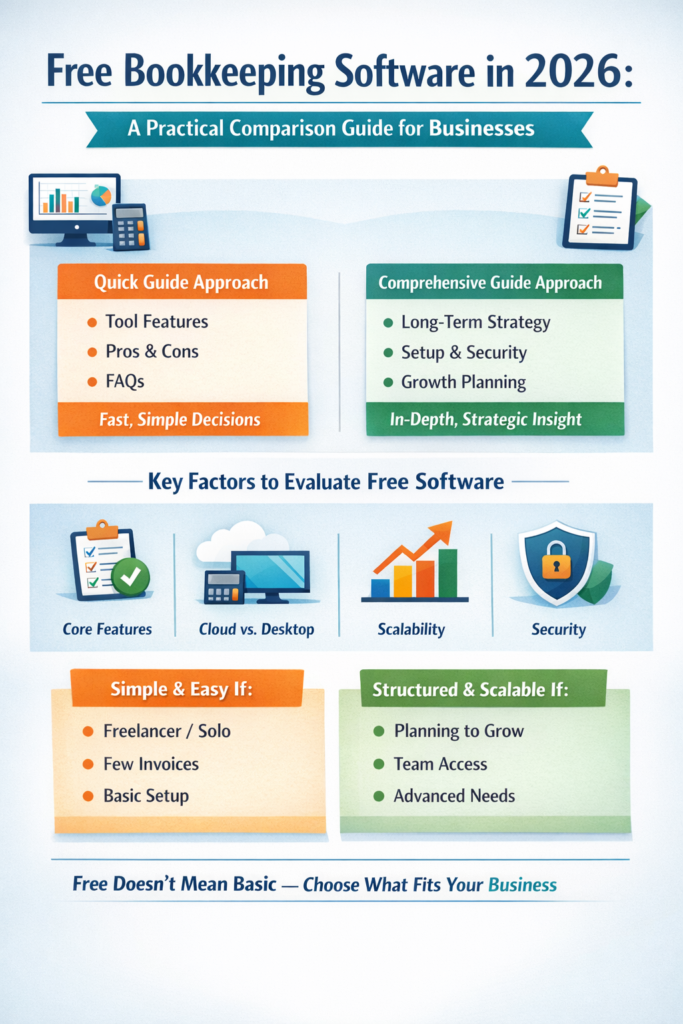
Free bookkeeping software has become a serious alternative to paid accounting tools. However, not all free solutions are built the same. Some focus on simplicity and quick setup, while others offer structured guidance, scalability insights, and deeper operational advice.
This article compares two different approaches to free bookkeeping content and transforms them into a clearer, unbiased resource to help business owners evaluate their options logically.
Rather than promoting any specific tool, this guide focuses on how to evaluate free bookkeeping software effectively.
Two Different Approaches to Free Bookkeeping Guidance
When comparing the two blogs, a clear difference emerges:
Blog Approach 1: Tool-Focused and Feature-Driven
Shorter format
Straightforward tool descriptions
Basic pros and cons
Simple comparison table
Direct answers to FAQs
This style is useful for:
Quick readers
Beginners
Users looking for a fast decision
However, it lacks deeper insights into implementation, security, long-term planning, and operational impact.
Blog Approach 2: Strategic and Decision-Oriented
Long-form educational guide
Explains why bookkeeping matters
Discusses migration and workflow setup
Covers security, scalability, and adoption
Includes future-proofing advice
This style benefits:
Growing businesses
Founders thinking long-term
Decision-makers evaluating risk
However, it may feel overwhelming for users who simply want a quick comparison.
What Actually Matters When Choosing Free Bookkeeping Software
Instead of focusing on brand names, focus on these five evaluation categories:
1. Core Accounting Capabilities
Every free bookkeeping tool should provide:
Income and expense tracking
Invoice creation
Basic financial reports
Bank reconciliation
Multi-device access (if cloud-based)
If any of these are missing, the tool may create more work than it saves.
2. Cloud vs. Desktop Models
Free bookkeeping tools typically fall into two categories:
Cloud-Based Software
Accessible from anywhere
Automatic backups
Real-time synchronization
Easier collaboration
Desktop Software
Full offline access
Greater data control
No reliance on internet
Manual backups required
The right choice depends on your business structure and comfort with cloud security.
3. Scalability and Growth
One major gap between the two blog styles was long-term thinking.
Before selecting free software, ask:
Is there a user limit?
Is there an invoice cap?
Does it support multiple currencies?
Can it handle inventory if needed?
Is there an upgrade path available?
Free tools work best when they align with your projected business size for the next 12–24 months.
4. Implementation Complexity
The shorter blog briefly lists features but does not discuss setup effort. The longer guide dives into migration planning and workflow optimization.
Important setup considerations:
Data import process
Chart of accounts configuration
Bank feed accuracy
Role-based user access
Report customization
A tool is only “easy” if your team can implement it correctly.
5. Security and Data Protection
The strategic blog includes stronger coverage of:
Encryption
Backup systems
Access controls
Compliance awareness
Free software still handles sensitive financial data. Security should never be overlooked simply because the tool is free.
Strengths and Weaknesses of Each Blog Approach
Category
Blog Style 1 (Quick Guide)
Blog Style 2 (Comprehensive Guide)
Readability
Easy and fast
Detailed but longer
Depth
Basic feature comparison
Strategic business insight
SEO Structure
List-based
Educational and structured
Implementation Advice
Minimal
Strong guidance
Security Coverage
Limited
Thorough
Ideal Audience
Beginners
Growing businesses
A Balanced Decision Framework
If you want a practical way to evaluate free bookkeeping tools, use this decision checklist:
Choose Simplicity If:
You are a freelancer or solo entrepreneur
You issue fewer than 50 invoices per month
You don’t manage inventory
You want minimal setup
Choose Structured, Scalable Systems If:
You plan to hire employees
You work with an accountant
You manage multiple revenue streams
You anticipate growth within 1–2 years
Common Mistakes Businesses Make
Regardless of which free tool you choose, avoid these errors:
Mixing personal and business finances
Skipping monthly reconciliation
Ignoring data backups
Using inconsistent expense categories
Delaying software setup
Free bookkeeping tools only work well when supported by disciplined financial habits.
Final Thoughts: Free Doesn’t Mean Basic
Both blog approaches offer value:
One simplifies the decision.
The other strengthens strategic understanding.
The smartest approach combines both:
Start with a clear feature comparison.
Evaluate setup effort.
Assess long-term scalability.
Review security practices.
Align the tool with your operational complexity.
Free bookkeeping software can absolutely support a growing business — but only if selected thoughtfully.
The real decision is not which tool is most popular.
It’s which structure supports your workflow, growth goals, and financial discipline.
When used properly, free bookkeeping software isn’t just a cost-saving measure — it becomes a foundation for better business decisions.
Most companies juggle multiple tools – WhatsApp for customer chat, CRM for sales tracking, marketing platforms for campaigns. Each works fine alone, but together? They’re a mess of manual data entry and missed opportunities.
Smart businesses solve this with custom software that actually connects these tools. Here’s why it matters and how it works.
The Real Cost of Disconnected Tools What happens without integration:
Sales reps manually copy WhatsApp leads into CRM Customer history gets lost between platforms Follow-ups fall through the cracks Teams work with outdated information Hot leads go cold while data gets transferred The result? Lower conversion rates and frustrated customers who expect instant, personalized responses.
Why Custom Integration Beats Generic Solutions
Your Workflow, Your Rules Off-the-shelf connectors force you to adapt to their limitations. Custom solutions adapt to how you actually work.
Example: Your sales process might need leads from WhatsApp to automatically:
Check inventory in your ERP Assign to the right rep based on location Trigger a personalized email sequence Schedule a follow-up call Generic tools can’t handle this complexity.
Real Automation, Not Just Data Transfer Custom integrations don’t just move data – they make decisions:
Smart lead scoring based on conversation content Automatic deal stage updates when customers respond Dynamic pricing pulled from your inventory system Contextual responses using customer purchase history
Security You Control With custom development, your data flows through systems you own and control. No third-party services storing sensitive customer information or conversation logs.
What Good Integration Actually Looks Like The customer journey:
Customer sees your ad, clicks WhatsApp link Chat starts → Lead instantly created in CRM with source tracking Customer asks about pricing → System pulls real-time inventory data Rep gets notification with full context: previous purchases, preferences, conversation history Deal closes → Automatic invoice generation, delivery scheduling, follow-up campaigns All without anyone touching a spreadsheet.
When Custom Development Makes Sense You need it if:
You handle 50+ WhatsApp leads per day Your team spends hours on manual data entry You use 3+ tools that don’t talk to each other You need industry-specific workflows (real estate, healthcare, finance) You’re planning to scale significantly Skip it if:
You’re a small business with simple needs Basic Zapier connections handle your workflow You don’t have budget for ongoing maintenance The Technical Reality What developers actually build:
API bridges between WhatsApp Business API and your CRM Webhook handlers for real-time data sync Business logic engines for automated decision-making Custom dashboards for unified reporting Backup systems to prevent data loss Timeline: 2-4 months for most integrations, depending on complexity.
ROI That Actually Matters Companies typically see:
40-60% faster lead response times 25-35% higher conversion rates 3-5 hours saved per day on manual tasks 90% reduction in data entry errors More importantly: customers get consistent, personalized experiences that build loyalty.
The Bottom Line Generic tools create generic results. If your business depends on converting WhatsApp leads efficiently, custom integration isn’t just nice-to-have – it’s how you stay competitive.
The question isn’t whether to integrate, but whether to do it right the first time or keep patching together solutions that break under pressure.
Smart businesses invest in systems that scale with them, not against them.
WhatsApp + CRM Integration: FAQ General Questions
Q: Do I really need custom integration, or can I use Zapier/Make? A: Depends on complexity. Zapier works for simple workflows (lead capture, basic notifications). Custom integration wins if you need:
Real-time two-way sync Complex business logic (conditional routing, smart assignment) High volume (100+ daily interactions) Industry-specific workflows Data security/compliance requirements For most growing businesses, Zapier gets you 80% there. Custom gets you the remaining 20% that actually moves the needle.
Q: How long does integration take?
A:Simple (WhatsApp → CRM lead capture): 2-4 weeks Medium (with automation workflows): 4-8 weeks Complex (multi-system, custom logic): 8-12 weeks Plus 2-4 weeks for testing and refinement.
Q: What’s the cost?
A:Custom development: ₹3-8 lakhs for basic integration, ₹8-20 lakhs+ for complex systems Ongoing maintenance: 10-15% of development cost annually Third-party APIs: WhatsApp Business API (~₹500/month), CRM licenses (varies)
Q: Which CRM systems can be integrated? A: Most major ones:
Salesforce HubSpot Zoho CRM Pipedrive Microsoft Dynamics Custom/in-house systems If it has an API, it can be integrated.
Technical Questions
Q: Is my customer data secure with integration? A: Yes, if done right. Custom integration means:
Data stays within your systems (not stored by third parties) Encrypted connections between platforms You control access and backups Compliance with GDPR, CCPA, local regulations Always ask your developer about security protocols before starting.
Q: What happens if the integration breaks? A: Good integrations have:
Error logging and alerts Automatic retry mechanisms Fallback systems Regular monitoring Your developer should provide 24/7 support for critical issues.
Q: Can I integrate WhatsApp with multiple CRMs?
A: Yes, but it gets complex. You’d need:
A central data hub that syncs to all CRMs Clear rules for which data goes where Duplicate prevention logic Usually not recommended unless you have a specific reason (like separate teams/regions).
Q: How do I handle WhatsApp message history?
New messages sync automatically Historical messages (before integration) need manual import or API pull Most integrations sync last 30-90 days of history Older messages stay in WhatsApp, accessible separately
Implementation Questions
Q: Do I need to change how my team works?
A: Minimally. Good integration:
Works within existing tools (no new apps to learn) Automates repetitive tasks Requires training on new workflows (1-2 hours) Bad integration forces you to change everything. That’s a red flag.
Q: What if I’m using WhatsApp Personal, not Business API?
A: Personal WhatsApp can’t be officially integrated. You’d need:
WhatsApp Business API (official, ₹500+/month) Or third-party solutions (less reliable, higher risk) Recommendation: Switch to Business API if you’re serious about integration.
Q: Can I test the integration before full rollout?
A: Absolutely. Standard approach:
Build in staging environment Test with small team (1-2 weeks) Fix issues Gradual rollout to full team Monitor for 2-4 weeks Never go live with 100% of traffic on day one.
Q: What if my CRM doesn’t have a good API?
A: Options:
Use a middleware platform (Zapier, Make, custom API layer) Switch to a CRM with better API support Build a custom data import/export system Some older CRMs are harder to integrate – factor this in.
Business Questions
Q: How do I measure if integration is working? A: Track these metrics:
Response time: Average time from WhatsApp message to CRM entry (should be <1 minute) Lead quality: % of WhatsApp leads that convert (compare before/after) Data accuracy: % of leads with complete, correct information Team efficiency: Hours saved on manual data entry per week Customer satisfaction: Response time feedback, repeat interactions Set baselines before integration, measure after 30/60/90 days.
Q: What if we outgrow the integration?
A: Good integrations are built to scale. As you grow:
Add more CRM users (no problem) Increase message volume (system handles it) Add new tools (extend the integration) Expand to new channels (SMS, email, etc.) Ask your developer about scalability during planning.
Q: Can I integrate WhatsApp with other channels too (SMS, email, etc.)?
A: Yes. Omnichannel integration means:
All customer interactions in one CRM Unified conversation history Consistent follow-up across channels Better customer experience More complex, but worth it if you use multiple channels.
Q: What happens if WhatsApp changes their API?
A: WhatsApp updates happen regularly. Your developer should:
Monitor API changes Update integration proactively Test before changes go live Communicate updates to you This is why ongoing support matters.
Stop getting vague “it depends” answers. Here’s what software development actually costs in the UK — and what your budget realistically buys.
If you’ve ever asked, “How much does software development cost in the UK?” you’ve probably heard:
“Well… it depends.”
While technically true, that answer is useless when you’re planning budgets, pitching investors, or allocating capital.
So here’s the direct version:
👉 UK software development costs range from £10,000 to £500,000+ in 2026.
But that number alone means nothing without context.
This guide breaks down:
Real UK developer rates
What different budget tiers actually include
Hidden costs most agencies don’t mention
How to budget properly
When to choose agencies vs freelancers vs in-house
UK Software Development Market Overview (2026)
The UK remains one of Europe’s strongest software markets, with London as the premium hub. However, cities like Manchester, Birmingham, Leeds, and Bristol offer strong alternatives at 20–30% lower rates.
Average UK Developer Day Rates (2026)
Role
Day Rate Range
Typical Annual Equivalent
Junior Developer
£300–£450
£40,000–£60,000
Mid-Level Developer
£450–£600
£60,000–£85,000
Senior Developer
£500–£700
£80,000–£110,000
AI/ML Specialist
£600–£1,000
£95,000–£140,000
Technical Architect
£700–£900
£110,000–£150,000
DevOps Engineer
£600–£850
£90,000–£130,000
London typically sits at the higher end of these ranges.
What Your Budget Actually Gets You
1️⃣ £10,000–£30,000: The “Foundation” Tier
Best for:
Internal tools
Basic dashboards
Proof-of-concept products
Simple booking systems
What You Get:
Core functionality only
Basic UI
Single database
Limited integrations
Minimal scalability planning
What You Don’t Get:
Advanced security
AI features
Performance optimization
Deep UX research
Multi-platform deployment
This is functional software — not scalable enterprise infrastructure.
2️⃣ £30,000–£100,000: The “Business-Ready” Tier
Most UK SMEs operate here.
Best for:
SaaS MVPs
E-commerce platforms
Customer portals
Membership systems
Marketplace prototypes
Included:
Feature
Included?
Professional UI/UX
✅
Payment integration (Stripe, etc.)
✅
User accounts & authentication
✅
Admin dashboard
✅
Responsive design
✅
Basic analytics
✅
Automated testing
Limited
Not Included:
Advanced AI or ML systems
Microservices architecture
Enterprise-grade compliance frameworks
High-load scalability optimization
This is the “sweet spot” for serious businesses.
3️⃣ £100,000–£500,000+: The “Scale & Enterprise” Tier
Best for:
Fintech platforms
Healthcare systems
Multi-tenant SaaS
Large marketplaces
High-traffic platforms
Included:
Enterprise Feature
Included
Microservices architecture
✅
Dedicated DevOps strategy
✅
Load & stress testing
✅
Security audits
✅
Compliance documentation
✅
Multi-region hosting
✅
Performance optimization
✅
Technical documentation
✅
This tier supports serious scale and regulatory environments.
Mobile vs Web Development Cost Comparison
Mobile development is significantly more expensive.
Feature
Web App
Mobile App
Development cost
Lower
40–60% higher
Platforms required
1
iOS + Android
Deployment complexity
Low
High
Maintenance cost
Moderate
High
Update flexibility
Immediate
App store approval required
If you don’t require:
Native GPS
Camera integration
Push notifications
Offline functionality
Start with web.
Hidden Costs Most Companies Ignore
1️⃣ Compliance Costs
GDPR compliance: +10–15%
Fintech regulatory work: +15–25%
Healthcare/NHS integration: +20–35%
Compliance adds real engineering time.
2️⃣ Infrastructure Costs
Service
Monthly Cost Range
AWS Hosting
£500–£5,000+
Monitoring Tools
£100–£500
Email/SMS APIs
Usage-based
Payment Processing
1.4%–2.9% + fixed fee
These are ongoing operational costs.
3️⃣ Maintenance Costs
Budget 15–20% annually of development cost for:
Security updates
Minor improvements
Performance upgrades
API updates
A £60,000 build = £9,000–£12,000 per year in maintenance.
Agency vs Freelancer vs In-House
Option
Cost
Risk Level
Best For
Agency
High
Low
Complex projects
Freelancer
Medium
Medium
Defined scopes
In-house
Very High
Low (long-term)
Core product companies
Agency
Multi-disciplinary teams
QA included
Project management included
Higher upfront cost
Freelancer
Lower cost
Requires internal management
Risk of dependency
In-House
£60k–£120k salary per developer
Recruitment costs
Benefits & overhead
Long-term commitment
How to Budget Smartly in 2026
Step 1: Define an MVP
Cut 60% of features. Launch with core value.
Step 2: Add 25% Buffer
Software overruns are common.
Step 3: Plan for Scale
Assume success. Build with future upgrades in mind.
Step 4: Don’t Over-Design Version 1
Perfection is expensive. Market validation is cheaper.
Red Flags When Hiring
🚩 Extremely low quotes 🚩 No testing process mentioned 🚩 Vague timelines (“3–6 months”) 🚩 No post-launch plan 🚩 No security discussion
Cheap software often becomes expensive rebuilds.
Realistic Budget Recommendations
For Startups: £20,000–£40,000 MVP Spend the rest on marketing.
For SMEs: £30,000–£60,000 web application Focus on ROI-driving features.
For Enterprises: £150,000+ properly architected solution Avoid rebuilding multiple times.
Top Factors Influencing Development Costs Understanding what drives your bill up or down helps you make smarter decisions about where to spend and where to save.
Complexity of Features Simple features: User registration, basic forms, static content display Complex features: Real-time chat, AI recommendations, advanced search, payment processing, multi-user collaboration
Cost impact: Each complex feature can add £5,000-£15,000 to your budget. A real-time dashboard costs 3x more than a static one.
Number of User Types & Permissions Single user type: Everyone sees the same thing (think blog or brochure site) Multiple roles: Admin, customer, vendor each need different interfaces and permissions
Cost impact: Each additional user role adds 20-30% to development time. An admin panel alone can cost £8,000-£20,000.
Design Requirements Template-based: Using existing UI frameworks with minor customization Custom design: Bespoke layouts, animations, brand-specific elements Advanced UX: User research, prototyping, extensive testing
Cost impact: Custom design adds 25-40% to total project cost. Advanced UX research can add another £10,000-£30,000.
Platform & Device Support Web only: Single responsive website Mobile apps: iOS and/or Android native apps Cross-platform: Web + mobile apps with shared functionality
Cost impact: Adding mobile apps increases costs by 60-100%. Supporting both iOS and Android nearly doubles mobile development costs.
Data & Security Requirements Basic security: Standard encryption, basic user authentication Enhanced security: Two-factor authentication, advanced encryption, security audits Compliance: GDPR, PCI-DSS, healthcare regulations, financial services compliance
Cost impact: GDPR compliance adds £5,000-£15,000. Financial services compliance can add 25-50% to total project cost.
Scalability & Performance Small scale: Hundreds of users, basic hosting Medium scale: Thousands of users, load balancing, CDN Enterprise scale: Millions of users, microservices, advanced caching
Cost impact: Building for scale from day one adds 30-50% to development costs but saves money long-term.
Geographic Location of Team London agencies: £500-£900/day (premium for access to top talent) Other UK cities: £400-£700/day (Manchester, Birmingham, Bristol) Hybrid teams: UK project management + offshore development (30-40% cost savings)
Cost impact: London vs. regional UK teams can mean 20-30% price difference for the same project.
Project Timeline Standard timeline: Normal development pace with proper planning Rushed timeline: Requires additional resources, overtime, parallel development Extended timeline: Allows for more thorough testing and refinement
Cost impact: Rushing a project can increase costs by 25-50%. Extended timelines may reduce hourly costs but increase total cost.
Ongoing Maintenance & Support Basic maintenance: Bug fixes, security updates Active development: Regular feature additions, performance improvements Full support: 24/7 monitoring, dedicated support team
Cost impact: Plan for 15-25% of initial development cost annually. Enterprise support can cost £3,000-£10,000+ monthly.
The Multiplier Effect Here’s the crucial part: these factors don’t just add up – they multiply. A complex app with custom design, multiple integrations, and compliance requirements doesn’t cost 3x more than a simple app. It costs 5-10x more.
Example: A basic booking system might cost £25,000. Add custom design (+40%), payment processing (+£8,000), mobile apps (+60%), and GDPR compliance (+£10,000), and you’re looking at £70,000+.
Smart budgeting tip: Pick 2-3 factors to invest in heavily, and keep the rest simple for version 1. You can always upgrade later.
Frequently Asked Questions (FAQ)
How much does software development cost in the UK in 2026?
Typically between £10,000 and £500,000+, depending on scope, integrations, and scalability requirements.
Why are UK software development rates high?
Because of:
Skilled labour market
Compliance requirements
High quality standards
Security & data protection laws
Is London more expensive than other UK cities?
Yes. London can be 20–30% more expensive than Manchester, Birmingham, or Leeds.
What is the average cost of a SaaS MVP in the UK?
£20,000–£40,000 if tightly scoped.
How much does ongoing maintenance cost?
15–20% of initial development cost annually.
Is outsourcing outside the UK cheaper?
Yes — but:
Communication gaps
Time zone issues
Compliance misunderstandings
Security risks
Often offset initial savings.
Should I build mobile first?
Only if your product requires native device features. Otherwise, start with web.
Final Thoughts
UK software development isn’t cheap — but it is predictable when scoped correctly.
The smartest companies:
Build focused MVPs
Budget for growth
Avoid feature overload
Choose partners carefully
A £50,000 product built properly is cheaper than a £20,000 product rebuilt twice.
London isn’t just Europe’s financial capital anymore. It has firmly established itself as the continent’s undisputed tech powerhouse — home to a thriving network of London software development companies attracting global investment and top-tier talent.
The numbers reinforce the momentum. According to techUK, the UK tech sector contributes £101 billion in Gross Value Added and employs approximately 1.7 million people, with projected three-year growth of 8.9%. London sits at the epicenter of that expansion.
As reported by Eastern Eye,
“London hosts the majority of the UK’s fastest-growing tech firms with revenues totaling £3.7bn.”
But statistics only tell part of the story. What makes London’s software development landscape so compelling — and which companies truly deserve attention?
Why London Became Europe’s Tech Capital
The Perfect Storm of Advantage
London’s rise wasn’t accidental. The city offers a rare combination of:
Deep financial expertise
Regulatory sophistication
Global connectivity
Dense technical talent
Clutch notes that London’s position as Europe’s fintech capital — alongside tech giants like Google and Meta — makes it a magnet for cutting-edge software talent.
The UK has created over 185 unicorns, ranking first in Europe and third globally behind the US and China, according to Business.gov.uk. Venture capital remains strong, with more than $16.2 billion raised in 2024 alone.
Market Outlook
The UK software development market is projected to reach £63.6 billion by 2030, growing steadily year over year. London captures a significant share of that growth.
More importantly, London software development companies aren’t just building apps — they’re solving complex, regulated, global-scale problems across fintech, healthcare, enterprise systems, and AI.
London Software Development Companies Worth Knowing
Based on verified reviews, market presence, and enterprise credibility, here are some key players shaping the ecosystem.
The Global Players
Endava
Consistently ranked among top UK software development firms, Endava is known for deep engineering expertise and enterprise-grade digital transformation projects.
GlobalLogic (Hitachi Group)
With strong enterprise credibility, GlobalLogic has helped build globally recognized digital products across industries.
The Specialists Making Waves
Old.St Labs
Frequently appearing in top Clutch rankings with strong verified client reviews and “Premier Verified” status.
ScienceSoft
With 35+ years of experience and thousands of completed projects, ScienceSoft is particularly strong in regulated sectors like healthcare and financial services.
The Rising Innovators
London’s startup ecosystem continues to produce category-defining companies.
Examples include:
Abound – Data-driven lending
HIVED – All-electric logistics
Lindus Health – Tech-enabled clinical research
These businesses demonstrate how London software development fuels real-world impact across industries.
What Sets London Apart
1. Regulatory Expertise
London companies understand compliance deeply — essential when building for financial services, healthcare, and government sectors.
2. Global Mindset
Developers build for international markets from day one. Multi-currency, multi-language, and cross-border regulation are standard considerations.
3. Talent Density
Greater London remains one of Europe’s most concentrated tech talent hubs, combining local graduates with global professionals.
4. Access to Capital
As Europe’s financial center, London offers access to venture funding and growth capital unmatched by most European cities.
Realistic Cost Expectations
Software development pricing in London varies widely depending on complexity:
£10,000–£25,000: Simple websites or MVPs
£50,000–£150,000+: Complex SaaS platforms or enterprise systems
Premium agencies command higher rates due to regulatory experience and enterprise delivery capabilities. The key is aligning your project scope with the right expertise.
Close integration with the NHS creates both opportunity and regulatory sophistication.
Enterprise Automation
With major corporations headquartered in London, demand for workflow automation, analytics, and integration solutions remains strong.
Choosing the Right London Software Development Company
For Startups: Prioritize flexibility, MVP experience, and scalable architecture.
For Enterprises: Look for compliance credentials, security standards, and enterprise delivery track records.
For Scale-Ups: Choose partners capable of supporting both rapid growth and long-term system stability.
The Future of London’s Tech Ecosystem
London’s software development market continues to expand, driven by:
AI and machine learning integration
Cloud-native architectures
Enterprise automation
Compliance-driven digital transformation
The city’s unique combination of finance, regulation, and engineering density positions it as Europe’s long-term software innovation capital.
The Bottom Line
London offers something rare: Technical excellence + regulatory depth + global reach.
The strongest London software development companies combine these strengths to deliver scalable, secure, and future-ready systems.
In a competitive market, due diligence matters. But when you choose wisely, you gain access to one of the most dynamic and sophisticated tech ecosystems in the world.
Frequently Asked Questions (FAQ)
1. What is the average cost of hiring a London software development company?
The cost of hiring a London software development company varies based on project complexity, technology stack, and regulatory requirements. Simple websites or MVP builds may start around £10,000–£25,000, while enterprise-grade platforms and custom SaaS systems can range from £50,000 to £150,000 or more. Highly regulated industries such as fintech and healthcare typically require larger budgets due to compliance and security needs.
2. Why choose a UK based software development company instead of offshore providers?
A UK based software development company offers several advantages, including regulatory expertise, strong data protection compliance (GDPR), easier communication due to aligned time zones, and better understanding of local market dynamics. For industries such as finance, insurance, and healthcare, UK-based teams often provide stronger compliance alignment and enterprise-grade delivery standards.
3. How long does it take to build custom software in London?
Development timelines depend on scope.
MVP or simple applications: 8–12 weeks
Mid-sized platforms: 3–6 months
Enterprise systems: 6–12+ months
Leading London software development companies typically use agile methodologies, allowing phased releases and faster time-to-market.
4. What industries do London software development companies specialize in?
Many London software development companies focus on:
Fintech
Healthcare & health tech
Enterprise automation
SaaS platforms
AI and machine learning solutions
E-commerce and retail tech
London’s financial heritage particularly strengthens its fintech and compliance-driven development capabilities.
5. How do I choose the right software development company in London?
When selecting a software development company in London, consider:
Verified client reviews
Industry-specific experience
Security and compliance certifications
Technology stack expertise
Post-launch support and scalability capability
It’s important to choose a partner aligned with both your technical requirements and long-term growth plans.
6. Are London software development companies suitable for startups?
Yes. Many London agencies work with startups and scale-ups, offering MVP development, flexible engagement models, and cloud-first architectures. However, startups should ensure that the chosen partner has prior experience building scalable products within constrained budgets.
The UK’s software development landscape is thriving in 2026, with companies ranging from AI-powered innovators to established enterprise solution providers. Here’s a comprehensive look at the leading software development firms shaping Britain’s tech industry.
The UK software market faces a talent shortage with 76% of employers struggling to fill tech roles, making established software houses increasingly valuable partners.
If you are searching for a UK based software development company, choosing the right partner can significantly impact your product quality, scalability, and long-term growth. A reliable UK based software development company offers not only strong technical expertise but also a deep understanding of local market standards, compliance requirements, and business culture. From custom enterprise applications to SaaS platforms and AI-driven solutions, these companies provide end-to-end services including strategy, UX/UI design, development, testing, and post-launch support. Working with a UK-based team also ensures better communication, aligned time zones, and higher accountability throughout the project lifecycle.
A leading UK based software development company typically specializes in modern technologies such as cloud computing, DevOps, AI integration, and full-stack development to build scalable digital products. Whether you are a startup looking to launch an MVP or an established enterprise aiming for digital transformation, partnering with an experienced UK based software development company ensures structured delivery, agile methodologies, and long-term technical support. Before making a decision, businesses should evaluate case studies, industry expertise, client testimonials, and technical capabilities to ensure the development partner aligns with their strategic goals.
Market Overview DBB Software reports that “around 76% of UK employers report struggling to hire for tech and IT roles, leaving thousands of positions unfilled and slowing digital transformation across industries.” This talent gap has made partnering with established software houses more critical than ever.
“The average software developer salary has reached about £60,000, and some senior specialists can earn over £100,000” — DBB Software
Top 10 Software Development Companies in the UK
Geeks Ltd Geeks Ltd positions itself as an “AI-Powered Software Development Company” and “total tech partner for the AI age.” With 17+ years of experience and 600+ businesses served, they specialize in AI consulting, strategy, and implementation.
Key Services: AI transformation, software development, strategic consulting Notable Clients: Dyson Farming, EasyJet, PayZone Specialty: AI-powered solutions and business transformation
Carmatec Carmatec is described as “one of the world’s most trusted software development and digital transformation companies” with “a solid footprint in the UK market.”
Key Services: Digital transformation, custom software development Specialty: Enterprise solutions and digital innovation
DBB Software DBB Software emphasizes their role as long-term partners rather than vendors, combining “engineering precision with thoughtful collaboration.”
DCP Web DCP Web focuses on delivering “secure, scalable, and user-focused products” across various sectors.
Key Services: Web development, mobile applications, enterprise systems Specialty: User-focused digital solutions
5.Endava – Large public PLC offering digital transformation, agile development, automation, and enterprise software services globally from its London base.
6.Net Solutions – London-based digital product and software engineering partner for web & mobile applications.
7. Intellectsoft – Custom software and enterprise development leader with strong UK delivery for mobile, web, and emerging tech systems.
8.Softwire – London-based full-service software development and consulting provider with a strong focus on UX and engineering quality.
9.GoodCore Software – UK custom software development company offering end-to-end solutions including SaaS and web application engineering.
10.Cyber-Duck – Digital transformation and UX-driven software development agency with notable UK enterprise clients.
Clutch-Verified Leaders Clutch maintains rankings of top software developers, with their platform showing “1,849 Companies” in the UK market as of December 2025.
Selection Criteria: Client reviews, project success, technical expertise Coverage: Custom software development across all industries
TechReviewer Top-Rated Firms TechReviewer lists “Top 100+ Software Development Companies in the UK” with detailed technology breakdowns.
AI and Machine Learning Pioneers Multiple sources emphasize companies leading in AI transformation. RightFirms shows growing demand for “OpenAI, LangChain, PyTorch, TensorFlow” expertise.
Key Technologies: OpenAI integration, LangChain, PyTorch, TensorFlow Applications: Business automation, data analytics, intelligent systems
Enterprise Solution Providers DCP Web notes that “organisations in every sector are seeking trusted collaborators who can deliver secure, scalable, and user-focused products.”
Target Market: Large enterprises, government, healthcare Strengths: Security, compliance, scalability
Industry Trends Shaping 2026 AI Integration Dominance: Nearly every top firm now offers AI-powered solutions, from basic automation to complex machine learning implementations.
Talent Shortage Impact: The 76% hiring difficulty rate has consolidated market power among established firms with proven teams.
Partnership Over Vendor Relationships: Companies increasingly seek long-term technology partners rather than project-based vendors.
Specialization Growth: Firms are focusing on specific technologies (AI, blockchain, IoT) rather than being generalists.
Selection Criteria for Top Companies DBB Software explains their evaluation process: “we reviewed each company through both quantitative and qualitative lenses. Our goal was to highlight teams that write great code as well as demonstrate business” acumen.
Key Factors:
Technical expertise and innovation Client satisfaction and retention Project delivery track record Industry recognition and awards Team stability and growth
What Makes UK Software Companies Stand Out Global Talent Pool: Access to international developers and diverse skill sets Regulatory Expertise: Strong understanding of GDPR, financial regulations, and compliance Innovation Culture: Emphasis on R&D and emerging technology adoption Client-Centric Approach: Focus on business outcomes rather than just technical delivery
The Bottom Line The UK’s software development market in 2026 is characterized by high demand, talent scarcity, and increasing specialization. The top companies combine technical excellence with business understanding, offering everything from AI transformation to traditional enterprise solutions.
Whether you need AI integration, custom software development, or digital transformation, these leading UK firms provide the expertise and reliability necessary for success in today’s competitive landscape.
Looking for a software development partner? Research these companies’ specific expertise areas and client testimonials to find the best fit for your project requirements.
UK Enterprise-Level Software Development: The Complete 2026 Landscape
The UK’s enterprise software development sector is undergoing a fundamental transformation in 2026, driven by AI integration, regulatory compliance, and evolving business needs. Here’s an in-depth look at how large-scale software development is reshaping British business.
UK enterprise software development in 2026 is characterized by AI-native architecture, security-first engineering, and a shift from speed-focused to quality-focused delivery models.
The Enterprise Software Revolution AI-Native Development Becomes Standard Vocal Media reports that “AI is no longer an add-on capability. In 2026, UK businesses increasingly expect software to be AI-native by design, not AI-enhanced as an afterthought.”
Key Enterprise AI Implementations:
AI-first system architecture Embedded machine learning pipelines Real-time decision intelligence within applications Predictive UX and automated workflows Geeks Ltd exemplifies this trend, positioning itself as an “AI transformation partner for leadership teams” that helps “CEOs redesign their organisations for the next operating model.”
Enterprise-Specific Development Trends Appinventiv identifies six critical areas UK technology leaders must address:
Software Bottleneck Identification Enterprise teams are focusing on identifying and eliminating development bottlenecks that slow delivery cycles.
Long-Term Infrastructure Approach
“Treat Enterprise Software as Long-Term Infrastructure” — Appinventiv
Governance and Security Integration “Build Governance and Security Into Everyday Engineering Work” rather than treating them as separate functions.
Delivery Standardization “Standardise Software Delivery Before Adding New Tools” to ensure consistency across enterprise teams.
Future-Proof Design “Design Software That Future UK Teams Can Understand” – focusing on maintainability and knowledge transfer.
Quality Over Speed “Prioritise Confidence Over Raw Speed in Software Delivery” – a significant shift from previous speed-focused approaches.
Market Dynamics and Talent Landscape The Senior-Driven Market Shift Harvey Nash UK reveals a fundamental market transformation:
“The current market has become increasingly senior-driven, with fewer junior roles available and employers expecting even entry-level candidates to have all the skills to hit the ground running.”
Key Market Changes:
Employers are more selective about skills requirements Broader, more adaptable skill sets are now essential Cloud knowledge remains mandatory Enterprise experience is increasingly valued Skills Evolution in Enterprise Development Appinventiv notes that “Skills Growth Becomes a Delivery Strategy, Not a HR Initiative” – indicating that skill development is now directly tied to project delivery capabilities.
Critical Enterprise Skills for 2026:
AI/ML integration capabilities Security-first development practices Cloud-native architecture design Regulatory compliance expertise Data governance and privacy Enterprise Software Categories and Specializations Financial Services and Fintech Vocal Media highlights that this trend “is particularly visible in fintech, healthtech, logistics” sectors.
London’s Fintech Corridor remains a global leader in:
Payment processing systems Regulatory compliance platforms Risk management software Digital banking solutions Healthcare Technology Enterprise healthcare software development focuses on:
Patient data management systems AI-powered diagnostic tools Compliance with NHS Digital standards Interoperability solutions Manufacturing and Industry 4.0 Geeks Ltd showcases clients like “Dyson Farming” and “EasyJet,” indicating strong enterprise manufacturing and logistics capabilities.
Security-First Enterprise Development Shift in Security Approach Appinventiv identifies a crucial trend: “Security Shifts from a Specialist Function to Team Ownership.”
Enterprise Security Integration:
Security by design principles DevSecOps implementation Continuous compliance monitoring Zero-trust architecture adoption Regulatory Compliance Focus Vocal Media emphasizes that UK software development is “driven by regulatory maturity” and “security-first engineering.”
Key Compliance Areas:
GDPR and data protection Financial services regulations Healthcare data standards Industry-specific compliance requirements Cost-Conscious Enterprise Development Engineering Economics Appinventiv notes that “Engineering Teams Start Treating Cost as a Design Input” – a significant shift toward cost-aware development practices.
Cost Optimization Strategies:
Cloud resource optimization Efficient architecture design Automated testing and deployment Performance monitoring and optimization Build vs. Buy Decisions “Build vs Buy Decisions Are Being Reopened” according to Appinventiv, indicating enterprises are reassessing their software procurement strategies.
Sustainability and Green Software Environmental Considerations Appinventiv identifies that “Green Software Moves from ‘Nice Idea’ to Delivery Constraint.”
Sustainable Development Practices:
Energy-efficient code optimization Carbon footprint measurement Sustainable cloud architecture Green hosting solutions Quality Engineering Evolution Predictive Quality Approaches “Predictive Quality Engineering Replaces ‘Test at the End’” represents a fundamental shift in enterprise quality assurance practices.
Modern Quality Practices:
Continuous testing integration AI-powered bug prediction Automated quality gates Performance monitoring from development Enterprise Software Startup Ecosystem Seedtable tracks “50 Best Enterprise Software Startups in UK” with “an aggregate funding of $3.9b” and “average funding per company of $77.5m.”
Key Startup Focus Areas:
DevOps and automation tools AI-powered business intelligence Cybersecurity solutions Industry-specific platforms Regional Enterprise Hubs London: Financial Services Hub Fintech innovation center Regulatory technology development Global financial software solutions Manchester: SaaS Clusters Vocal Media mentions “Manchester’s SaaS clusters” as a key development center.
Edinburgh: Deep-Tech Innovation “Edinburgh’s deep-tech hubs” focus on advanced enterprise solutions and research-driven development.
Enterprise Development Methodologies Distributed Team Management Appinventiv notes that “Distributed Teams Force Explicit Engineering Decisions.”
Remote Enterprise Development:
Clear documentation standards Asynchronous collaboration tools Distributed architecture patterns Global team coordination Data-Driven Development “Data Flow and Integration Become” central to enterprise software architecture, requiring sophisticated data management strategies.
Future Outlook for UK Enterprise Software Technology Integration Priorities Immediate Focus Areas:
AI and machine learning integration Cloud-native architecture adoption Security and compliance automation Sustainable development practices Market Positioning DCP Web notes that “The United Kingdom has established itself as a premier hub for software development, attracting both forward-thinking startups and established businesses.”
Competitive Advantages:
Strong regulatory framework understanding Access to global talent pools Established financial services expertise Innovation-friendly business environment The Bottom Line UK enterprise software development in 2026 represents a mature, sophisticated market focused on long-term value creation rather than rapid deployment. The combination of AI-native development, security-first approaches, and sustainability considerations creates a unique landscape where quality, compliance, and innovation converge.
Enterprise organizations partnering with UK software development firms can expect solutions that are not just technically advanced but also strategically aligned with long-term business objectives and regulatory requirements.
For enterprise software development needs, consider partners who demonstrate expertise in AI integration, regulatory compliance, and sustainable development practices – the three pillars defining UK enterprise software in 2026.
Frequently Asked Questions: Software Development Company UK
Q: What makes UK software development companies different from other countries?
A: UK software development companies excel in regulatory compliance (GDPR, financial services), have access to diverse global talent, and specialize in enterprise-grade security. DCP Web notes the UK has “established itself as a premier hub for software development” with expertise in “secure, scalable, and user-focused products.”
Q: How much does it cost to hire a software development company in the UK?
A: Harvey Nash UK indicates costs vary significantly based on seniority and specialization. Enterprise-level projects typically range from £500-£1,500 per day for senior developers, with AI and security specialists commanding premium rates.
Q: What technologies do UK software development companies specialize in?
A: Vocal Media highlights AI-native development, cloud architecture, and security-first engineering as key specializations. Popular tech stacks include .NET, Python, React, Node.js, and AWS/Azure cloud platforms.
Q: How do I choose the right software development company in the UK?
A: Look for companies with proven enterprise experience, regulatory compliance expertise, and AI integration capabilities. Appinventiv recommends evaluating their approach to “long-term infrastructure” and “security integration” rather than just speed of delivery.
Q: What industries do UK software development companies serve best?
A: Vocal Media identifies fintech, healthtech, and logistics as key strengths. London excels in financial services, Manchester in SaaS solutions, and Edinburgh in deep-tech innovations.
Q: Do UK software development companies work with international clients?
A: Yes, most established UK software development companies serve global clients. Geeks Ltd shows companies like Geeks Ltd are “trusted by 600+ businesses” internationally, with clients including major brands like EasyJet and Dyson.
Q: What’s the typical project timeline for UK software development companies?
A: Enterprise projects typically range from 3-18 months depending on complexity. NVSEEDS “confidence over raw speed,” meaning UK companies prioritize quality and long-term maintainability over rapid deployment.
Q: How do UK software development companies handle data security and compliance?
A: UK companies “build governance and security into everyday engineering work” rather than treating it as an afterthought. GDPR compliance, financial regulations, and industry-specific standards are built into development processes.
Q: What’s the difference between hiring a UK software development company vs. freelancers?
A: Harvey Nash UK shows the market has become “increasingly senior-driven” with higher skill requirements. Companies offer team stability, project management, and enterprise-grade processes that individual freelancers typically cannot provide.
Q: Are UK software development companies adopting AI and machine learning?
A: Absolutely. Vocal Media reports that “AI-native software development becomes the default” with companies expecting “AI-native by design, not AI-enhanced as an afterthought.”
Q: What should I expect in terms of communication and project management from UK companies?
A: UK software development companies typically offer structured project management with regular updates, clear documentation, and established communication protocols. tandardized delivery processes.
Q: Do UK software development companies offer ongoing support and maintenance?
A: Most established UK companies provide comprehensive post-launch support, including maintenance, updates, and scaling services. “enterprise software as long-term infrastructure,” indicating ongoing partnership approaches.
Q: How do UK software development companies compare globally in terms of quality?
A: UK companies are recognized for high-quality, enterprise-grade solutions with strong regulatory compliance. DCP Web notes they “consistently produce high-quality digital products” and are among “the most respected software firms in Europe.”
Q: What’s the current talent situation for UK software development companies?
A: Harvey Nash UK reports a competitive market where “employers are looking for candidates with stronger, broader technical expertise” and are “less willing to compromise” on skills, making established companies with proven teams more valuable.
Q: Can UK software development companies handle both web and mobile development?
A: Yes, most full-service UK software development companies offer comprehensive digital solutions including web applications, mobile apps, and enterprise systems. TechReviewer shows companies specializing in various technologies from React and Node.js to native mobile development.
Need someone to pick up groceries, create content for your brand, or help with event staffing? Quest is the Singapore-based app that’s reimagining the gig economy by connecting “Citizens” who need tasks done with “Heroes” who can do them – all powered by AI matching.
Quest is an AI-driven marketplace with 385,000 users that matches people needing tasks done with local freelancers across categories from errands to creative work.
What Makes Quest Different Unlike traditional freelance platforms that focus on long-term projects, Quest specializes in immediate, local tasks. Quest Inc describes it as “an AI assistant that finds the right Hero for every task, so you can sit back and relax.”
The platform covers everything from simple errands to professional services across categories like:
Errands & Odd Jobs UGC & Social Media Content Part-time & Event Staffing Home Services Overseas Purchases Care Services The Numbers Tell the Story Google Play Store reports that “as of 2025, Quest has a whopping 385,000 users, and we are still constantly growing every single day, with hundreds of quests posted daily.”
This growth is particularly impressive given Singapore’s history with gig platforms. Vulcan Post notes that “a decade ago, when TaskRabbit was known to be the go-to platform for hiring individuals to run errands, the city-state saw an influx of similar businesses in Singapore, but these local versions eventually fizzled out.”
How It Actually Works For Citizens (Task Posters):
Post your quest with details and budget AI matches you with relevant Heroes Review offers and choose your Hero Pay securely through the app Get your task completed For Heroes (Service Providers): Quest Inc explains their “Gen AI-powered matching algorithm is designed to connect you with the perfect quests. Simply share your skills, set your availability, location, earning goals, and preferences, and we will notify you when the perfect opportunity arises.”
Real User Experience Lemon8 shares a user’s honest review: “I really liked the app interface and it was quite easy to post a quest. Pleasantly surprised by the AI features that help to generate” quest descriptions.
The user, a freelance florist, found Quest helpful when she needed extra hands but felt “paiseh to ask” friends and family for repeated favors. The app provided a guilt-free way to get help while compensating people fairly.
Safety and Trust Features App Store emphasizes that “your safety is our number one priority. To ensure smooth transactions, you make or receive payments through the app. All Quest users are verified and authenticated.”
Key safety features include:
Verified user profiles In-app payment system Rating and review system Customer support team monitoring The Business Side Quest isn’t just for individuals. Quest for Business offers enterprise solutions with features like:
Multi-hire capabilities for events Pre-vetted talent pools Dedicated account managers Priority support Pricing starts at $30 per post or $120/month for unlimited access.
Recognition and Growth The platform’s success hasn’t gone unnoticed. Vulcan Post reports that “just a month ago, Quest’s founders were listed under the Forbes 30 Under 30 Asia 2025 list—a major milestone for the homegrown startup.”
Founded in June 2021 by SMU undergraduates Craig Choy, Evan Chow, and Matthew Wu, Quest has grown from a university project to a major player in Southeast Asia’s gig economy.
What Users Are Saying Paid From Surveys confirms that “it is legitimate, based on my testing, as you can actually earn money from the jobs found inside the app.”
The App Store shows a 3.9-star rating with 435 reviews, while Google Play reports 4.5 stars from 37.7K reviews – indicating solid user satisfaction across platforms.
The AI Advantage What sets Quest apart is its intelligent matching system. LinkedIn describes it as “an AI-driven marketplace reimagining on-demand services. By intelligently matching users with service providers—from home tasks to personal errands—we deliver fast, tailored experiences for all.”
This AI matching reduces the time spent browsing through irrelevant listings, making the platform more efficient for both sides.
Frequently Asked Questions Q: How does Quest’s AI matching work? A: Quest Inc explains that Heroes share “skills, availability, location, earning goals, and preferences” and the AI notifies them about matching opportunities. Citizens get matched with relevant Heroes based on their quest requirements.
Q: Is Quest safe to use? A: Yes. App Store confirms “all Quest users are verified and authenticated” with payments processed securely through the app. There’s also a rating system and customer support monitoring.
Q: What types of tasks can I post on Quest? A: Quest covers errands, odd jobs, creative work, care services, delivery, overseas purchases, education, home services, and event staffing. Basically anything legal that can be done locally.
Q: How much does it cost to use Quest? A: For individuals, posting quests is free – you just pay the Hero’s rate. Quest for Business shows business plans starting at $30 per post or $120/month for unlimited access.
Q: How quickly can I get help? A: App Store mentions “Citizens who need urgent help have the option to select the quest completion date to ‘Immediately’” for urgent tasks.
Q: Can I earn good money as a Hero? A: Paid From Surveys confirms “you can actually earn money from the jobs found inside the app.” Heroes set their own rates and work on their own terms.
Q: Is Quest only available in Singapore? A: While Quest started in Singapore and has strong local presence, the app is available in other regions. Check your app store for availability.
Q: What if something goes wrong with my quest? A: Quest has customer support and a rating system. Since payments go through the app, there’s protection for both parties. You can contact support for disputes or issues.
Q: Do I need special skills to be a Hero? A: Not necessarily. Quest has tasks ranging from simple errands (no special skills needed) to specialized work like content creation or home services. You choose what matches your abilities.
Q: How is Quest different from other gig platforms? A: Quest focuses on immediate, local tasks rather than long-term projects. The AI matching is more intelligent than keyword-based systems, and it’s designed specifically for the Southeast Asian market.
Q: Can businesses use Quest for hiring? A: Yes. Quest for Business offers enterprise features like multi-hire, pre-vetted talents, and dedicated account managers for businesses.
Q: What’s the typical turnaround time for tasks? A: Depends on the task complexity and urgency. Simple errands can be completed same-day, while specialized work might take longer. You set the timeline when posting your quest.
The Bottom Line Quest succeeds where previous gig platforms failed by focusing on three key areas: AI-powered matching, local community building, and comprehensive safety measures. It’s not trying to be everything to everyone – instead, it excels at connecting people for immediate, local tasks.
Whether you need help with daily errands or want to earn extra income on flexible terms, Quest offers a modern solution to age-old problems. The 385,000+ user base and Forbes recognition suggest they’re onto something significant.