In today’s hyper-competitive digital landscape, businesses face an increasingly complex challenge: how to differentiate themselves while operating efficiently at scale. The answer for many forward-thinking organizations lies in custom software development – the strategic creation of tailored digital solutions that align perfectly with unique business requirements.
While off-the-shelf software offers convenience and quick deployment, it often forces businesses into rigid frameworks that don’t match their specific workflows, industry requirements, or growth ambitions. Custom software development flips this paradigm, allowing organizations to build technology that serves their exact needs rather than adapting their processes to fit generic solutions.
This comprehensive guide explores every aspect of custom software development, from understanding core concepts and benefits to navigating costs, choosing development partners, and implementing solutions across various industries. Whether you’re a startup looking to build your first MVP or an enterprise seeking to modernize legacy systems, this guide provides the insights needed to make informed decisions about custom software investments.
Understanding Custom Software Development: Beyond the Basics
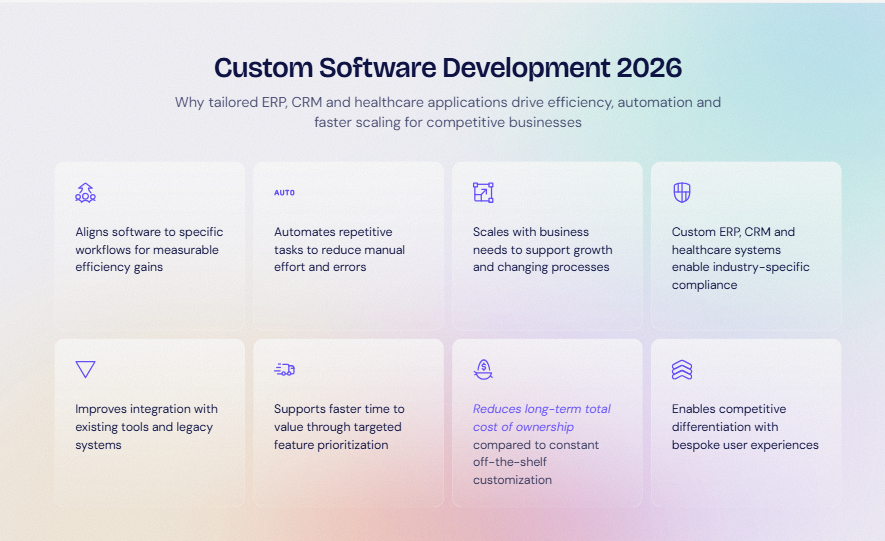
Custom software development is the process of designing, building, deploying, and maintaining software solutions tailored to the unique needs of a business or organization. Unlike commercial off-the-shelf (COTS) software, custom solutions are created specifically for a company’s workflows, industry requirements, and long-term strategy.
Rather than forcing businesses to adapt to generic tools, custom software ensures that technology works around the business, not the other way around.
The Custom Software Development Lifecycle
A professional custom software development company typically follows a structured development lifecycle to ensure quality, scalability, and long-term success.
1. Discovery and Requirements Analysis
This stage focuses on understanding business needs and defining project scope.
Key activities include:
- Stakeholder interviews and workshops
- Business process mapping
- Technical requirements documentation
- Feasibility studies and risk assessment
- Project scope definition and timeline planning
2. Strategic Planning and Architecture
Once requirements are defined, the technical blueprint is designed.
This includes:
- System architecture design
- Technology stack selection
- Database design and data modeling
- Integration planning with existing systems
- Security framework development
3. User Experience and Interface Design
A well-designed interface ensures high user adoption and productivity.
Design activities include:
- User research and persona development
- Wireframing and prototyping
- Visual design and branding integration
- Accessibility compliance planning
- Mobile responsiveness optimization
4. Development and Implementation
The development phase transforms design concepts into functional software.
Common practices include:
- Agile development methodology
- Continuous integration and deployment
- Code reviews and quality checks
- Performance optimization
- Security implementation
5. Testing and Quality Assurance
Testing ensures the software performs reliably under real-world conditions.
Testing processes include:
- Unit testing
- Integration testing
- User acceptance testing (UAT)
- Performance and load testing
- Security penetration testing
- Cross-platform compatibility testing
6. Deployment and Launch
After successful testing, the software is deployed into production.
Deployment tasks include:
- Production environment setup
- Data migration and system integration
- User training and documentation
- Go-live support and monitoring
7. Ongoing Maintenance and Evolution
Custom software continues to evolve after launch.
Ongoing support includes:
- Security updates and patches
- Feature enhancements
- Performance monitoring
- Scalability improvements
- Compliance update
Why Custom Software Development Matters
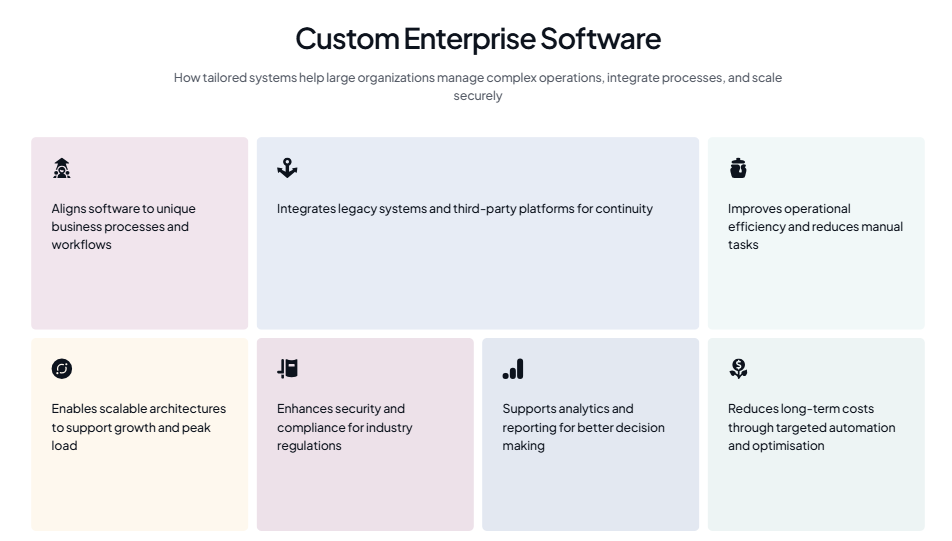
Organizations increasingly view software as a strategic asset rather than just an operational tool.
Several key business drivers explain why companies invest in custom solutions.
1. Perfect Alignment with Business Processes
Off-the-shelf software is built for mass markets and often includes unnecessary features while lacking critical functionality.
Custom software ensures:
- Every feature serves a business purpose
- Workflows match internal operations
- Industry-specific requirements are addressed
For example, a manufacturing company may require software that integrates directly with specialized machinery and generates regulatory compliance reports—capabilities rarely available in generic platforms.
2. Scalability and Flexibility
Custom software grows with the organization.
Benefits include:
- Modular architecture for expansion
- API-first development for integrations
- Cloud-native infrastructure for global scalability
- Microservices architecture for independent scaling
3. Enhanced Security and Compliance
Custom systems provide stronger security because they are designed specifically for the organization’s environment.
Security advantages include:
- Reduced attack surface
- Industry-specific compliance controls
- Full control over data storage and handling
- Customized security protocols
4. Competitive Differentiation
Custom software can create unique capabilities that competitors cannot easily replicate.
These advantages may include:
- Superior customer experiences
- Faster operational processes
- Data-driven insights
- Innovative digital services
5. Optimized Total Cost of Ownership
Although initial development costs may be higher, custom software often reduces long-term costs by eliminating:
- Licensing fees
- Integration complexity
- Inefficient workflows
- Workarounds for missing features
Industry-Specific Custom Software Development
Different industries require specialized solutions due to regulatory requirements, operational complexity, and customer expectations.
Custom Healthcare Software Development
Healthcare technology must meet strict compliance standards while supporting complex clinical workflows.
Custom healthcare solutions include:
Electronic Health Record (EHR) Systems
Advanced capabilities include:
- Specialty-specific templates
- Integration with medical devices
- Population health analytics
- Telemedicine capabilities
- AI-powered diagnostic support
Hospital Management Systems
Integrated platforms manage:
- Patient admission and discharge
- Staff scheduling and resource allocation
- Inventory management for medical supplies
- Billing and insurance claims processing
Custom ERP Software Development
Enterprise Resource Planning (ERP) systems integrate multiple business functions into one platform.
Capabilities include:
Financial Management
- Multi-currency accounting
- Real-time reporting
- Budgeting and forecasting tools
- Compliance and audit tracking
Supply Chain Optimization
- Demand forecasting
- Supplier relationship management
- Logistics coordination
- Sustainability tracking
Human Resources Management
- Recruitment and onboarding
- Performance management
- Payroll administration
- Workforce analytics
Custom CRM Software Development
Customer Relationship Management platforms help businesses manage customer interactions and drive revenue.
Key features include:
Sales Pipeline Management
- Lead scoring and qualification
- Automated follow-ups
- Territory management
- Revenue forecasting
Marketing Automation
- Campaign management
- Customer segmentation
- Marketing attribution tracking
- Social media integration
Customer Service Tools
- Omnichannel support systems
- Knowledge bases and self-service portals
- SLA monitoring
- Customer satisfaction tracking
Custom Software Development Costs
Custom development costs vary widely depending on project complexity, technology requirements, and team structure.
Typical Cost Ranges
| Project Type | Estimated Cost |
|---|---|
| Simple applications | $25,000 – $75,000 |
| Medium complexity apps | $75,000 – $200,000 |
| Enterprise systems | $200,000 – $500,000 |
| AI-driven platforms | $500,000 – $2M+ |
Factors Influencing Costs
- Project scope and complexity
- Technology stack
- Development team size
- Geographic location of developers
- Integration requirements
Custom Software Development Outsourcing
Many companies partner with external development teams to reduce costs and access specialized expertise.
Common Outsourcing Models
Dedicated Development Team
- Long-term collaboration
- Full control over development processes
- Flexible team scaling
Project-Based Outsourcing
- Fixed scope and timeline
- Predictable budget
- Best for clearly defined projects
Hybrid Model
- Strategic roles onshore
- Development offshore
- Cost efficiency with strong oversight
Emerging Technologies in Custom Software
Modern software development increasingly integrates advanced technologies.
Artificial Intelligence
- Intelligent automation
- Predictive analytics
- Customer service chatbots
- Fraud detection systems
Cloud-Native Architecture
- Auto-scaling infrastructure
- Global content delivery networks
- Containerized deployment
Internet of Things (IoT)
- Real-time equipment monitoring
- Smart device integrations
- Supply chain tracking
Quality Assurance in Custom Software Development
Quality assurance ensures reliability, performance, and security.
Testing approaches include:
- Automated unit testing
- Integration testing
- End-to-end testing
- Performance testing
- Security vulnerability testing
Future Trends in Custom Software Development
The future of software development will be shaped by:
- AI-assisted coding and automation
- Low-code and no-code platforms
- Sustainable software engineering
- Cloud-first architecture
These innovations will enable faster development cycles and more intelligent applications.
Conclusion
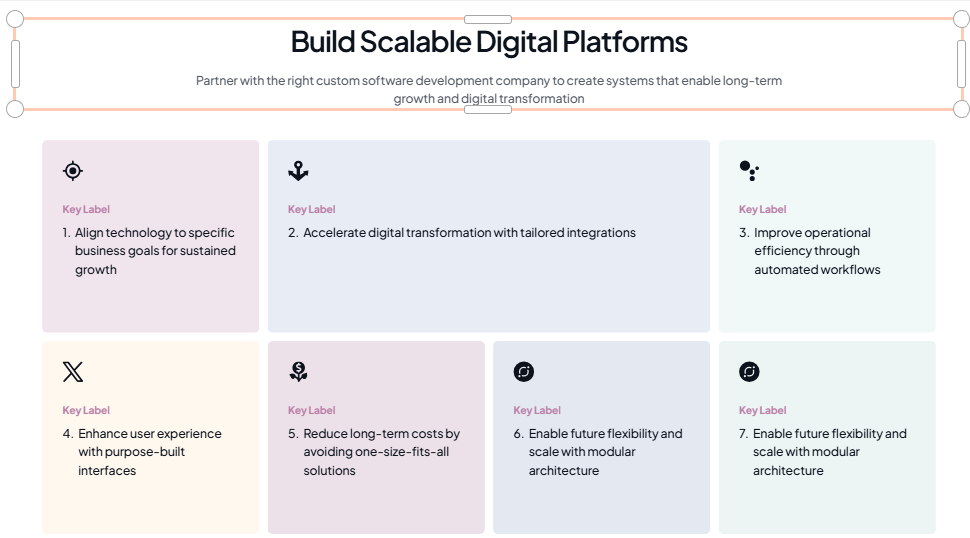
Custom software development is a strategic investment that allows organizations to build technology aligned with their unique goals and operations.
Unlike generic tools, custom solutions offer:
- Tailored functionality
- Greater scalability
- Enhanced security
- Competitive differentiation
With careful planning, the right technology strategy, and experienced development partners, custom software can become a powerful catalyst for innovation and business growth.
Frequently Asked Questions (FAQs)
1. What is custom software development?
Custom software development is the process of designing, building, and maintaining software solutions tailored specifically to the needs of a particular business or organization. Unlike off-the-shelf software, custom solutions are built to match unique workflows, operational processes, and strategic goals.
2. How is custom software different from off-the-shelf software?
Off-the-shelf software is designed for a broad audience with general features, while custom software is developed specifically for a business’s unique requirements. Custom software offers greater flexibility, scalability, and integration capabilities compared to pre-built solutions.
3. What are the benefits of custom software development?
Custom software offers several advantages, including:
- Tailored functionality for specific business processes
- Greater scalability as the business grows
- Improved security and compliance
- Seamless integration with existing systems
- Competitive advantage through unique capabilities
4. How long does custom software development take?
The timeline depends on the complexity of the project. Simple applications may take 2–4 months, while complex enterprise systems may require 6–12 months or more. The development process typically includes planning, design, development, testing, and deployment stages.
5. How much does custom software development cost?
The cost of custom software development varies based on project complexity, features, technology stack, and development team location. Projects can range from $25,000 for basic applications to over $500,000 for large enterprise platforms.
6. Which industries benefit the most from custom software development?
Many industries benefit from custom software, including:
- Healthcare
- Finance and banking
- Logistics and supply chain
- Retail and e-commerce
- Manufacturing
- Education and EdTech
Custom solutions help these industries automate processes, improve efficiency, and enhance customer experiences.
7. Can custom software integrate with existing systems?
Yes. One of the biggest advantages of custom software is its ability to integrate seamlessly with existing systems such as CRM platforms, ERP systems, payment gateways, and third-party APIs.
8. Is custom software scalable for growing businesses?
Yes. Custom software is designed with scalability in mind, allowing businesses to add features, handle more users, and expand into new markets without replacing their existing system.
9. What technologies are commonly used in custom software development?
Common technologies used in custom software development include:
- Frontend: React, Angular, Vue.js
- Backend: Node.js, Python, Java, .NET
- Databases: PostgreSQL, MySQL, MongoDB
- Cloud Platforms: AWS, Azure, Google Cloud
The technology stack is selected based on the project requirements and scalability needs.
10. How do businesses choose the right custom software development company?
When selecting a development partner, businesses should consider:
- Industry experience and portfolio
- Technical expertise
- Development methodology (Agile, DevOps)
- Communication and transparency
- Post-launch support and maintenance services
Choosing the right partner ensures successful project delivery and long-term support.