
![[HERO] The 2026 AI Tech Revolution: A Comprehensive Guide to the Future of Innovation](https://cdn.marblism.com/xnaJP4proNY.webp)
1. Introduction: The Silicon Renaissance
Welcome to March 2026. If you feel like the world has shifted beneath your feet over the last two years, you aren’t imagining it. We’ve officially moved past the “can an AI write a funny poem?” phase and entered what we at AI Faculty call the Silicon Renaissance—a shift that’s increasingly documented in industry tracking like the NVIDIA 2026 State of AI report.
Back in the early days, AI was basically a very fancy “if-this-then-that” machine. Useful, but not exactly magical. To understand why 2026 feels like the tech industry just chugged three espresso shots, we have to do a quick (but fun) historical lap.
From rule-based systems to “statistical everything”
Phase 1: Rule-based AI (1950s–1990s)
The first wave of AI was built on rules. Humans wrote the logic. Computers followed it. This gave us expert systems used in medicine, manufacturing, and finance. If the rule list was good, the system was decent. If the rule list was incomplete (it always was), the system fell apart like a cheap umbrella in a monsoon.
Phase 2: Machine learning (1990s–2010s)
Then we realized we could stop writing every rule manually and instead train systems on data. This was the “statistical” era: classifiers, recommendation engines, search ranking, fraud detection. AI got better at predicting patterns, but it still mostly lived behind the scenes. It didn’t converse, it didn’t plan, and it definitely didn’t own the workflow.
Phase 3: Deep learning + big compute (2012–2020)
When deep learning hit scale—thanks to GPUs, better datasets, and more efficient training—AI jumped from “smart spreadsheet” to “whoa.” Vision and speech took off. Translation improved. But the systems were still mostly single-purpose: great at one thing, not great at being generally helpful.
The LLM era: AI learns language, and everything changes (2020–2025)
Large Language Models (LLMs) turned out to be a cheat code for software. Train a model on a huge chunk of human text and it picks up structure: reasoning patterns, coding conventions, summarization, tone, and the “shape” of knowledge.
In 2023 and 2024, the tech world was obsessed with chatbots. We were amazed a machine could pass tough exams, write decent marketing copy, and generate a picture of a cat in a spacesuit. Fair. That was a big deal.
But by late 2025, the novelty wore off and the serious work began: turning AI from a cool demo into dependable infrastructure.
2026: the agentic era (AI that takes actions, not just answers)
Here’s the major 2026 shift: the best AI systems aren’t just answering questions. They’re doing tasks.
This is the rise of Agentic AI: systems that can plan, use tools, take multi-step actions, check their own work, and keep going until the job is done. Think: “not just an assistant,” but a “team member” that can operate inside your apps. If you want a more technical reference point for the “reasoning + tool use” direction, NVIDIA’s work is worth skimming here: NVIDIA Nemotron-3 research white paper (PDF).
Agentic systems typically combine:
- A model (LLM or multimodal model) for reasoning and language
- Tools (browsers, databases, CRMs, IDEs, ticketing systems, calendars)
- Memory (what you prefer, what the project needs, what happened last time)
- Guardrails (permissions, policies, approvals, audit trails)
- Feedback loops (test, verify, retry, escalate)
If LLMs were the “brain,” agents are the “hands.” And in tech, hands matter.
The big paradigm shift: from “AI as a tool” to “AI as an operating system”
In 2024, AI was often used like a tool:
- open ChatGPT
- ask question
- paste answer somewhere
- hope it works
In 2026, AI increasingly behaves like an operating system:
- it sits across your workflow
- it routes tasks to the right apps
- it coordinates multiple “mini-services”
- it watches for issues before you notice
- it learns how your organization operates
In other words, AI is becoming a layer that orchestrates work.
Table 1: The Evolution of AI Architecture (2020 vs 2023 vs 2026)
A simple example:
- Tool-era AI: “Write an email reply to this parent.”
- OS-era AI: “Draft the reply, check policy guidelines, pull the student’s attendance record, suggest next steps, create a follow-up reminder, and log the interaction.”
This is exactly why education institutes (our core audience at AI Faculty) are paying closer attention. It’s not about replacing teachers or staff. It’s about reducing the invisible admin work that quietly eats the week.
And now that AI is shifting into an “operating layer,” the tech stack beneath it has had to evolve too—which brings us to the infrastructure revolution.
2. The Infrastructure Revolution: Chips, Data Centers, and the Cloud
If data is the new oil, then the infrastructure we’re building in 2026 is the refinery… plus the pipeline… plus the logistics network… and also the accountant tracking your GPU bill.
The big headline: AI is no longer compute-light. Even when you’re not training massive models, you’re running inference all day—summaries, retrieval, copilots, agents, recommendations, vision, voice, security monitoring. It adds up.
So the infrastructure world had to adapt fast.
Training vs inference (and why inference is the “sneaky expensive” one)
People love talking about training because it’s dramatic: “we trained a model with a trillion parameters,” fireworks, applause, lots of acronyms.
But in 2026, many organizations feel the cost of inference more than training.
- Training cost is often a big one-time (or periodic) event: huge compute, big bill, but planned.
- Inference cost is continuous: every user query, every agent step, every tool call, every validation pass.
With agentic systems, inference grows because one user request may trigger dozens of model calls:
- plan step
- retrieve docs
- write draft
- check policy
- run tests
- revise output
- produce final answer
Congrats, you just turned “one prompt” into an entire workflow.
That’s why modern AI infrastructure focuses on:
- throughput (tokens/sec)
- latency (how fast it responds)
- cost per token
- memory bandwidth
- energy efficiency
If you want a second, independent infrastructure lens beyond the major cloud/GPU vendors, this LinkedIn write-up is a handy scan of what’s changing in 2026: BuzzHPC’s 2026 AI infrastructure research and expectations.
Table 3: Infrastructure Costs (H100 vs H200 vs Blackwell)
Note: exact numbers vary by vendor and configuration. This table is a practical 2026 buyer-style comparison: what most teams actually care about—throughput, efficiency, and inference economics. For a broader view of hardware scaling trends and the ROI logic behind modern AI infrastructure, see NVIDIA’s 2026 “State of AI” report: NVIDIA State of AI report 2026.
NVIDIA’s H200 and why memory is the new headline
The NVIDIA H200 became important not just because it’s “faster,” but because it improves what increasingly matters for LLM workloads: moving data fast.
LLMs aren’t only compute-hungry; they’re also memory-hungry. More memory and faster memory access helps with:
- longer context windows
- bigger batch inference
- serving more users per GPU
- running multiple models side-by-side
- keeping more of the model “resident” for speed
In plain terms: if your GPU is a kitchen, memory bandwidth is how quickly ingredients reach the chef. A brilliant chef can’t cook if supplies arrive one spoon at a time.
Blackwell: the “data center era” GPU generation
Then came NVIDIA Blackwell (the platform that followed Hopper). The reason Blackwell matters in 2026 is that it pushes AI further into a data-center-first design:
- bigger focus on serving models efficiently (not just training them)
- better scaling across clusters (because no one runs one GPU anymore)
- more attention to energy, thermals, and density
The result: organizations can run more AI workloads per rack—which is basically the difference between “AI is feasible” and “AI is a budget horror story.”
Beyond the GPU: ASICs, custom silicon, and the “Great Diversification”
While NVIDIA continues to dominate a big chunk of the stack, 2026 is absolutely the era of diversification:
- Google TPUs for large-scale training/inference in Google’s ecosystem
- AWS Trainium/Inferentia for cost-efficient workloads on AWS
- Apple/Qualcomm NPUs for on-device inference
- lots of specialized inference chips optimized for specific model shapes
This matters because not every AI workload needs a Formula 1 car. Some need a scooter that’s cheap, efficient, and always available.
Cloud wars: Azure vs AWS vs GCP (and the shift to AI-as-a-service)
Cloud used to mean: rent servers. Now it increasingly means: rent capabilities.
In 2026, the big cloud players are moving from Infrastructure-as-a-Service (IaaS) to AI-as-a-Service (AIaaS):
- managed model endpoints
- agent frameworks and orchestration layers
- vector databases and retrieval pipelines
- governance, logging, and evaluation tooling
- private networking, encryption, and compliance features built around AI
This “AI-as-an-operating-layer” idea also overlaps with how sovereign AI cloud stacks are being designed; for a deeper infrastructure view, Accenture’s PDF is a solid reference: Accenture whitepaper on the operating system for sovereign AI clouds (PDF).
Because most customers don’t want to “build AI.” They want outcomes:
- “reduce support load”
- “speed up content creation”
- “detect threats”
- “help teachers plan lessons faster”
- “make onboarding less painful”
AIaaS is how cloud providers package those outcomes.
Data centers are getting a makeover: liquid cooling, higher density, and sovereign AI hubs
Remember when a data center was basically a warehouse full of servers and industrial-strength air conditioning? Cute.
In 2026, density is higher and heat is a serious villain. So we’re seeing:
- liquid cooling becoming mainstream (especially for high-density AI racks)
- tighter integration between compute, networking, and storage
- more investment in power delivery and energy efficiency
And then there’s a geopolitics-flavored trend: sovereign AI hubs.
A lot of regions now want:
- local data storage
- local model serving
- local compliance and governance
- reduced dependence on foreign infrastructure
So we’re seeing government-supported or regionally operated AI compute clusters—designed so critical workloads (education, healthcare, defense, public services) can run without sending sensitive data across borders.
The real infrastructure headline: efficiency wins
The infrastructure story in 2026 is not only “more compute.”
It’s “more useful AI per watt, per rupee, per dollar, per square foot.”
Because in a world where AI becomes the operating layer of work, the bottleneck isn’t ideas.
It’s power, cost, and latency.
And yes—this is why hardware suddenly became dinner-table conversation for people who previously didn’t care what a GPU was.
3. Software Development 2.0: AI Agents and the Death of Coding?
If the infrastructure is the engine, software is the driver—and in 2026, the driver is letting the car handle a lot of the steering.
Let’s address the dramatic headline first: coding is not dead.
But the coding bottleneck? That’s on life support.
From autocomplete to autonomy: Copilot grows up
Early AI coding tools felt like smart autocomplete:
- finish a line
- suggest a function
- explain a snippet
Useful, but still very much “human drives, AI gives directions.”
By 2026, copilots have evolved into autonomous or semi-autonomous agents that can:
- search the codebase for relevant files
- reproduce bugs from logs
- write and run tests
- propose fixes across multiple modules
- open pull requests with explanations
- handle CI/CD steps
- deploy to staging (and sometimes production with approvals)
So the workflow shifts from “write everything” to “supervise and steer.”
What changes in a software engineer’s day?
A modern engineer’s day is increasingly about:
- writing clear specs for agents
- reviewing outputs (PRs, tests, architecture proposals)
- deciding trade-offs
- keeping systems safe, reliable, and maintainable
- setting guardrails (permissions, approvals, risk thresholds)
The irony is: as AI writes more code, the importance of good engineering judgment goes up.
Because:
- code is easy to generate
- correct code is harder
- safe, secure, maintainable systems are the hardest
The shift: from syntax knowledge to system design
Syntax used to be a gate. If you didn’t know the language well, you couldn’t contribute.
In 2026, syntax is less of a moat. Engineers are being valued for:
- system design (how components fit together)
- data modeling (what should exist and why)
- reliability (timeouts, retries, observability, graceful failures)
- security (least privilege, secrets, threat modeling)
- cost awareness (especially inference costs)
The key question becomes:
“Can you design a system that stays sane in the real world?”
Multi-agent workflows: the new “team structure”
One of the biggest shifts is multi-agent development:
- Agent A writes a feature branch
- Agent B generates tests and fuzzing inputs
- Agent C reviews for performance regressions
- Agent D checks security patterns and dependency risks
- Human approves, merges, and sets priorities
In strong teams, this becomes a loop:
- specify
- generate
- test
- verify
- ship
- monitor
- improve
Humans move up the stack, and the “assembly line” gets automated.
The new risks: when code is cheap, mistakes are cheaper too
When AI can write a lot of code quickly, you can accidentally:
- ship subtle bugs at scale
- increase technical debt faster
- introduce insecure dependencies
- deploy features you didn’t fully understand
So mature organizations in 2026 are investing in:
- automated evaluation of generated code
- policy checks (licensing, security, compliance)
- strong CI/CD gates
- observability (logs, traces, metrics)
- incident response playbooks
For teams tracking what “AI-generated software” means at the stack level (and where reliability risks can sneak in), this recent research paper is a useful read: VibeTensor research on AI-generated software stacks (arXiv PDF).
In short: we don’t need fewer engineers. We need engineers who can govern faster development.
Which takes us to the less glamorous but extremely real chapter: cybersecurity.
4. Cybersecurity in the Age of Machine-Speed Threats
Cybersecurity used to be a cat-and-mouse game. In 2026, the cat hired an AI. The mouse did too. Now everyone’s sprinting.
The problem is simple: attacks scale better than defense… until defense also scales with AI.
How attackers use AI in 2026 (spoiler: it’s annoyingly effective)
1) Automated phishing that doesn’t sound like phishing
Old phishing emails were full of spelling mistakes and weird urgency. Easy-ish to spot.
AI-assisted phishing is:
- grammatically correct
- personalized (pulled from public data)
- context-aware (references real projects, teams, events)
- multi-step (email → chat message → fake doc → credential capture)
And yes, it can be localized by region, language, and even writing style.
2) Malware generation and mutation
Attackers use AI to:
- generate code variants
- obfuscate payloads
- adjust tactics based on endpoint defenses
- speed up discovery of vulnerabilities in exposed systems
3) Social engineering at scale
Instead of targeting 10 people, attackers can target 10,000 with tailored messages and let conversion rates do the work.
For education institutes, this is especially painful because:
- lots of users (students, parents, staff)
- lots of access points (portals, devices, Wi-Fi networks)
- frequent onboarding/offboarding cycles
- mixed device hygiene (personal devices, shared labs, BYOD)
How defenders use AI: detection, correlation, and faster response
The good news is that defense is finally getting the same “machine speed” upgrades.
Modern AI-driven security operations focus on:
- real-time anomaly detection (impossible travel, strange access patterns, unusual data transfers)
- log correlation across endpoints, identity providers, network events, and cloud systems
- automated triage (grouping alerts into incidents, reducing false positives)
- guided response (suggesting containment steps, patch priorities, rollback actions)
In plain language: security teams get fewer random alarms and more “this is likely a real fire, here’s where it started, and here’s what to do next.”
The 2026 security posture shift: assume breach, minimize blast radius
The modern mindset is less “we will never get breached” and more:
“if something goes wrong, how do we keep it small and recover fast?”
This is where zero-trust architecture becomes non-negotiable.
Zero trust in 2026 (simple version)
Zero trust is basically:
never trust, always verify.
It means:
- identity is checked continuously, not just at login
- access is least-privilege by default (users/apps get only what they need)
- devices must be healthy to connect
- networks are segmented (so one compromised account can’t roam freely)
- actions are logged and auditable
In practice, this looks like:
- MFA and phishing-resistant auth for staff
- strict access controls for student information systems
- separate admin accounts for high-risk tasks
- conditional access based on device posture
- tighter controls on third-party apps and integrations
Where AI and zero trust meet: better verification
AI helps zero trust by:
- spotting suspicious behavior sooner
- identifying compromised credentials faster
- recommending policy changes based on patterns
- reducing noise so humans can focus on real incidents
But AI also raises new concerns:
- prompt injection in security copilots
- data leakage from insecure tool integrations
- over-reliance on automated decisions
- “shadow AI” tools used without governance
So the best security teams treat AI like a powerful intern:
helpful, fast, but not allowed to make irreversible changes without proper controls.
And on the “sovereignty gets real” side of risk planning—especially when infrastructure and jurisdiction decisions start to affect security posture—EDB’s recap from GTC is a strong, practical take: EDB’s insights on where sovereign AI gets real (GTC 2026).
The Road Ahead
We’ve only just scratched the surface of the 2026 revolution. By building a smarter, more efficient foundation of chips, cloud AI services, and data centers built for density, we’ve cleared the way for the “Agentic Era”: where AI doesn’t just answer questions, but takes actions.
In the next sections of this guide, we’ll explore what happens when agents move beyond screens (and into the physical world), how data ownership is changing, and what responsible AI governance looks like when AI is effectively part of the operating fabric of organizations.
Stay tuned, because the Silicon Renaissance is just getting started.
This update expands our deep dive into the AI Tech Revolution through the first four chapters (Introduction, Infrastructure, Software Development, and Cybersecurity).
5. The Rise of Agentic AI
If 2024 was the year everyone met AI, 2026 is the year everyone tries to manage AI.
Because we’ve crossed a line: AI isn’t just generating content anymore. It’s starting to run workflows.
So… what is an “agent,” really?
An AI agent is an AI system that can:
- understand a goal (“reduce refund requests this month”)
- break it into steps (an actual plan)
- use tools (CRM, email, browser, spreadsheets, ticketing system, code repo)
- take actions (not just suggestions)
- check results (did it work?)
- repeat until done or escalate
A chatbot answers.
An agent executes.
If that sounds like a small difference, here’s the big one:
- Chatbot: “Here’s how you could do it.”
- Agent: “I did it. Here’s the link. Want me to ship it?”
Multi-step task execution: the “AI that doesn’t stop after one message”
The real unlock in 2026 isn’t better jokes (though yes, it got funnier). It’s multi-step completion.
A single business request often needs:
- clarify the objective
- gather context (docs, policies, previous work)
- perform actions across apps
- verify output (tests, approvals, sanity checks)
- deliver result + summary
Agents are built to live in that loop.
A simple, everyday example:
- A teacher asks for “a quiz + rubric for this chapter, aligned to Bloom’s levels.”
- The agent:
- pulls the chapter outline
- drafts 3 difficulty tiers
- checks for duplicate questions
- generates a rubric
- formats it for Google Docs/LMS
- creates a share link
- logs it for reuse later
That’s not “content.” That’s workflow completion—and it’s why people now say “agentic” with a straight face.
From “predictive AI” to “active AI”
For years, most AI in business was predictive:
- predict churn
- predict fraud
- predict which ad will work
- predict demand
That’s helpful. But it still leaves humans doing the actual work.
In 2026, we’re shifting to active AI:
- not just predicting churn, but creating retention offers + triggering the right message
- not just flagging a security risk, but isolating the device and opening an incident ticket
- not just forecasting demand, but adjusting inventory rules and notifying procurement
This is why AI feels like it’s becoming an “operating layer.” Active AI doesn’t just point at the dashboard. It starts turning knobs.
Why businesses care (aka: show me the ROI)
Agentic AI is mostly an ROI story, because it hits the big hidden costs:
- repetitive manual work
- slow handoffs between teams
- “where is that file?” time
- context switching (the productivity killer nobody budgets for)
In practical terms, agentic AI tends to deliver ROI by:
- shrinking cycle time (hours → minutes)
- increasing throughput (same team, more output)
- reducing error rates (via checks, tests, consistency)
- improving customer experience (faster response, fewer misses)
This shift toward autonomous, workflow-running operations is also showing up in major industry research—KPMG’s 2026 coverage highlights how organizations are moving from experimentation to more autonomous operating models: KPMG Global Tech Report 2026.
And unlike a lot of shiny AI pilots, agents are measurable:
- time saved per task
- tasks completed per week
- tickets reduced
- deployment frequency
- resolution time
If you can measure it, you can fund it. That’s why agents are everywhere.
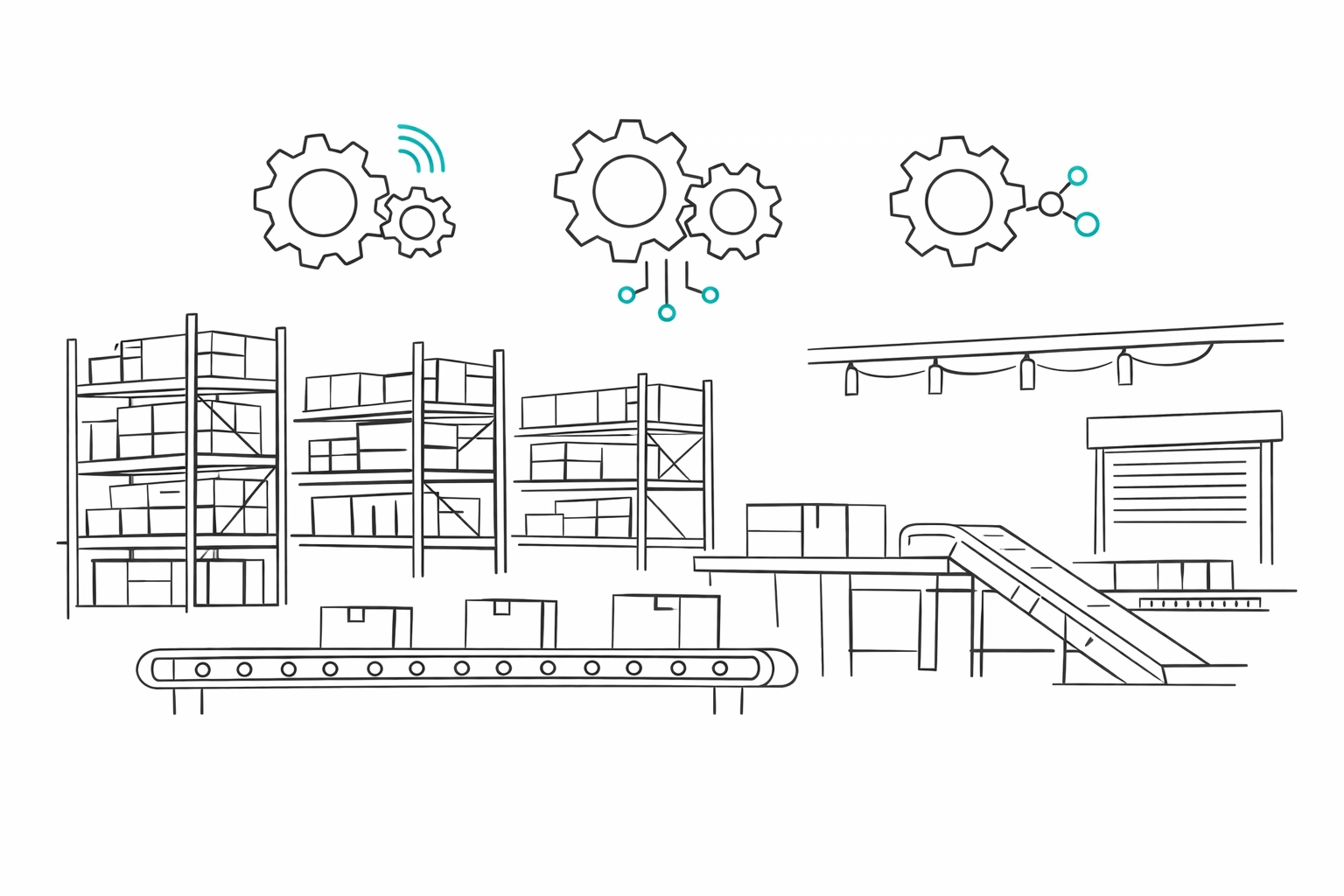
6. Physical AI and Robotics (AI Leaves the Screen)
Here’s the next “oh wow” moment: AI is leaving the chat window.
Physical AI is about using models to perceive the real world (vision), understand goals (language), and control actions (movement). It’s the difference between:
- “I can describe a warehouse”
and - “I can run parts of a warehouse.”
And no, we’re not talking humanoids doing backflips for LinkedIn clout. The biggest wins in 2026 are boring in the best way: logistics, factories, hospitals—places where efficiency is money.
Warehousing: the quiet automation empire
Warehouses are basically the Olympics of ROI:
- lots of repeated movements
- lots of scanning, sorting, picking
- high labor costs
- tight margins
- errors are expensive
That’s why companies like Amazon have been investing heavily in warehouse automation for years. The 2026 twist is the software brain:
- better computer vision
- better task planning
- better coordination between machines and humans
- faster adaptation to new layouts and SKUs
Instead of “program the robot for every scenario,” the trend is:
- show it examples
- let it learn patterns
- let it plan routes and steps
That flexibility is where ROI accelerates.
Manufacturing: BMW and the “AI quality inspector that never blinks”
In manufacturing, the most immediate wins are usually:
- visual quality checks
- predictive maintenance
- safer workflows
- less downtime
Companies like BMW and other large manufacturers have been exploring AI for inspection and planning. With modern vision systems, AI can detect:
- micro-defects humans miss
- pattern shifts across batches
- anomalies that predict a machine failure
And because it’s software-driven, improvements are iterative:
- update the model
- roll out to more lines
- reduce defects
- reduce rework
- ship faster
That’s the kind of ROI leaders actually love: measurable, repeatable, scalable.
Healthcare: “less paperwork, more patient time”
Healthcare isn’t only robots delivering medicines (though that exists). In 2026, physical AI shows up as:
- smarter imaging workflows
- automated inventory and equipment tracking
- assistive systems in labs and pharmacies
- patient monitoring and anomaly detection
The ROI is not just cost. It’s time:
- less admin load
- fewer missed signals
- faster diagnosis pipelines
- better utilization of staff
Vision + LLMs → Large Behavior Models (LBMs)
You’ll hear a new phrase in 2026: Large Behavior Models (LBMs).
Think of it like this:
- LLMs are good at language and reasoning
- computer vision is good at seeing
- control systems are good at moving
LBMs blend these capabilities so systems can learn behaviors:
- “pick this object”
- “place it there”
- “avoid that”
- “follow this safety rule”
- “adapt if the environment changes”
It’s not just “recognize a box.” It’s “handle the task.”
Business impact: why physical AI is a CFO conversation now
Physical AI gets funded when it impacts:
- throughput (units/hour)
- defect rate
- downtime
- labor safety
- utilization of expensive assets
In short: it moves from “innovation lab” to “operations budget.”
And yes, it’s still hard. Hardware is messy. Real environments are chaotic. But the direction is clear: AI is becoming embodied—and ROI is driving the rollout.
7. The Data Dilemma: Managing the Fuel of AI
A spicy truth of 2026: most AI projects don’t fail because the model is bad.
They fail because the data is:
- scattered
- outdated
- locked in silos
- missing permissions
- impossible to search
- not trustworthy
AI is only as smart as the information it can access—and the rules controlling that access.
The modern data stack: Snowflake, Databricks, Pinecone (and friends)
In 2026, data platforms are less about “where we store tables” and more about “how we operationalize intelligence.”
You’ll see common patterns like:
- Snowflake for cloud data warehousing and sharing
- Databricks for lakehouse + ML/AI pipelines
- Pinecone (and other vector DBs) for fast semantic search and retrieval
- governance layers for access control, lineage, and compliance
The trend: data platforms are becoming AI platforms—because AI needs:
- clean inputs
- fast retrieval
- strong permissions
- observability
From data lakes to AI-ready data meshes
Old world:
- “dump everything in a data lake and figure it out later.”
2026 world:
- “make data AI-ready with ownership, meaning, and quality.”
That’s why many orgs are moving toward data meshes:
- domain teams own their data products
- shared standards define quality and access
- discovery is easier
- governance is built-in
It’s less romantic than “single source of truth,” but way more realistic at scale.
Vector databases and RAG in 2026 (simple explanation)
LLMs are great, but they hallucinate when they don’t have the right context.
So organizations increasingly use RAG (Retrieval-Augmented Generation):
- store knowledge (docs, policies, manuals, tickets)
- create embeddings (meaning-based fingerprints)
- retrieve the most relevant chunks for a query
- feed that context into the model
- generate an answer grounded in your sources
This is where vector databases shine: they’re optimized for “find similar meaning,” not “exact keyword match.”
In business terms, RAG helps you build:
- support copilots that cite sources
- policy assistants that stay compliant
- internal search that feels like magic
- tutoring systems that reference your curriculum (huge for education institutes)
Privacy, compliance, and sovereign AI storage
The more AI becomes an operating layer, the more sensitive data it touches:
- student records
- customer data
- financial info
- IP and internal strategy
So in 2026, data strategy includes:
- encryption at rest and in transit
- strict access controls (least privilege)
- audit logs
- retention policies
- regional storage requirements
This links directly to the growth of sovereign AI (we’ll get there in Chapter 9): many organizations want models and storage that are regionally controlled, not globally scattered.
ROI takeaway: data work is not “overhead,” it’s the multiplier
The most profitable AI programs treat data like product:
- invest in quality
- define ownership
- measure freshness and accuracy
- build retrieval pipelines
Because once your data foundation is solid, everything else gets cheaper:
- faster deployments
- fewer hallucinations
- fewer compliance issues
- higher user trust
- more adoption
And adoption is where ROI actually shows up.
8. Enterprise Scaling: From Pilots to Production
Let’s talk about the graveyard of AI: the pilot project folder.
In 2024–2025, many companies did AI experiments that were:
- fun
- flashy
- hard to integrate
- impossible to govern
- and quietly abandoned
In 2026, the vibe is different. This is the year businesses ask:
“Cool. What’s the ROI—and can we scale it without chaos?”
For a broad pulse-check on what’s actually changing (vs. what’s just marketing), Deloitte’s running coverage is a decent credibility anchor: Deloitte’s 2026 AI breakthroughs and trend pulse check.
Why 2026 is the year of ROI (and the end of “AI fatigue”)
After the hype wave, teams got tired:
- too many tools
- too many demos
- too few real outcomes
But now, the winners have a clear playbook:
- pick use cases with measurable value
- integrate with real systems
- build governance early
- control inference costs
- roll out in stages
Also, a huge driver is adoption momentum—many leaders cite a 64% adoption rate as a sign that AI has moved from “optional” to “standard” (see Deloitte’s reporting here: Deloitte 2026 AI report). Translation: if your competitors are using AI to move faster, you can’t stay in brainstorming mode.
What stops scaling (it’s rarely the model)
The top scaling blockers in 2026 usually look like:
1) Governance (aka: “who is allowed to do what?”)
You need policies for:
- what data the AI can access
- what it can write/change
- what requires approval
- how decisions are logged
- how models are evaluated
2) Cost control (inference is the silent budget eater)
If an agent calls a model 30 times per task, and you run 10,000 tasks… you feel that bill.
Scaling needs:
- caching
- smaller models for simpler tasks
- batching
- routing (send easy work to cheaper models)
- usage monitoring by team and use case
3) Organizational silos (the “AI can’t access the thing” problem)
AI adoption slows down when:
- data is locked in one department
- IT blocks integrations
- security policies are unclear
- no one owns the workflow end-to-end
Scaling works when there’s an operating model:
- business owner + tech owner + security owner
- shared KPIs
- clear rollout milestones
The 2026 enterprise playbook (simple and actually doable)
Companies that scale AI successfully tend to:
- start with 3–5 high-impact workflows (not 50 random ones)
- ship a v1 fast (weeks, not quarters)
- measure impact (time saved, revenue influenced, risk reduced)
- standardize the platform (model access, logging, evaluation)
- expand to adjacent workflows
Think of it like building a highway:
- you don’t pave the whole country first
- you build the busiest route
- then connect the rest
ROI metrics that leaders care about
In 2026, AI wins are increasingly measured like operations improvements:
- cycle time reduction
- increased throughput per employee
- cost per ticket / cost per transaction
- quality scores / defect reduction
- customer satisfaction
- risk reduction (security incidents, compliance violations)
If you can’t attach a metric, it stays a pilot.
9. Sovereign AI and the Global Race
Sovereign AI used to sound like a government-only topic.
In 2026, it’s a boardroom topic.
Because “where your AI runs” and “who controls the data” has become strategic—like energy, supply chains, and telecom networks.
What is sovereign AI?
Sovereign AI is the idea that a country (or a regulated organization) can:
- run AI workloads on local infrastructure
- store sensitive data within its jurisdiction
- enforce local compliance
- reduce dependency on foreign platforms
- maintain operational continuity during geopolitical disruption
It’s not just nationalism. It’s risk management.
Why countries and companies want proprietary LLMs
There are a few big motivations:
1) Strategic security
If your AI stack is critical infrastructure, you want control over:
- availability
- updates
- access policies
- auditing
- incident response
2) Local compliance and privacy
Different regions have different rules around:
- student data
- health records
- financial reporting
- public sector procurement
Having local model hosting and storage reduces legal and operational friction.
3) Domain specialization
A general-purpose LLM is great, but many organizations want:
- models tuned to their language, curriculum, policies, terminology
- more controllable behavior and guardrails
- predictable performance on internal tasks
4) Cost predictability
Proprietary hosting (on-prem, private cloud, sovereign cloud) can offer better long-term economics for high volume inference—especially for agentic workflows.
The global race: it’s infrastructure + talent + data
The “AI race” isn’t just who has the best model.
It’s who has:
- compute capacity
- power and cooling
- a strong data ecosystem
- research and engineering talent
- governance frameworks that don’t slow everything to a crawl
And from a business perspective, sovereign AI is becoming a checkbox in large deals:
- “Where will data be stored?”
- “Can we keep models private?”
- “Do you support regional compliance?”
- “What’s the audit trail?”
ROI takeaway: sovereignty is about resilience
Sovereign AI is not just ideology; it’s ROI through:
- reduced regulatory risk
- fewer compliance delays
- better uptime and continuity planning
- more trust with customers and stakeholders
In 2026, trust is a competitive advantage.
The Road Ahead
By this point, the shape of the 2026 AI revolution is clear:
- AI is becoming agentic (it acts)
- it’s moving into physical operations (it touches the real world)
- data is the make-or-break factor (it fuels everything)
- enterprises are scaling for ROI (not vibes)
- sovereignty is becoming strategy (not just policy)
In the next chapters, we’ll go even deeper into how industries are rebuilding around AI-native workflows—and how education institutes can adopt these changes responsibly without drowning in tools, costs, or chaos.
This update expands our deep dive into the AI Tech Revolution through the first nine chapters (Introduction through Sovereign AI).
10. The Economics of AI: Bubble or Boom?
Let’s address the awkward question every CFO has asked at least once in 2026:
“Is this another dot-com bubble… but with GPUs?”
Fair question. The AI market has seen wild valuations, huge funding rounds, and enough hype to power a small city. But here’s the twist: even if parts of the AI market are overheated, the real-world utility is not imaginary.
The better framing for 2026 is:
- Some AI valuations were bubbly.
- The underlying AI demand is very real.
If you want a grounded take on what’s signal vs noise (and why “bubble talk” keeps coming up), MIT Sloan Management Review’s 2026 trends roundup is a useful reference point: Five trends in AI and data science for 2026.
Dot-com déjà vu (and what’s actually different this time)
The dot-com era had two simultaneous truths:
- A lot of companies were overvalued and underbuilt.
- The internet still changed everything.
AI is following a similar pattern:
- Some startups will not survive.
- Some product categories will consolidate fast.
- Some “AI features” will become table stakes and stop being a premium upsell.
But the core difference is that AI isn’t just a new distribution channel (like the internet was). AI is a labor multiplier. It changes how work gets done inside every company.
That’s why even when the hype cools, usage keeps rising.
Market valuations vs real-world utility
In 2026, we’re seeing a split:
Valuation hype is about narratives:
- “We’re the next platform!”
- “We’ll replace every workflow!”
- “Our model is bigger!”
Business value is about outcomes:
- faster customer support
- fewer security incidents
- better conversion rates
- higher employee throughput
- lower cost per task
- reduced cycle time
ROI doesn’t care about your pitch deck. It cares about your before-and-after numbers.
The “deflation” of the AI bubble is actually good news
If AI hype deflates, it pushes the industry toward:
- fewer gimmicks
- more reliable infrastructure
- better pricing discipline
- clearer governance
- more focus on use cases that pay for themselves
This is how sustainable markets form. In 2026, buyers are smarter, procurement teams are involved, and “cool demo” is not enough.
Deflation is basically the market saying:
“Congrats. Now ship something that works on Monday morning.”
Where ROI shows up first (and why it sticks)
The AI economics story is strongest where the work is:
- high-volume
- repetitive
- expensive when wrong
- slow due to handoffs
That’s why in 2026, the biggest wins are often in:
- customer support and internal helpdesks
- security monitoring and incident response
- sales ops and marketing ops
- software delivery (testing, triage, documentation)
- document-heavy industries (finance, insurance, education)
If you can cut a 40-minute task down to 6 minutes, you don’t need a hype cycle. You have a budget line item.
11. AI Ethics, Governance, and Regulation
In 2026, the most underrated AI feature is… trust. One of the clearer summaries of where responsible adoption is heading—especially as regulation and compliance expectations tighten—is PwC’s outlook here: PwC’s 2026 AI Business Predictions. And for a mainstream risk + sovereignty angle leaders are citing in boardrooms, this overview is a useful external reference: Yahoo Finance report on 2026 AI risks and sovereignty.
Because the more AI becomes an operating layer, the more you need answers to:
- “Where did this output come from?”
- “What data did it use?”
- “Who approved it?”
- “What happens if it’s wrong?”
- “Is it biased?”
- “Is it compliant?”
This is exactly why ethics and governance are no longer “nice-to-have.” They’re how AI moves from pilots to production.
The rise of the Chief AI Officer (CAIO)
Say hello to the CAIO: the Chief AI Officer.
In many organizations, AI used to sit awkwardly between:
- IT (who owns systems)
- data teams (who own pipelines)
- security (who says “no” for valid reasons)
- business teams (who want outcomes yesterday)
The CAIO role is emerging to:
- prioritize high-ROI AI use cases
- standardize tools and platforms
- define governance and risk controls
- coordinate teams (so AI isn’t 12 disconnected experiments)
- create measurement frameworks (adoption + impact)
Think of it as “AI program management meets business strategy meets risk.”
European AI Act compliance (and the global ripple effect)
The European AI Act has made compliance a real operational requirement, not a slide in a policy deck. Even companies outside Europe are paying attention because:
- they serve EU customers,
- they partner with EU organizations,
- or they adopt global standards to reduce complexity.
In practical 2026 terms, regulation pushes organizations to:
- document model purpose and risk level
- track data sources and usage rights
- monitor model performance over time
- maintain human oversight in high-risk scenarios
- create incident processes for AI failures
It sounds heavy, but it’s also a forcing function for maturity.
Bias mitigation and the “black box” problem
Two evergreen challenges:
1) Bias
Models learn patterns from data, and data is… human. Which means it can reflect unequal treatment, stereotypes, and historical imbalance.
2026 best practices include:
- bias testing as part of evaluation
- diverse training/validation datasets
- careful prompt and retrieval design
- human review for high-impact decisions
- monitoring outcomes, not just accuracy
2) Black box
When AI outputs are hard to explain, trust drops.
That’s why explainability in 2026 often looks like:
- RAG with citations (“here are the sources I used”)
- decision logs (“here’s what the agent did, step by step”)
- model cards and usage policies
- audit trails and approval gates
In other words: less “trust me” and more “here’s the receipt.”
Trust and safety in 2026 (the practical checklist)
Trust and safety isn’t just about stopping bad actors. It’s about preventing accidental chaos.
Most mature orgs now standardize:
- access permissions (what the AI can read/write)
- red-team testing (try to break it before users do)
- prompt injection defenses (especially for agents with tools)
- data leakage prevention
- monitoring + rollback plans
Governance is how AI becomes boring—and “boring” is what businesses want.
12. The Future of Work: Human-Silicon Teams
The future of work in 2026 is not “humans vs AI.”
It’s humans with AI—and specifically, humans who know how to direct AI.
Table 4: Human-Silicon Collaboration Framework
In 2026, “AI skills” isn’t one skill. It’s a small team of roles—sometimes spread across the same person, sometimes across multiple people.
Upskilling and the talent gap
There’s a new gap in the market:
- not “can you code?”
- but “can you work with AI systems safely and effectively?”
High-value skills in 2026 include:
- writing clear instructions/specs for agents
- evaluating outputs (spotting subtle errors)
- understanding data permissions and privacy
- designing workflows that combine humans + AI
- measuring impact (time saved, risk reduced, revenue influenced)
The people who win aren’t necessarily the best prompt writers. They’re the best workflow designers.
Workers are becoming “AI orchestrators”
In many roles, work is shifting from:
- doing the task end-to-end
to: - orchestrating a set of AI tools/agents that do 70–90% of the execution
Examples:
- A recruiter doesn’t just screen resumes; they manage an AI pipeline that ranks, summarizes, and schedules—then they focus on final judgment and candidate experience.
- A support lead doesn’t write every response; they oversee a support agent that drafts, cites policy, logs cases, and escalates edge cases.
Orchestration is basically the new operational literacy.
The hybrid workforce: how agents work alongside humans
The best setups look like a relay race:
- AI handles high-volume, low-risk work
- humans handle exceptions, relationships, and decisions
- AI learns from human corrections over time
In 2026, organizations are designing “human-in-the-loop” systems where:
- AI proposes
- human approves or edits
- the system records feedback
- future outputs improve
This is how adoption sticks: people feel in control, not replaced.
The shift from task completion to teaching AI to do tasks
Here’s the quiet revolution:
Instead of doing the same task 200 times, workers increasingly do it 20 times and then teach AI to do it the other 180.
That teaching can look like:
- writing SOPs the agent can follow
- creating checklists and validation rules
- providing examples of “good” and “bad” outcomes
- defining escalation boundaries
- labeling edge cases
So productivity improves in two ways:
- AI helps you today.
- AI reduces your workload tomorrow.
That’s why “AI literacy” is not optional anymore—it’s the new baseline for career resilience.
13. Sector Spotlight: AI in FinTech
FinTech is basically AI’s natural habitat:
- lots of data
- lots of transactions
- high fraud pressure
- high compliance
- customer expectations for speed
In 2026, FinTech is moving beyond “chatbots for banking” into deeper transformations.
Personalized banking: from generic offers to real-time financial coaching
Banks and fintech apps are using AI to create:
- personalized spending insights
- proactive savings nudges
- tailored product recommendations
- smarter credit risk assessments
GenAI adds a new layer: explanation.
Instead of “your score changed,” the system can say:
- what changed
- why it matters
- what to do next
Done well, that improves trust and reduces customer support load (ROI again).
Algorithmic trading and research workflows
AI in trading isn’t new, but 2026 upgrades the workflow:
- faster summarization of filings and news
- scenario analysis and risk reporting
- automated research note drafting
- detection of unusual market patterns
Important caveat: this is heavily governed. In high-risk financial decisions, AI is usually:
- a decision-support tool
- not an unchecked decision-maker
Fraud detection gets a generative upgrade
Fraud systems already use ML, but generative AI helps with:
- explaining why a transaction looks suspicious
- generating investigation summaries
- correlating evidence across multiple systems
- speeding up case handling
In plain terms: fewer false positives, faster investigations, and lower operational cost.
Digital assets and customer finance (GenAI reshapes the interface)
Digital assets and new financial products come with complexity. GenAI is being used to:
- translate complex terms into plain language
- generate personalized education content
- improve onboarding and compliance checks
- support customer queries with accurate, cited answers
The ROI angle is straightforward:
- reduce support costs
- reduce user drop-off
- reduce compliance risk
14. Sector Spotlight: AI in HealthTech
HealthTech is where AI’s promise is huge—and the constraints are real (privacy, safety, regulation). In 2026, the most valuable systems are the ones that:
- improve outcomes
- reduce clinician workload
- and behave responsibly
For a healthcare-specific trends roundup that matches the “agentic + physical + sovereign AI” direction, this is a strong industry read: HealthVerity on AI trends shaping healthcare in 2026.
Precision medicine and risk prediction
AI helps by combining signals across:
- lab results
- imaging
- genetics (where applicable)
- patient history
- lifestyle and wearable data (when consented)
The goal is not “AI replaces doctors.”
It’s:
- earlier detection
- better risk stratification
- more personalized treatment pathways
Even small improvements have massive ROI because they reduce:
- hospital readmissions
- late-stage intervention costs
- unnecessary tests
Drug discovery and faster iteration loops
Drug discovery is expensive and slow. AI is being used to:
- narrow candidate molecules faster
- simulate interactions
- prioritize experiments
- analyze research literature at scale
This doesn’t magically make drugs appear overnight, but it can compress stages and reduce wasted experiments—real value in a high-cost pipeline.
AI-assisted diagnostics (especially imaging)
Computer vision models assist in:
- radiology workflows
- pathology slide review
- triaging urgent cases
- highlighting anomalies for clinician review
The best systems act like a second set of eyes:
- faster review
- fewer misses
- better prioritization
LLMs analyzing patient records (with guardrails)
LLMs are being used to:
- summarize patient histories
- extract key events from unstructured notes
- flag potential risks based on patterns
- draft clinical documentation (with human review)
The ROI is time:
- fewer hours spent on paperwork
- more time spent with patients
- reduced burnout (which is quietly one of healthcare’s biggest cost drivers)
And because safety matters, 2026 HealthTech systems emphasize:
- strict access controls
- auditing
- citations and traceability
- human oversight
- privacy-preserving deployments
The Road Ahead
At this point, one thing is obvious: 2026 isn’t about AI as a shiny product feature. It’s about AI as infrastructure, workflow, and competitive advantage.
The companies that win won’t be the ones that “used AI.”
They’ll be the ones that:
- measured ROI,
- built governance,
- trained their teams,
- and scaled responsibly.
This update expands our deep dive into the AI Tech Revolution through the first fourteen chapters (Introduction through HealthTech).
15. Sector Spotlight: AI in EdTech (and Why Teachers Are Finally Getting Their Time Back)
If there’s one place where AI in education has moved from “interesting experiment” to “please deploy this yesterday,” it’s EdTech.
Not because schools want to turn classrooms into sci-fi movies. But because teachers and education institutes are drowning in invisible work:
- lesson planning that eats weekends
- grading that never ends
- admin tasks that multiply like group projects
- personalized support requests from students (and parents) that deserve attention, but also… time
AI for teachers in 2026 is increasingly about one simple promise:
less busywork, more teaching.

AI as a teaching assistant (the kind that doesn’t “need a quick call”)
The most useful classroom AI isn’t trying to be the teacher. It’s trying to be the teacher’s sidekick.
In 2026, “AI as a teaching assistant” usually looks like:
- drafting lesson plans from a syllabus + learning objectives
- creating differentiated worksheets (easy/medium/hard) in minutes
- generating quiz questions with answer keys and rubrics
- turning a chapter into a slide outline + speaking notes
- writing parent communication templates that still sound human
And the best part: teachers don’t have to start from a blank page. They start from a good first draft, then adjust with professional judgment.
That’s the winning combo:
- AI does the heavy lifting
- teachers do the high-value thinking (context, empathy, pedagogy)
Grading automation (aka: the Sunday-night rescue plan)
Let’s be honest: grading is where teacher time goes to disappear.
In 2026, grading automation is getting practical—especially for:
- MCQs and structured responses
- rubric-based evaluation for short answers
- feedback suggestions (tone-controlled and aligned to the rubric)
- spotting common misconceptions across the class
Important nuance: schools still want teacher oversight for high-stakes assessments. But even when the teacher is the final decider, AI can:
- pre-score drafts
- highlight where a student met/missed criteria
- generate consistent feedback faster
- summarize class-level patterns (“70% missed Q3 because concept X needs reteaching”)
So the teacher spends less time being a spreadsheet… and more time actually teaching.
Personalized student learning paths (without making teachers run 40 separate classes)
Personalization sounds great until you realize it usually means the teacher becomes a one-person Netflix recommendation system.
In 2026, AI supports personalized learning paths by:
- identifying learning gaps using formative assessment data
- recommending practice activities aligned to specific outcomes
- adapting difficulty based on performance (with guardrails)
- generating revision plans for students before exams
- giving students explainers in multiple formats (text, examples, step-by-step)
For education institutes, this improves:
- student engagement
- completion rates
- and outcomes—without multiplying workload linearly.
Where AI Faculty fits in (and why we’re leading the charge in 2026)
At AI Faculty, our whole mission is simple: empower teachers.
We’re seeing a clear pattern in 2026: schools don’t want “another tool.” They want a system that:
- fits inside existing workflows (LMS, docs, email, assessments)
- respects privacy (student data is not a toy)
- provides consistent, explainable outputs (rubrics, citations, alignment)
- is easy enough that adoption doesn’t require a 40-slide training deck
That’s exactly why AI Faculty is focusing on practical AI in education:
- teacher-first workflows (planning, content creation, assessment, feedback)
- institute-ready governance (permissions, audit trails, data boundaries)
- outcomes that can be measured (time saved, faster cycle time, better student support)
If you want the full story (with examples and the “what this looks like in a real institute” details), read: Empowering Educators: How AI Faculty is Transforming AI in Education.
The headline isn’t “AI replaced teaching.”
The headline is:
teachers got their evenings back—and students got more support.
16. The Environmental Cost of AI (Yes, Your Prompt Has a Carbon Footprint)
AI has a PR problem in 2026: it’s transformative… and it’s power-hungry.
Training and serving large models requires serious compute. Compute requires data centers. And data centers require:
- electricity
- cooling
- land and equipment
- constant upgrades
So while AI makes businesses more efficient, it can also make energy bills (and emissions) spike.

Energy consumption of data centers (the part no one put in the demo)
Here’s the practical truth:
- training runs are intense but periodic
- inference is continuous and quietly massive (especially with agents that make multiple calls per task)
In 2026, the “agentic era” increases inference volume, which increases:
- power draw
- cooling requirements
- total cost of ownership
So the question businesses ask is no longer just:
“Can we do this?”
It’s also:
“Can we do this sustainably?”
Liquid cooling: the not-so-glamorous hero
Air cooling is hitting limits as racks get denser.
That’s why liquid cooling is going mainstream:
- better heat transfer
- higher density per rack
- improved performance stability (less throttling)
- often lower total energy spent on cooling
It’s not flashy, but it’s one of the key enablers of “more AI without melting the building.”
Green energy partnerships (ESG meets GPU reality)
More companies are signing partnerships for:
- renewable energy sourcing
- power purchase agreements (PPAs)
- on-site solar where feasible
- grid optimization and load shifting
Why? Because AI demand makes energy planning a strategic function, not a facilities detail.
In some orgs, “AI roadmap” and “energy roadmap” are now in the same meeting. Which is… very 2026.
Sustainable AI: balancing performance with ESG goals
The sustainable AI playbook is becoming clearer:
- use smaller models for simpler tasks (don’t bring a rocket to carry groceries)
- route requests intelligently (cheap model for easy prompts, larger model only when needed)
- cache and reuse outputs
- batch inference when latency isn’t critical
- optimize prompts and workflows (less token waste)
- measure emissions and energy per workload, not just per data center
The companies that win aren’t just the ones with the biggest models.
They’re the ones with the best “value per watt.”
17. Consumer Tech: The AI-First UX (RIP Search Bar?)
For the last two decades, we’ve lived in a “search-first” world:
- open a browser
- type keywords
- scan links
- piece together an answer
In 2026, that workflow is starting to feel… old.
Because AI-first UX is changing the default interface from:
search → click → read → decide
to:
ask → converse → act
Is it the end of the search bar?
Not fully. Search isn’t dying—it’s evolving.
What’s changing is user expectation:
- “Don’t give me 10 links. Give me the answer.”
- “Don’t make me compare options. Summarize and recommend.”
- “Don’t make me do the steps. Do the steps.”
Search becomes a backend capability, while conversation becomes the frontend experience.
The rise of conversational interfaces in devices
In 2026, conversational interfaces are showing up everywhere:
- phones: system-level assistants that can control apps
- laptops: copilots that handle workflows across files, calendars, and mail
- smart TVs: “find something to watch that isn’t depressing but also not a cartoon”
- cars: voice-first navigation, messaging, and support without menu-jumping
The big UX win isn’t “talking to your device.”
It’s less friction:
- fewer taps
- fewer menus
- less app switching
- more task completion
Wearable AI and everyday hardware with LLMs inside
Wearables are getting smarter, but the interesting shift is intent:
- you don’t just track stats
- you ask for guidance, summaries, and next actions
Examples of what’s becoming normal:
- “Summarize my day and tell me what I missed.”
- “Remind me when I’m near the campus bookstore.”
- “Draft a reply to that message with a polite tone.”
- “Translate this conversation quietly.”
We’re also seeing LLMs pushed closer to the device:
- on-device models for privacy and speed
- hybrid models (device + cloud) for capability and efficiency
- better microphones and sensors feeding context (with opt-in controls)
In short: consumer tech is shifting from “apps you operate” to “assistants you direct.”
18. AI in BPO and Customer Service (Where the ROI Is Loud, Fast, and Kinda Unignorable)
If EdTech is where AI improves human impact, BPO is where AI shows up with a calculator. If you want a deeper take on why this shift is happening (and why it’s not slowing down), check out Why every brand is moving towards AI contact support (Part 1).
Table 2: ROI Comparison: Traditional BPO vs. AI-First BPO
> Witty but true: traditional BPO scales with hiring. AI-first BPO scales with copy-paste… plus permissions.
Customer service is full of:
- high volume
- repetition
- constant training needs
- quality monitoring
- strict SLAs
- and a never-ending queue that doesn’t care about your staffing plan
That’s why AI contact center services are exploding in 2026: they’re built for the exact shape of the problem.
Telecom business process outsourcing is shifting to AI agents
Telecom is one of the most brutal customer service environments:
- billing disputes
- plan changes
- device troubleshooting
- network issues (often not the customer’s fault)
- high churn pressure
Traditional telecom business process outsourcing was built on scaling human agents and scripts. In 2026, the new model is:
- AI agents handle Tier 0–1
- humans handle escalations and exceptions
- AI continuously learns from resolutions and policy updates (with governance)
That means fewer “please hold” moments and faster first-contact resolution.
How ai customer service providers are cutting costs by 95% (yes, really)
This is where the story gets spicy.
In our Comsmart Solutions-style case study world (the one with the headline results), the pattern looks like:
- fast rollout (weeks, not quarters)
- automation of repetitive inquiries
- better routing and triage
- fewer human touches per ticket
- higher consistency
That’s how ai customer service providers can realistically talk about outcomes like up to 95% cost reduction for the right workflow mix—exactly the kind of result we documented in the Comsmart Case Study.
Not every workflow gets that number. But the point is: the ceiling is high when the work is highly repetitive and policy-driven.
The role of artificial intelligence bpo in modern enterprises
Artificial intelligence BPO isn’t “outsourcing to a cheaper country.”
It’s “outsourcing to a cheaper workflow.”
In 2026, companies use AI-driven BPO to:
- deflect routine tickets (FAQs, status checks, basic troubleshooting)
- automate after-call work (summaries, tags, dispositions)
- generate and send follow-ups
- update CRMs and order systems
- monitor quality at scale (100% conversations, not 2% samples)
This changes what “outsourcing” even means:
- vendors become platform operators + outcome partners
- pricing shifts toward performance and resolution metrics
- success depends on integration, governance, and QA—more than headcount
Why inbound customer service partners and back office outsourcing services are being replaced
This is the uncomfortable part for the old model.
Inbound customer service partners and back office outsourcing services traditionally added value by providing:
- staffing
- training
- coverage
- process execution
But AI is now doing a chunk of that execution with:
- instant scalability (no hiring ramp)
- consistent policy application
- multilingual support
- 24/7 coverage without shift planning
- measurable improvements in handle time and resolution
So in 2026, many organizations are replacing parts of traditional outsourcing with:
- AI contact center services (voice + chat + email)
- AI-driven back-office automation (forms, claims, refunds, onboarding)
- hybrid models where humans focus on exceptions and relationship-heavy cases
The winners won’t be “all-AI” or “all-human.”
They’ll be the teams that design the best human + AI workflow, with clear escalation and auditing.
19. Predictions: 2027–2030 (The “Hold My Coffee” Years)
Predictions are risky. Mostly because the future has a sense of humor.
But we can still sketch likely trajectories based on what’s compounding right now: better models, cheaper inference, tighter integration, and more agentic workflows. For a practical “what’s next” lens from a major enterprise vendor, this is a solid companion read: IBM’s 2026 AI tech trends and predictions.
AGI timelines: when does “general” actually mean general?
AGI (Artificial General Intelligence) is the internet’s favorite argument.
Between 2027 and 2030, we’ll likely see:
- systems that are “general” across many white-collar workflows
- better long-horizon planning and tool use
- more reliable reasoning in narrow domains (with citations and verification)
- wider adoption of agent teams (planner + executor + reviewer)
Will that be “AGI”? Depends on your definition.
But functionally, it may feel like:
“this system can do 60–80% of the work in a role, with oversight.”
The real story won’t be the label—it’ll be the productivity shift.
The post-labor economy (or at least, the post-routine economy)
“Post-labor” is dramatic. Reality will be messier.
What’s far more likely by 2030:
- routine digital tasks get automated aggressively
- job roles get redesigned (less execution, more oversight + creativity + judgment)
- new roles appear (AI operators, workflow designers, model auditors, safety leads)
- institutions that invest in upskilling outperform those that pretend nothing is changing
The big economic question becomes:
Who captures the productivity gains?
- employees via higher wages and better working conditions?
- customers via lower prices?
- companies via margins?
Expect policy and labor markets to wrestle with that.
Convergence of physical and digital AI
By 2030, expect tighter convergence:
- digital agents that schedule, purchase, negotiate, and coordinate
- physical systems that execute (robots, drones, automated labs, smart logistics)
- shared memory and context across devices
Translation: AI won’t be “an app.”
It’ll be a layer across:
- work
- education
- healthcare
- consumer devices
- operations
Also: governance becomes even more important when AI can both decide and act.
20. Conclusion: Navigating the AI-Driven Tech Landscape
If you made it this far, congrats—you’ve survived the Silicon Renaissance without needing a GPU budget approval form.
Here’s the simplest way to summarize the 2026 AI Tech Revolution:
- AI is shifting from answering questions to completing workflows.
- Infrastructure (chips, data centers, power) is now a competitive advantage.
- Governance and ethics aren’t optional—they’re the cost of scaling trust.
- Education and BPO aren’t side stories—they’re core proof that AI can deliver real outcomes.
For businesses and leaders, the practical “don’t panic, just win” checklist is:
- stay ROI-focused: measure time saved, cost reduced, quality improved
- stay ethical and compliant: build guardrails, audit trails, and human oversight
- stay agile: ship small, learn fast, scale what works
- invest in people: upskill teams so humans lead the workflow, not chase it
And for education institutes specifically: AI in education is not about replacing the human part of learning. It’s about protecting it—by removing the admin drag that steals time from teaching.
The next few years won’t be quiet. But they can be navigable.
Just remember:
If your AI strategy is “buy a tool and hope,” you’ll get chaos.
If your strategy is “design workflows, govern them, and measure outcomes,” you’ll get the future—on purpose.
Leave a Reply