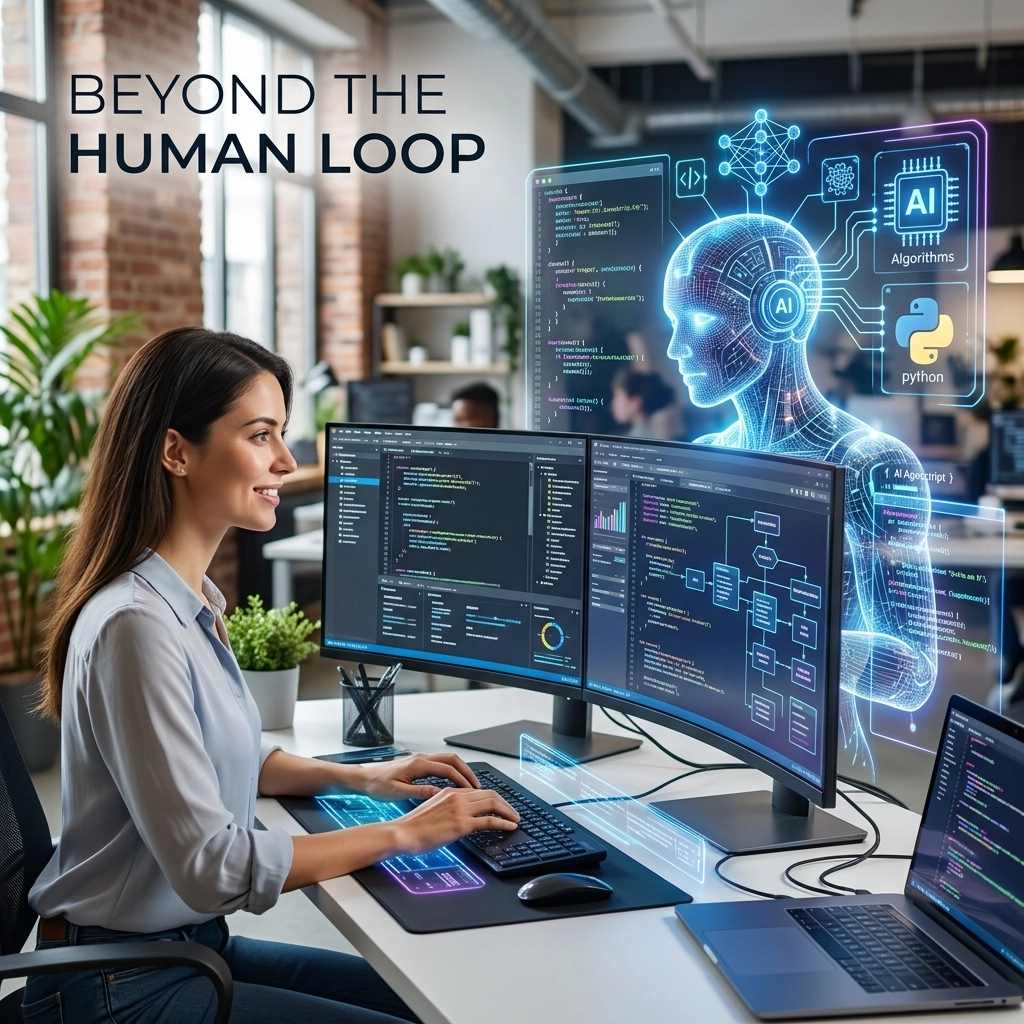
The era of the "Human-Only" development cycle is officially over. If you are still relying solely on manual hand-coding for every line of your enterprise architecture, you aren’t just behind the curve: you are operating in a previous technological epoch.
We have reached an inflection point in custom software development. The transition from AI as a "Co-pilot" (sitting quietly in the corner of an IDE) to AI as an "Agent" (autonomously executing tasks) has fundamentally shifted the ROI of building software. In 2026, the question isn't whether you should use AI; it’s whether you have the vision to hire ai agent development services to augment your human talent.
At NV Seeds, we’ve watched this evolution unfold. The shift is no longer about "replacing" developers; it’s about liberating high-level architects from the drudgery of boilerplate, regression testing, and deployment scripts. It’s about building a hybrid workforce where human creativity meets machine-grade execution speed.
The Evolution of the Developer Workforce
To understand where we are, we have to look at how we got here. The history of software engineering can be categorized into three distinct phases:
| Phase | Characterization | Primary Tooling | Human Involvement |
|---|---|---|---|
| Phase 1: The Scribes | Manual syntax and logic. | Text editors, early IDEs. | 100% Manual. |
| Phase 2: The Copilots | AI suggests code snippets. | GitHub Copilot, ChatGPT. | 90% Manual (Human reviews every line). |
| Phase 3: The Agents | Autonomous task execution. | AI Agent Development Services. | 20% Oversight (Human sets goals/guardrails). |
The jump from Phase 2 to Phase 3 is where the real value lies. While a Copilot waits for you to type, an AI agent takes a Jira ticket, scans the repository, writes the logic, runs the tests, and submits a pull request for your review. This is the Renaissance of Productivity.
Why You Should Hire AI Agents for Custom Software Development
When you hire dedicated developers today, you aren't just looking for people who can type fast. You are looking for teams that can orchestrate AI. Integrating AI agents into your custom software development lifecycle (SDLC) provides four non-negotiable advantages:
1. Velocity Without Burnout
AI agents don't sleep, and they don't get "code fatigue." They can handle the "heavy lifting" of the SDLC: planning, designing, and writing executable code: at a pace that would leave a human team exhausted. By automating the repetitive 80% of a project, your human developers can focus on the 20% that requires deep domain expertise and creative problem-solving.
2. Autonomous Debugging and Self-Healing Code
One of the most transformative features of modern AI agents is their ability to identify and fix bugs before a human even sees them. Instead of waiting for a QA tester to find a regression, an agent can automatically scan code for issues, identify the root cause, and generate patches in real-time. Think of it as an X-ray for your codebase that not only finds the fracture but resets the bone instantly.
3. Seamless Integration and Scaling
Modern agent frameworks support 500+ integrations and APIs. This allows you to connect your AI models to your existing business systems at scale. Whether it’s syncing with your CRM or managing complex cloud infrastructure, AI agents act as the connective tissue that makes your software "smart" from the inside out.
4. Rich Observability
Unlike "black box" AI of the past, production-grade agents offer rich observability with traces, logs, and workflow-level insights. You can see exactly why an agent made a specific decision. This transparency makes it easier to refine performance and ensures that the software stays within your defined business logic.
The "Human-in-the-Loop" Guardrails
A common anxiety for CTOs and product owners is the "runaway agent" scenario. Will the AI delete the database? Will it expose customer records? Will it quietly pass sensitive data through the wrong API? Those concerns are not paranoia. They are the right questions.
The answer lies in Human-in-the-Loop (HITL) guardrails combined with production-grade security architecture. When you work with NV Seeds, we implement pre-defined logic, approval steps, scoped permissions, and environment-level controls. The agent operates with autonomy inside a controlled "sandbox" or tightly defined execution boundary, but requires human sign-off for critical deployments, architectural changes, data access expansions, or policy exceptions.
This creates a Powerhouse dynamic:
- The Agent: Does the research, writes the code, runs the unit tests, and operates within approved security boundaries.
- The Human Developer: Reviews the summary, validates the logic against the business goal, and approves high-impact actions.
- The Security Layer: Enforces access controls, logs agent behavior, masks sensitive values, and blocks unsafe actions before they become incidents.
This workflow reduces the "Cost-per-task" significantly compared to traditional manual development without turning your software supply chain into the Wild West.
How AI Agents Manage Sensitive Data
This is where the conversation gets real. AI agents are only as safe as the system wrapped around them. A well-built agent should not have open access to every database, secret, file store, and third-party tool in your stack. That is not automation. That is a breach waiting for a calendar invite.
At NV Seeds, we design custom agent systems around the principle of least privilege. In plain English: each agent gets access only to the minimum data and tools required to complete a task.
That usually includes controls such as:
- Role-based and policy-based access control so agents can only interact with approved systems.
- Scoped credentials and short-lived tokens instead of hard-coded secrets.
- Data masking and redaction layers to prevent personally identifiable information (PII), financial records, or protected business data from being unnecessarily exposed to prompts or logs.
- Segregated environments for development, staging, and production so experiments never touch live data without authorization.
- Audit trails and trace logs so every high-risk action is visible, reviewable, and attributable.
In practice, this means an AI agent that drafts support responses may access ticket metadata but not full payment details. An internal coding agent may analyze schemas and test data but never pull unrestricted production records. That boundary matters. A lot.
The Role of Encryption in Agentic Systems
If permissions are the locks, encryption is the armored vault.
When we build AI-enabled systems, encryption protects sensitive data in two core states:
| Data State | What It Means | Why It Matters |
|---|---|---|
| Data in transit | Information moving between apps, APIs, cloud services, and agent workflows | Prevents interception during requests, responses, and system-to-system communication |
| Data at rest | Information stored in databases, backups, object storage, logs, and vector stores | Protects records if storage systems are exposed, copied, or improperly accessed |
For custom AI solutions, that often translates into:
- TLS-secured communication between services, APIs, and user interfaces.
- Encrypted databases and storage volumes for operational and historical data.
- Encrypted secrets management for API keys, credentials, and service tokens.
- Key rotation policies to reduce long-term exposure risk.
- Careful handling of embeddings and vector databases, because semantic search layers can still contain sensitive business context if left unprotected.
Here is the blunt truth: if your AI agent is smart but your encryption model is flimsy, you have built a race car with no brakes.
How NV Seeds Ensures Privacy and Compliance
Privacy and compliance are not "nice-to-have" checkboxes we tape on at the end of a sprint. They need to be designed into the architecture from day one. That is especially true when building custom AI agents for sectors handling customer data, internal intellectual property, regulated workflows, or cross-border operations.
At NV Seeds, we build with a privacy-by-design and security-by-design approach that includes:
- Data minimization: We collect, process, and expose only the data required for the use case.
- Model and vendor evaluation: We assess where prompts and outputs go, how providers handle retention, and whether data is used for model training.
- Environment isolation: Sensitive workloads can be separated by client, region, or compliance requirement.
- Human approval gates: High-risk actions involving production systems, exports, approvals, or regulated data require explicit review.
- Logging with controls: We preserve observability without dumping raw secrets or personal data into logs.
- Compliance-aware architecture: We align builds with the client’s legal, contractual, and industry obligations, whether that means stricter access policies, retention rules, consent controls, or audit readiness.
Depending on your business context, that can support readiness for frameworks and expectations tied to GDPR, HIPAA, SOC 2, internal governance policies, and enterprise procurement reviews. The exact checklist varies, but the principle stays the same: your AI agent should behave like a trusted operator, not an unsupervised intern with master keys.
The result is simple. You get the upside of agentic execution—speed, scale, lower cost-per-task—without gambling with customer trust, confidential data, or compliance exposure.
Strategic Hybridity: Hiring Developers vs. Building Agents
Should you stop hiring people? Absolutely not. In fact, to leverage AI agents effectively, you need more skilled humans than ever: they just need a different skill set.
At NV Seeds, we provide a dual-track solution. You can hire dedicated developers who are experts in AI orchestration, or you can engage our ai agent development services to build custom autonomous tools for your specific industry.
The ROI Calculation
Imagine a project that traditionally takes 6 months and a team of 5 developers.
- Manual Approach: 4,800 man-hours. High risk of human error. Constant context switching.
- Agent-Augmented Approach: 1,200 human man-hours + AI Agent orchestration. Faster time-to-market. 30-50% reduction in total cost.
The "bottom line" is simple: Companies that adopt agentic workflows will out-build and out-innovate those stuck in the manual loop.
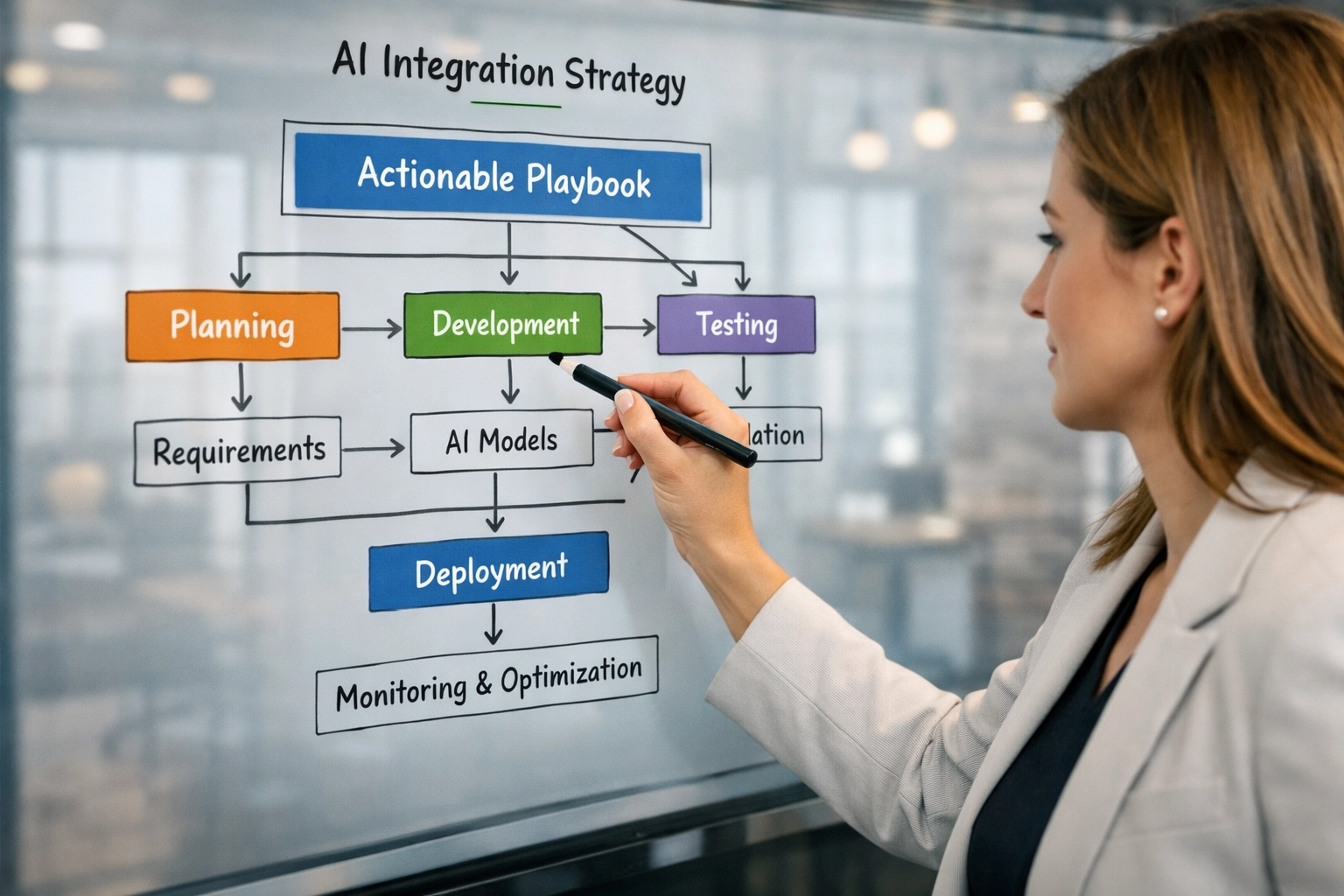
The AI Agent Implementation Playbook
If you’re ready to transition your custom software development to an agentic model, follow this step-by-step playbook:
- Identify Low-Creativity/High-Volume Tasks: Start by delegating unit testing, documentation, and boilerplate creation to AI agents.
- Establish Guardrails: Define exactly where the agent needs human approval (e.g., API key changes, database migrations).
- Implement Observability Tools: Ensure you have traces and logs in place to monitor the agent's "reasoning" process.
- Upskill Your Dedicated Team: Move your developers from "coders" to "reviewers and architects."
- Iterate Based on ROI: Measure the time saved per sprint and reinvest that "time-capital" into new feature development.
Partner with NV Seeds
Transitioning to an AI-driven development model is a significant shift. You need a partner who understands both the technical services required and the human talent needed to manage them.
Whether you are looking to build a SaaS platform or need digital transformation consulting, NV Seeds is here to bridge the gap between human intelligence and artificial autonomy.
FAQ: Hiring AI Agents for Software Development
Is it expensive to start with AI agent development?
While there is an initial setup cost for the infrastructure and integration, the long-term ROI is massive. You save significantly on "cost-per-task" by automating the most time-consuming parts of the SDLC.
Can AI agents replace my entire development team?
No. AI agents lack the high-level strategic thinking, empathy for the end-user, and complex problem-solving abilities of humans. They are best used as an "augmentation" force.
How do I know if my project is right for AI agents?
If your project involves repetitive coding patterns, extensive testing requirements, or complex data integrations, it is a prime candidate. Contact us for a consultation to evaluate your specific use case.
What about security?
Security is foundational in every custom AI solution we build. At NV Seeds, we protect sensitive data through scoped agent permissions, encryption for data in transit and at rest, secrets management, audit logging, and human approval checkpoints for high-risk actions. We also design for privacy and compliance from the start, with controls that support enterprise requirements around data handling, retention, and regulatory alignment.
The future of software isn't just written by humans; it's orchestrated by them. By embracing ai agent development services, you aren't just building faster: you're building smarter. Ready to get started? Let’s build the future together.
Leave a Reply