By mid-2026, the question isn’t whether you should use AI agents; it’s whether you’re going to build a temporary shack or a skyscraper.
The market is currently flooded with "easy-to-deploy" tools like OpenClaw, promising to turn every employee into an automation wizard. And while openclaw ai automation is a fantastic gateway drug for solo developers and small teams, the enterprise reality is significantly more complex. When you're managing cross-departmental workflows, sensitive customer data, and high-stakes financial transactions, a "one-size-fits-all" platform can quickly become a bottleneck.
At NV Seeds, we’ve spent the last few years watching companies oscillate between the allure of off-the-shelf open-source tools and the raw power of custom-built solutions. Let’s cut through the marketing noise and find out where your budget actually belongs.
The Automation Inflection Point: Why 2026 is Different
We’ve moved past the "Phase 1" of AI, the era of simple chatbots and basic text generation. We are now firmly in the Agentic Renaissance. This is the era where AI doesn't just talk; it acts.
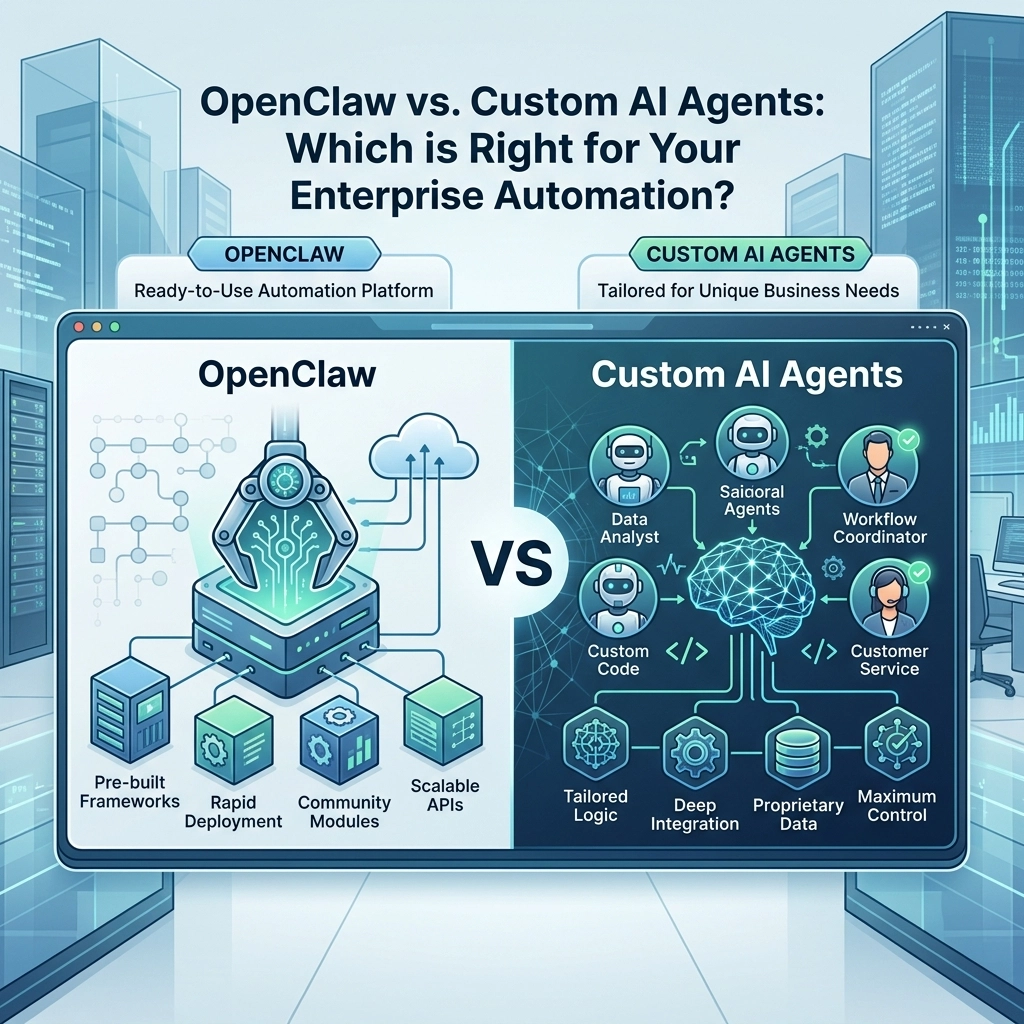
In this landscape, OpenClaw has emerged as a powerhouse for individual productivity. It’s the "Swiss Army Knife" of 2026, versatile, self-hosted, and excellent for personal task management. But for an enterprise, bringing OpenClaw into a global infrastructure is like trying to run a factory using only hand tools. It works for a few tasks, but it doesn't scale to an assembly line.

OpenClaw: The Local Hero of Personal Automation
OpenClaw is essentially an open-source, self-hosted orchestrator for AI agents. It’s designed for the power user who wants to connect their local LLMs (like Llama 4 or Claude 4) to their personal files, emails, and browser.
The Pros for Individuals:
- Zero Cost (Mostly): If you run it locally, your only cost is the electricity powering your GPU.
- Privacy: Since it’s self-hosted, your data never has to leave your local network.
- Flexibility: It’s built for hackers. If you can code it, OpenClaw can probably execute it.
However, for a dedicated team looking to streamline multi-million dollar operations, the "do-it-yourself" nature of OpenClaw introduces significant risk. It lacks the governance, audit trails, and reliability that modern IT departments demand.
Custom AI Agents: The Enterprise Powerhouse
When we talk about Custom AI Agents at NV Seeds, we’re talking about bespoke software architectures built from the ground up to solve a specific business problem. These aren't just wrappers around a GPT model; they are integrated systems that live inside your existing tech stack.
1. Governance and Decision Boundaries
In an enterprise setting, you can’t just let an agent "figure it out." You need hard rails. If an agent is processing a refund for a customer, it needs to follow specific accounting rules, check against fraud databases, and log every single decision. Custom agents allow us to build these "decision boundaries" into the core logic, ensuring compliance with SOC 2 or GDPR standards.
2. Deep Integration (Beyond the API)
While OpenClaw relies on public APIs and generic connectors, a custom agent built by specialized developers can tap directly into your proprietary legacy systems. Whether it’s an on-premise ERP or a niche industry database, a custom solution offers a level of "surgical" integration that off-the-shelf tools simply can't match.
3. Reliability and "The Five Nines"
OpenClaw is subject to the whims of your local environment. If your server goes down or a specific Python dependency breaks, your automation stops. Custom agents are built on enterprise-grade infrastructure (like AWS or Azure) with auto-scaling, failovers, and 99.999% uptime guarantees.
Comparison: OpenClaw vs. Custom AI Agents
| Feature | OpenClaw AI Automation | Custom Enterprise Agents (NV Seeds) |
|---|---|---|
| Primary User | Individual / Small Tech Team | Enterprise / Global Corporation |
| Setup Time | Fast (Hours) | Moderate (Weeks) |
| Scalability | Limited by local hardware | Infinite (Cloud-native) |
| Governance | Minimal / Manual | Built-in audit trails & compliance |
| Security | Self-managed (High risk) | Enterprise-grade encryption & SSO |
| Maintenance | DIY (You fix the bugs) | Managed by NV Seeds |
| ROI Potential | High for micro-tasks | Massive for core business processes |
Real-World Scenario: The "Inventory Chaos" Correction
Imagine a global retail brand, let’s call them AuraStyle.
The OpenClaw Approach:
AuraStyle’s head of logistics tries to use openclaw ai automation to manage warehouse stock levels. He sets up a local agent to "watch" the inventory spreadsheet and send emails when items are low. It works for a week. Then, the server restarts for a Windows update, the agent goes offline, and AuraStyle misses a critical reorder for their best-selling product during a holiday rush. Cost? Thousands in lost sales and a very stressed logistics head.
The Custom Agent Approach:
AuraStyle partners with NV Seeds to build a Gen AI Agent. This agent is integrated directly into their SAP system and real-time shipping APIs.
- It predicts stockouts before they happen using historical data.
- It automatically negotiates pricing with three different suppliers based on current market rates.
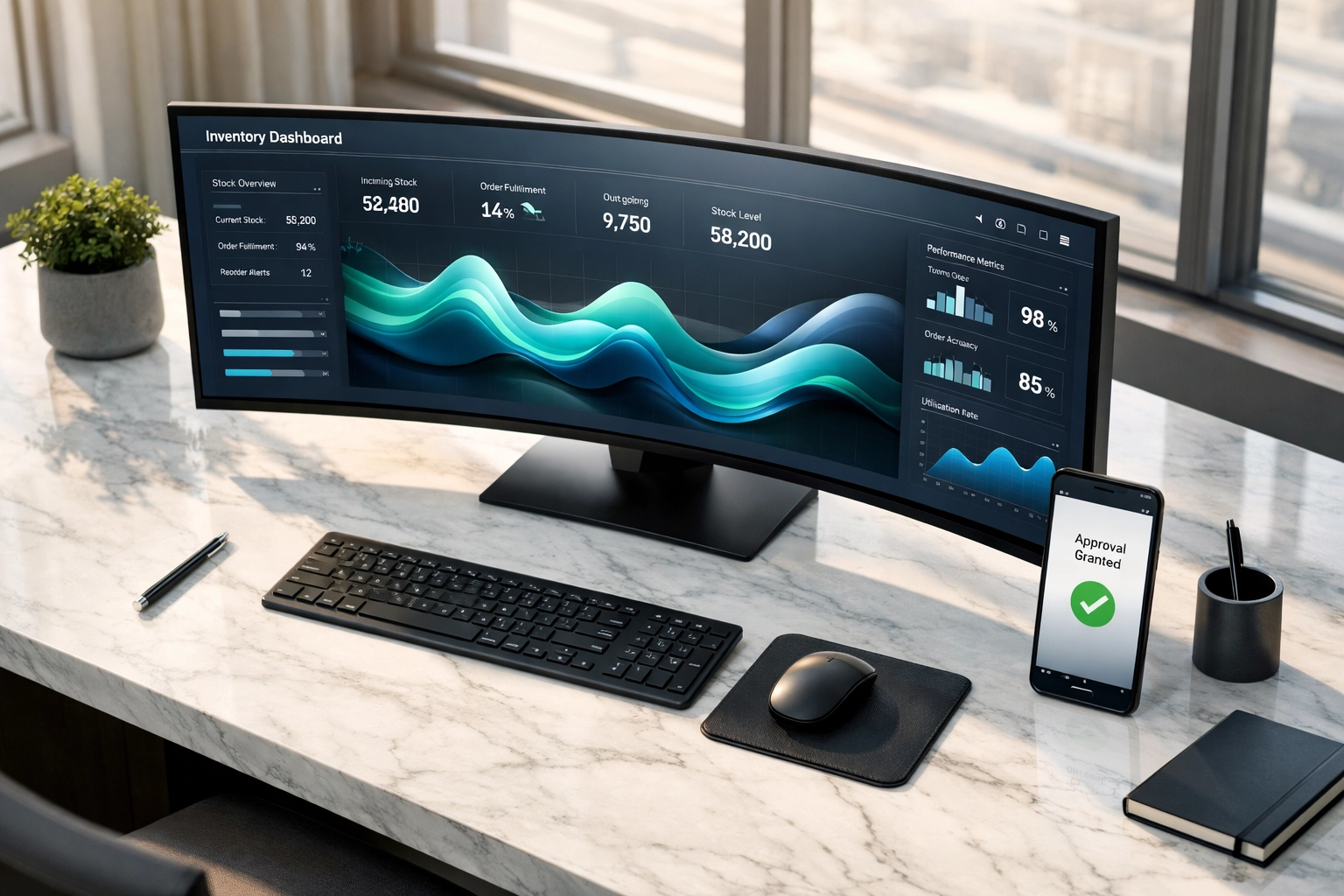
- It generates a compliance-ready purchase order and sends it to the CFO for a one-click approval on their mobile app.
- Every action is logged in a secure dashboard for the annual audit.
The result? A 22% reduction in overstock costs and zero missed reorders. That is the difference between a tool and a solution.
Case Study: Transforming Logistics for a UK-Based Manufacturer
In early 2026, we worked with a leading manufacturer in the UK (check out our other insights on the UK market). They were struggling with a manual "Request for Quote" (RFQ) process that took three days per customer.
We replaced their manual entry with a Custom AI Agent. Unlike generic platforms, this agent was trained on their specific pricing proprietary logic and historical "win/loss" data.
- Before: 72-hour turnaround time.
- After: 4-minute turnaround time.
- The Bottom Line: They saw a 40% increase in quote-to-contract conversion within the first quarter.
While they considered using an open-source framework, the need for platform independence and high-level security made a custom NV Seeds solution the only viable choice.
The NV Seeds Playbook: Choosing Your Path
If you are currently deciding where to invest your automation budget, follow this simple checklist:
- Does the workflow touch customer data or financial transactions?
- If yes: Build Custom.
- Does the automation need to run 24/7 without human intervention?
- If yes: Build Custom.
- Is this for a single person's productivity or a team-wide process?
- Single person: Use OpenClaw. Team-wide: Build Custom.
- Do you have a dedicated DevOps team to maintain the AI infrastructure?
- If no: Partner with a service provider for a managed custom agent.

FAQ: Navigating the AI Automation Landscape
Q: Is OpenClaw really free?
A: The software is open-source, but the "cost" comes in the form of your time, the hardware you run it on, and the potential losses if the system fails during a critical task.
Q: Can I start with OpenClaw and move to a custom agent later?
A: Absolutely. Many of our clients start by prototyping with open-source tools to prove the concept. Once they realize the value, they contact us to build a robust, scalable version that can handle enterprise loads.
Q: How long does it take to build a custom AI agent?
A: Depending on the complexity and the number of integrations, a Minimum Viable Product (MVP) can usually be deployed in 4 to 8 weeks.
Q: What is the biggest risk of using open-source AI in a large company?
A: Shadow IT. When departments start running their own unmanaged AI instances, it creates massive security holes and "data silos" that are impossible for the IT department to track or secure.
The Bottom Line
OpenClaw is a brilliant piece of software for the 2026 tinkerer. It’s fun, it’s fast, and it’s private. But for the enterprise, "fun and fast" isn't enough. You need reliable, compliant, and scalable.
The future of your business shouldn't depend on a self-hosted script. It should depend on an architecture built to win. Ready to stop tinkering and start scaling? Let's talk about building your bespoke AI workforce.
Leave a Reply