If you’re still building your SaaS platform with a "cloud-only" mindset, you’re essentially writing a blank check to Big Tech every month.
By mid-2026, the honeymoon phase of the AI gold rush has ended. The reality check? The "Cloud Tax." As LLM providers hiked prices by 30% this year to offset staggering GPU costs, the savvy founders and enterprise leaders we work with at NV Seeds stopped asking "How do we add AI?" and started asking "How do we afford it?"
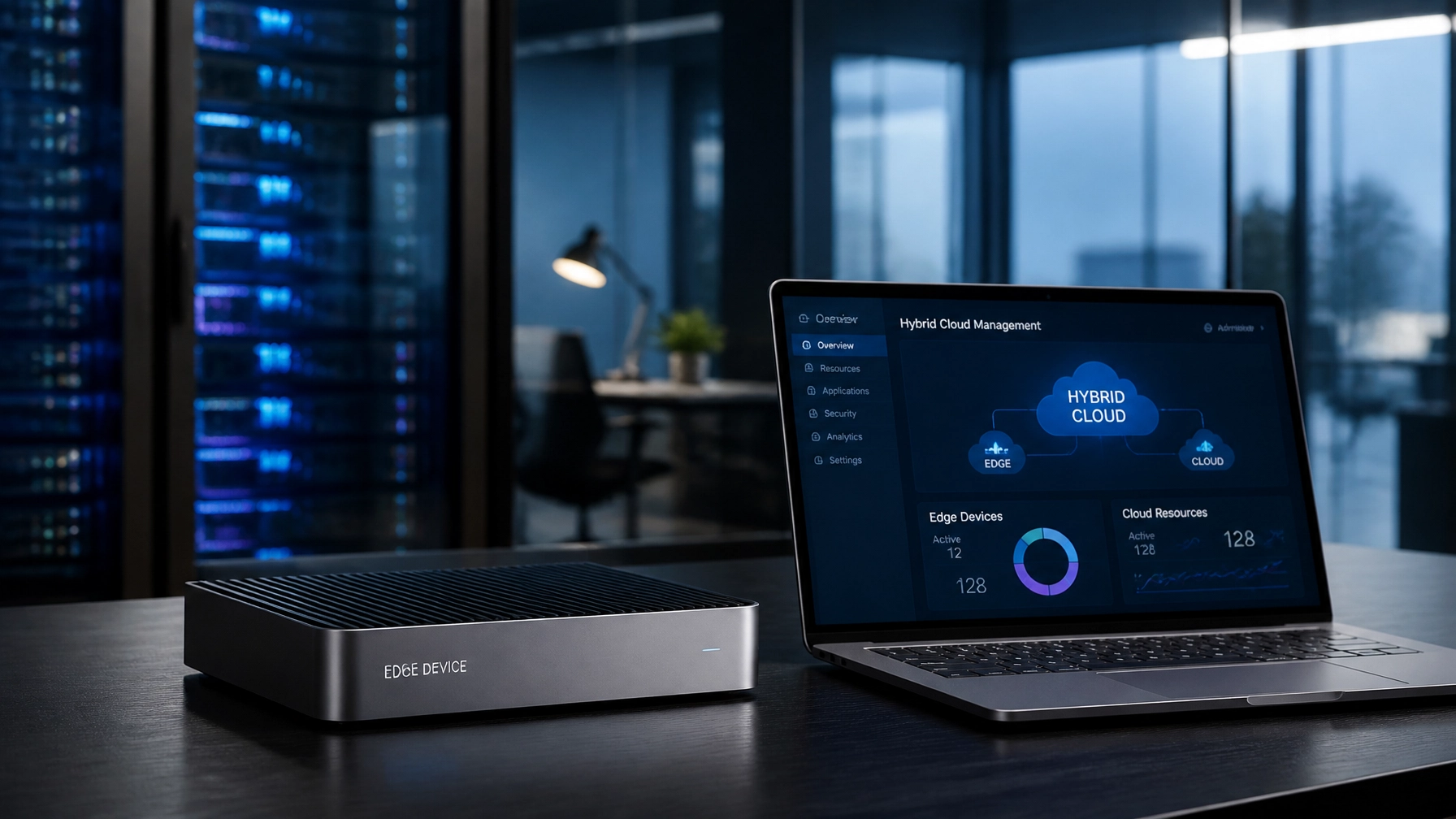
Welcome to the era of Hybrid AI Infrastructure. It is the single most important architectural shift in saas platform development this decade. It’s no longer just about the cloud; it’s about a sophisticated dance between local edge processing and heavy-duty cloud LLMs.
The 2026 Inflection Point: Why "Cloud-Only" is the New Legacy
For the last three years, we’ve been living in a centralized world. You sent every prompt to a remote server, waited for a response, and paid per token. It was simple, but it was also slow, expensive, and a privacy nightmare.
Today, we’ve hit what we call the Hybrid Renaissance. We are seeing a massive move toward digital transformation consulting that prioritizes "Intelligence at the Edge."
The Evolution of SaaS AI (A 3-Phase History)
- Phase 1 (2023-2024): The API Wrapper. SaaS products were just skins over OpenAI or Anthropic. Low differentiation, high cost.
- Phase 2 (2024-2025): The Fine-Tuning Era. Companies started training smaller, specialized models on their own data but still hosted them in the cloud.
- Phase 3 (2026): Hybrid Orchestration. The current standard. SaaS platforms now intelligently route tasks. A 7B parameter model on the user’s local device handles basic UI logic, while a massive 2T parameter cloud model handles the deep reasoning.
The ROI of Hybrid: Why Your CFO Will Thank You
If you’re managing a custom software development project, the bottom line is your North Star. Hybrid AI infrastructure delivers ROI across three critical vectors:
1. Cost Optimization (Taming the Token)
Cloud-only AI is a variable cost that scales linearly with your user base. In 2026, that’s a recipe for margin death. By offloading 60-70% of "low-stakes" inference to local devices or private edge clusters, you turn a variable cloud cost into a fixed infrastructure investment.
Bottom Line: We’ve seen clients reduce their monthly LLM bills by up to 45% by implementing local pre-processing.
2. Privacy as a Competitive Advantage
In the age of the ISO 42001 (the new global AI management standard), data residency isn't just a legal checkbox, it's a sales pitch.
- The Hybrid Edge: With hybrid infra, sensitive PII (Personally Identifiable Information) never has to leave the user’s firewall. The local model "scrubs" or "anonymizes" data before it ever touches the public cloud.
3. Latency: The "Kitchen Delivery" Metaphor
Think of cloud AI like ordering a gourmet meal from a restaurant across town. Even with a fast car (high-speed internet), you’re at the mercy of traffic.
Hybrid AI is like having a private chef in your kitchen. The chef (local model) prepares the appetizers immediately (UI feedback, text completion), while the main course (complex analysis) is being delivered from the restaurant (cloud). This "Zero-Latency" feel is what separates top-tier SaaS platforms from the laggards.
Case Study: Re-Architecting a Healthcare SaaS for 2026
The Client: A global telemedicine platform serving 150+ clinics.
The Problem: Their "AI Scribe" feature was costing $40,000/month in API fees and was struggling with GDPR compliance because patient audio was being sent to a third-party cloud.
The NV Seeds Solution:
We implemented a hybrid architecture using our dedicated team approach:
- Local Node: We deployed an optimized SLM (Small Language Model) that runs on the doctor’s workstation to handle real-time transcription and data scrubbing.
- Cloud Hub: Only the anonymized, structured text is sent to a private cloud infrastructure service for deep medical coding and diagnosis suggestions.
The Result:
- 62% Reduction in cloud compute costs.
- Instant UI response (0ms network lag for transcription).
- Full Compliance with strict data residency laws in 12 countries.
The Hybrid AI Playbook: How to Get Started
Moving to a hybrid model isn't a "flip the switch" moment; it's a strategic migration. Here is the checklist we use with our enterprise clients:
- Audit Your Workloads: Which 40% of your AI tasks are repetitive or low-complexity? These are your candidates for local edge processing.
- Select Your "Little" Model: Evaluate SLMs like Phi-3 or specialized Llama-3 variants that can run on consumer-grade hardware.
- Invest in an Orchestrator: You need a routing layer that decides, in real-time, whether a prompt stays local or goes to the cloud based on complexity and cost.
- Secure Your Data Plane: Ensure your custom software development includes end-to-end encryption between the edge and the hub.
Frequently Asked Questions
Isn't local AI too slow for phones or older laptops?
Not in 2026. Thanks to NPU (Neural Processing Unit) advancements in almost every smartphone and laptop released in the last two years, running a 7B parameter model is now faster than a round-trip to a cloud server.
Is hybrid infrastructure harder to maintain?
Yes, it adds a layer of complexity to your DevOps. This is why many companies hire developers who specialize in hybrid orchestration rather than just full-stack web development.
How does this impact my pricing model?
Most SaaS companies are moving to a Hybrid Pricing Model (a base subscription for edge features + a metered "power user" fee for cloud-heavy tasks). This aligns your revenue directly with your infrastructure costs.
The Bottom Line
The "Intelligence Renaissance" is here, and it is decentralized. By adopting a hybrid AI infrastructure, you aren't just saving money: you’re building a more resilient, private, and faster platform.
Ready to re-architect your SaaS for the 2026 landscape? At NV Seeds, we don’t just build apps; we transform visions into powerful digital solutions. Let’s talk about your next project.
Leave a Reply