Author: admin

  • Why an AI Agent Alone Isn’t a Solution: The “Missing Pieces” in Your Digital Transformation Strategy

    Why an AI Agent Alone Isn’t a Solution: The “Missing Pieces” in Your Digital Transformation Strategy

    By April 2026, the "AI gold rush" has shifted from a frantic land grab to a calculated consolidation. If you’ve spent the last eighteen months chasing the promise of autonomous AI agents, you’ve likely hit a wall. It’s a familiar story: the pilot program showed a 40% productivity spike, the board was thrilled, and then: crickets. The transition from a "cool demo" to a core business driver is where most digital transformation strategies go to die.

    Here’s the hard truth: An AI agent, no matter how sophisticated the underlying LLM, is not a strategy. It is a component.

    At NV Seeds, we’ve watched enterprise leaders treat AI agents like "magic wands" they can wave over broken processes to fix them. But an agent without an ecosystem is like a high-performance Ferrari engine sitting on a wooden pallet; it’s powerful, it makes a lot of noise, but it isn’t taking you anywhere.

    The Great Disconnect: Why Hype Doesn't Equal ROI

    We are currently at an Inflection Point. Organizations are realizing that while AI agents offer a theoretical 35-45% boost in task-level productivity, they often fail to move the needle on top-line revenue or bottom-line efficiency when deployed in isolation.

    The problem isn't the AI; it's the Missing Pieces.

    The Evolution of Automation (A Quick History Lesson)

    To understand where we are, we have to look at how we got here:

    • Phase 1: The Script Era (2010-2020): Rigid RPA (Robotic Process Automation) that broke if a pixel moved two inches to the left.
    • Phase 2: The Chatbot Renaissance (2022-2023): Generative AI allowed us to talk to our data, but the "data" was often a static PDF.
    • Phase 3: The Agentic Shift (2024-Present): Agents that can "reason," "plan," and "execute."

    We are now entering Phase 4: The Integrated Ecosystem, where the focus moves away from the agent itself and toward the infrastructure that supports it.

    Software architect overseeing integrated AI infrastructure and digital transformation ecosystem.


    Missing Piece #1: The Grounding Problem & Legacy Friction

    Most AI agents are suffering from a "closed world" syndrome. They are brilliant at reasoning within the confines of their training data, but they are functionally blind to your actual business operations.

    1. Static Knowledge in a Dynamic World: If your agent is assisting with SaaS platform development, but it doesn't have real-time access to your Jira backlog, your current AWS spend, or the latest security patch, it’s giving you advice based on a world that no longer exists.
    2. The Legacy Chain: Your business likely runs on a mix of modern cloud tools and "the system that Dave built in 2008" which holds all the critical customer data. AI agents struggle with these fragmented tech stacks. Without custom middleware and expert software development, the agent becomes just another siloed tool.

    Missing Piece #2: The UI/UX Blind Spot

    There is a dangerous assumption that "the chat interface is the only UI we’ll ever need." This is a fallacy.

    For complex custom software development, a text box is an inefficient way to manage a project. If an AI agent is refactoring code, you don’t want to read a 1,000-word explanation; you want a visual diff, a performance impact chart, and a "Merge" button.

    Human-centric design is not optional. An AI agent needs a "cockpit": a dedicated UI that allows humans to monitor, steer, and override the agent’s actions without needing to write 50-word prompts every five minutes.

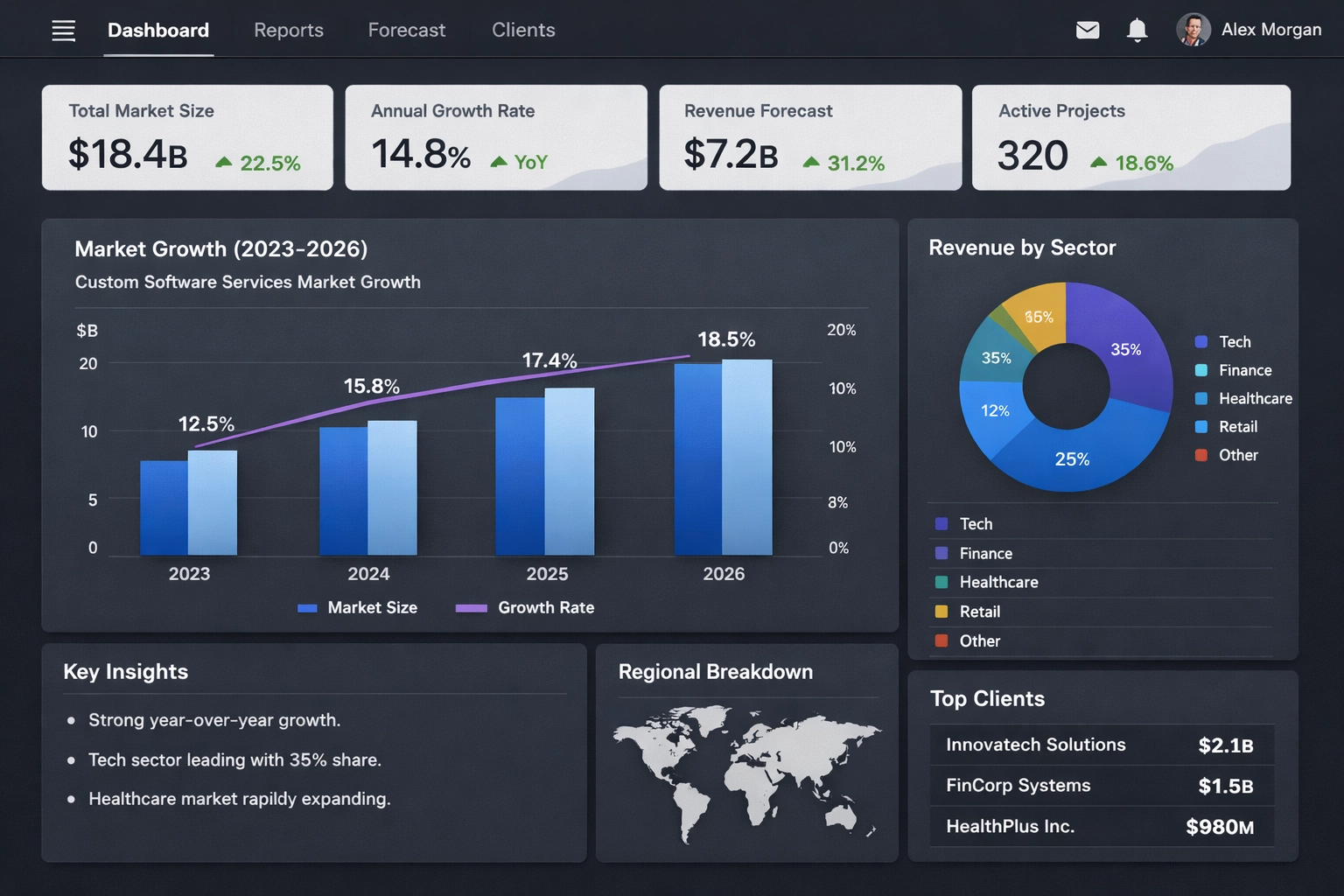
    A professional using a custom dashboard UI to monitor and control autonomous AI agents.


    Missing Piece #3: The "Human-in-the-Loop" Mandate

    Trust is the ultimate currency of digital transformation. If your AI agent is handling content transformation or financial reconciliation, you cannot afford a "hallucination" that costs $50,000.

    Feature AI Agent Alone NV Seeds Hybrid Approach
    Decision Logic Probabilistic (Best guess) Deterministic + Probabilistic
    Compliance Hard to audit Full audit logs & Human oversight
    Edge Cases Likely to hallucinate Escalates to human expert
    Security Susceptible to prompt injection Multi-layer guardrails

    A "Human-in-the-Loop" (HITL) approach isn't a sign of weakness; it’s a requirement for security and compliance. At NV Seeds, we design systems where the AI does the heavy lifting (the "drudge work"), but the final 5%: the nuanced, high-stakes decision-making: is served up to a human expert in an easy-to-digest format.

    How NV Seeds Bridges the Gap

    We don't just sell you an "agent." We build the architecture that makes the agent useful. Our approach to Gen AI Agent Development involves four critical pillars:

    1. Strategic Alignment: We start with the Why. Before a single line of code is written, we align the agent’s goals with your ROI metrics.
    2. Legacy Integration: Our dedicated teams build the "connectors" that allow AI to talk to your old SQL databases and your new Snowflake instances seamlessly.
    3. Security Architecture: We implement robust guardrails that prevent data leakage and ensure your proprietary IP stays yours.
    4. Agile Refinement: AI systems aren't "shipped"; they are "nurtured." We use our proven agile methodology to constantly retrain and tune your agents based on real-world feedback.

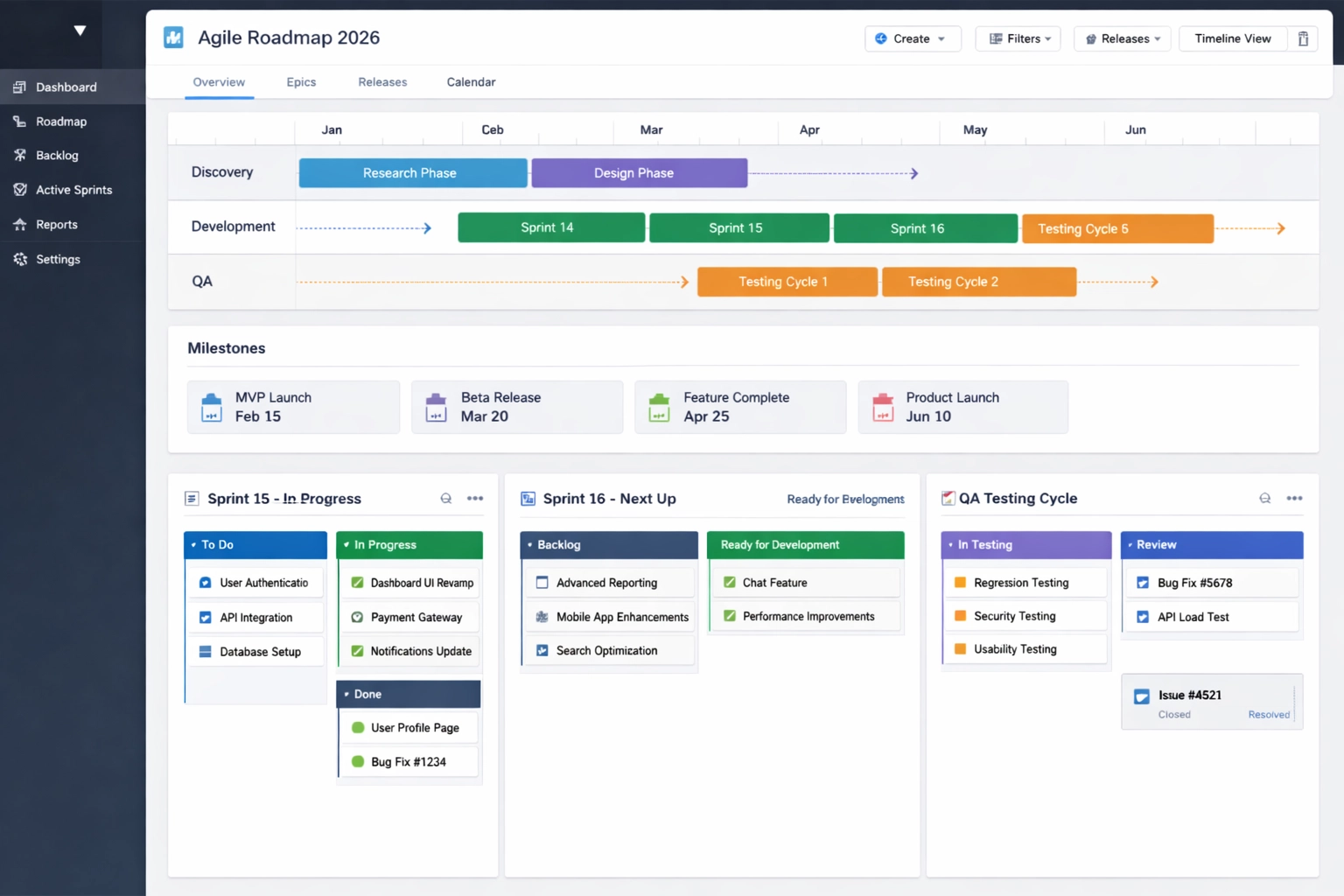
    Business strategist aligning custom software development with AI agent digital transformation goals.


    Your 2026 Playbook: Moving Beyond the Bot

    If you’re ready to turn your AI experiments into a powerhouse of efficiency, here is your action plan:

    • Audit Your Data Pipes: Ensure your AI has structured, real-time access to the data it needs. No more static knowledge bases.
    • Define the "Escalation Path": Explicitly map out what happens when the AI is only 70% confident. Who does it talk to? How is that feedback captured?
    • Build the Interface, Not Just the Agent: Invest in custom UI/UX that allows your team to interact with the AI’s output efficiently.
    • Focus on "Cost-per-Task": Stop measuring AI success by "engagement" and start measuring it by the reduction in cost-per-successful-outcome.

    Frequently Asked Questions

    Q: Won’t adding a human-in-the-loop slow down the process?
    Actually, it speeds up the outcome. An autonomous agent that makes a mistake requires hours of manual cleanup. A human-steered agent prevents the mistake from happening in the first place, ensuring a higher "first-time-right" ratio.

    Q: Is it expensive to integrate AI agents with legacy systems?
    The initial investment is higher than a "plug-and-play" bot, but the cost to develop an app that actually works is always lower than the cost of a failed digital transformation. ROI is found in integration, not isolation.

    Q: How do we start if our data is a mess?
    That’s exactly where we come in. Most of our case studies begin with a "Data Hygiene" phase. You can't have an intelligent agent without intelligent data.

    The Bottom Line

    AI agents are a transformative technology, but they are not a "set it and forget it" solution. To truly win in the current landscape, you need to combine the raw power of AI with strategic human oversight, custom UI, and deep system integration.

    Ready to build an AI strategy that actually scales? Let’s talk.

  • Beyond the Human Loop: Why You Should Hire AI Agents for Custom Software Development

    Beyond the Human Loop: Why You Should Hire AI Agents for Custom Software Development

    The era of the "Human-Only" development cycle is officially over. If you are still relying solely on manual hand-coding for every line of your enterprise architecture, you aren’t just behind the curve: you are operating in a previous technological epoch.

    We have reached an inflection point in custom software development. The transition from AI as a "Co-pilot" (sitting quietly in the corner of an IDE) to AI as an "Agent" (autonomously executing tasks) has fundamentally shifted the ROI of building software. In 2026, the question isn't whether you should use AI; it’s whether you have the vision to hire ai agent development services to augment your human talent.

    At NV Seeds, we’ve watched this evolution unfold. The shift is no longer about "replacing" developers; it’s about liberating high-level architects from the drudgery of boilerplate, regression testing, and deployment scripts. It’s about building a hybrid workforce where human creativity meets machine-grade execution speed.

    The Evolution of the Developer Workforce

    To understand where we are, we have to look at how we got here. The history of software engineering can be categorized into three distinct phases:

    Phase Characterization Primary Tooling Human Involvement
    Phase 1: The Scribes Manual syntax and logic. Text editors, early IDEs. 100% Manual.
    Phase 2: The Copilots AI suggests code snippets. GitHub Copilot, ChatGPT. 90% Manual (Human reviews every line).
    Phase 3: The Agents Autonomous task execution. AI Agent Development Services. 20% Oversight (Human sets goals/guardrails).

    The jump from Phase 2 to Phase 3 is where the real value lies. While a Copilot waits for you to type, an AI agent takes a Jira ticket, scans the repository, writes the logic, runs the tests, and submits a pull request for your review. This is the Renaissance of Productivity.

    Why You Should Hire AI Agents for Custom Software Development

    When you hire dedicated developers today, you aren't just looking for people who can type fast. You are looking for teams that can orchestrate AI. Integrating AI agents into your custom software development lifecycle (SDLC) provides four non-negotiable advantages:

    1. Velocity Without Burnout

    AI agents don't sleep, and they don't get "code fatigue." They can handle the "heavy lifting" of the SDLC: planning, designing, and writing executable code: at a pace that would leave a human team exhausted. By automating the repetitive 80% of a project, your human developers can focus on the 20% that requires deep domain expertise and creative problem-solving.

    2. Autonomous Debugging and Self-Healing Code

    One of the most transformative features of modern AI agents is their ability to identify and fix bugs before a human even sees them. Instead of waiting for a QA tester to find a regression, an agent can automatically scan code for issues, identify the root cause, and generate patches in real-time. Think of it as an X-ray for your codebase that not only finds the fracture but resets the bone instantly.

    3. Seamless Integration and Scaling

    Modern agent frameworks support 500+ integrations and APIs. This allows you to connect your AI models to your existing business systems at scale. Whether it’s syncing with your CRM or managing complex cloud infrastructure, AI agents act as the connective tissue that makes your software "smart" from the inside out.

    4. Rich Observability

    Unlike "black box" AI of the past, production-grade agents offer rich observability with traces, logs, and workflow-level insights. You can see exactly why an agent made a specific decision. This transparency makes it easier to refine performance and ensures that the software stays within your defined business logic.

    The "Human-in-the-Loop" Guardrails

    A common anxiety for CTOs and product owners is the "runaway agent" scenario. Will the AI delete the database? Will it expose customer records? Will it quietly pass sensitive data through the wrong API? Those concerns are not paranoia. They are the right questions.

    The answer lies in Human-in-the-Loop (HITL) guardrails combined with production-grade security architecture. When you work with NV Seeds, we implement pre-defined logic, approval steps, scoped permissions, and environment-level controls. The agent operates with autonomy inside a controlled "sandbox" or tightly defined execution boundary, but requires human sign-off for critical deployments, architectural changes, data access expansions, or policy exceptions.

    This creates a Powerhouse dynamic:

    • The Agent: Does the research, writes the code, runs the unit tests, and operates within approved security boundaries.
    • The Human Developer: Reviews the summary, validates the logic against the business goal, and approves high-impact actions.
    • The Security Layer: Enforces access controls, logs agent behavior, masks sensitive values, and blocks unsafe actions before they become incidents.

    This workflow reduces the "Cost-per-task" significantly compared to traditional manual development without turning your software supply chain into the Wild West.

    How AI Agents Manage Sensitive Data

    This is where the conversation gets real. AI agents are only as safe as the system wrapped around them. A well-built agent should not have open access to every database, secret, file store, and third-party tool in your stack. That is not automation. That is a breach waiting for a calendar invite.

    At NV Seeds, we design custom agent systems around the principle of least privilege. In plain English: each agent gets access only to the minimum data and tools required to complete a task.

    That usually includes controls such as:

    • Role-based and policy-based access control so agents can only interact with approved systems.
    • Scoped credentials and short-lived tokens instead of hard-coded secrets.
    • Data masking and redaction layers to prevent personally identifiable information (PII), financial records, or protected business data from being unnecessarily exposed to prompts or logs.
    • Segregated environments for development, staging, and production so experiments never touch live data without authorization.
    • Audit trails and trace logs so every high-risk action is visible, reviewable, and attributable.

    In practice, this means an AI agent that drafts support responses may access ticket metadata but not full payment details. An internal coding agent may analyze schemas and test data but never pull unrestricted production records. That boundary matters. A lot.

    The Role of Encryption in Agentic Systems

    If permissions are the locks, encryption is the armored vault.

    When we build AI-enabled systems, encryption protects sensitive data in two core states:

    Data State What It Means Why It Matters
    Data in transit Information moving between apps, APIs, cloud services, and agent workflows Prevents interception during requests, responses, and system-to-system communication
    Data at rest Information stored in databases, backups, object storage, logs, and vector stores Protects records if storage systems are exposed, copied, or improperly accessed

    For custom AI solutions, that often translates into:

    • TLS-secured communication between services, APIs, and user interfaces.
    • Encrypted databases and storage volumes for operational and historical data.
    • Encrypted secrets management for API keys, credentials, and service tokens.
    • Key rotation policies to reduce long-term exposure risk.
    • Careful handling of embeddings and vector databases, because semantic search layers can still contain sensitive business context if left unprotected.

    Here is the blunt truth: if your AI agent is smart but your encryption model is flimsy, you have built a race car with no brakes.

    How NV Seeds Ensures Privacy and Compliance

    Privacy and compliance are not "nice-to-have" checkboxes we tape on at the end of a sprint. They need to be designed into the architecture from day one. That is especially true when building custom AI agents for sectors handling customer data, internal intellectual property, regulated workflows, or cross-border operations.

    At NV Seeds, we build with a privacy-by-design and security-by-design approach that includes:

    • Data minimization: We collect, process, and expose only the data required for the use case.
    • Model and vendor evaluation: We assess where prompts and outputs go, how providers handle retention, and whether data is used for model training.
    • Environment isolation: Sensitive workloads can be separated by client, region, or compliance requirement.
    • Human approval gates: High-risk actions involving production systems, exports, approvals, or regulated data require explicit review.
    • Logging with controls: We preserve observability without dumping raw secrets or personal data into logs.
    • Compliance-aware architecture: We align builds with the client’s legal, contractual, and industry obligations, whether that means stricter access policies, retention rules, consent controls, or audit readiness.

    Depending on your business context, that can support readiness for frameworks and expectations tied to GDPR, HIPAA, SOC 2, internal governance policies, and enterprise procurement reviews. The exact checklist varies, but the principle stays the same: your AI agent should behave like a trusted operator, not an unsupervised intern with master keys.

    The result is simple. You get the upside of agentic execution—speed, scale, lower cost-per-task—without gambling with customer trust, confidential data, or compliance exposure.

    Strategic Hybridity: Hiring Developers vs. Building Agents

    Should you stop hiring people? Absolutely not. In fact, to leverage AI agents effectively, you need more skilled humans than ever: they just need a different skill set.

    At NV Seeds, we provide a dual-track solution. You can hire dedicated developers who are experts in AI orchestration, or you can engage our ai agent development services to build custom autonomous tools for your specific industry.

    The ROI Calculation

    Imagine a project that traditionally takes 6 months and a team of 5 developers.

    • Manual Approach: 4,800 man-hours. High risk of human error. Constant context switching.
    • Agent-Augmented Approach: 1,200 human man-hours + AI Agent orchestration. Faster time-to-market. 30-50% reduction in total cost.

    The "bottom line" is simple: Companies that adopt agentic workflows will out-build and out-innovate those stuck in the manual loop.

    The AI Agent Implementation Playbook

    If you’re ready to transition your custom software development to an agentic model, follow this step-by-step playbook:

    1. Identify Low-Creativity/High-Volume Tasks: Start by delegating unit testing, documentation, and boilerplate creation to AI agents.
    2. Establish Guardrails: Define exactly where the agent needs human approval (e.g., API key changes, database migrations).
    3. Implement Observability Tools: Ensure you have traces and logs in place to monitor the agent's "reasoning" process.
    4. Upskill Your Dedicated Team: Move your developers from "coders" to "reviewers and architects."
    5. Iterate Based on ROI: Measure the time saved per sprint and reinvest that "time-capital" into new feature development.

    Project manager planning a custom software development workflow on a modern interactive glass board.

    Partner with NV Seeds

    Transitioning to an AI-driven development model is a significant shift. You need a partner who understands both the technical services required and the human talent needed to manage them.

    Whether you are looking to build a SaaS platform or need digital transformation consulting, NV Seeds is here to bridge the gap between human intelligence and artificial autonomy.

    FAQ: Hiring AI Agents for Software Development

    Is it expensive to start with AI agent development?

    While there is an initial setup cost for the infrastructure and integration, the long-term ROI is massive. You save significantly on "cost-per-task" by automating the most time-consuming parts of the SDLC.

    Can AI agents replace my entire development team?

    No. AI agents lack the high-level strategic thinking, empathy for the end-user, and complex problem-solving abilities of humans. They are best used as an "augmentation" force.

    How do I know if my project is right for AI agents?

    If your project involves repetitive coding patterns, extensive testing requirements, or complex data integrations, it is a prime candidate. Contact us for a consultation to evaluate your specific use case.

    What about security?

    Security is foundational in every custom AI solution we build. At NV Seeds, we protect sensitive data through scoped agent permissions, encryption for data in transit and at rest, secrets management, audit logging, and human approval checkpoints for high-risk actions. We also design for privacy and compliance from the start, with controls that support enterprise requirements around data handling, retention, and regulatory alignment.

    The future of software isn't just written by humans; it's orchestrated by them. By embracing ai agent development services, you aren't just building faster: you're building smarter. Ready to get started? Let’s build the future together.

  • The Future of Dev: Why You Should Hire AI Agents for Custom Software Development

    The Future of Dev: Why You Should Hire AI Agents for Custom Software Development

    The era of manual, boilerplate-heavy coding is officially in the rearview mirror. As of April 2026, the tech landscape has shifted from "writing code" to "orchestrating intelligence." If your business is still relying solely on traditional development cycles, you aren’t just behind: you’re essentially using a typewriter in a world of neural interfaces.

    The inflection point occurred when we moved beyond simple AI "autocomplete" to fully autonomous agentic workflows. Today, smart leaders don't just hire developers; they hire AI agents for custom software development to act as a force multiplier for their human talent. At NV Seeds, we’ve seen this transformation firsthand. We’ve moved past the "experimental" phase into a reality where AI agents handle the heavy lifting, allowing human creativity to focus on high-level architecture and user experience.

    The Manual Coding Bottleneck: A Relic of the Past

    For decades, custom software development was a game of attrition. You hired a team, spent weeks on requirements, months on development, and even more time on debugging and QA. It was slow, expensive, and prone to human error.

    In this "Phase 1" of development, every line of code was a potential point of failure. Then came "Phase 2": the era of Copilots: where AI suggested snippets of code. While helpful, it still required a human to manually accept, test, and integrate every suggestion.

    We are now firmly in Phase 3: The Agentic Era. AI agents don’t just suggest code; they understand the objective, plan the architecture, execute the development, and self-correct when they hit a wall. They are the digital craftsmen of the 2026 economy.

    Software engineer using AI agents for custom development to increase coding productivity.
    (Text Overlay: "35% More Productivity. Zero More Overhead.")

    Why You Should Hire AI Agents for Custom Software Development Today

    The decision to integrate AI agents into your development lifecycle isn't just about following a trend; it's about survival in a hyper-competitive market. When you hire developers who are backed by sophisticated AI agents, the ROI becomes undeniable.

    1. The Productivity Powerhouse: 35–45% Efficiency Gains

    The most immediate impact is the sheer volume of high-quality output. AI agents provide a productivity boost of 35–45%. How? By automating the "grunt work" that usually eats up 60% of a developer's day.

    • Boilerplate Generation: Agents can spin up entire microservices architectures in seconds.
    • Documentation: Real-time, accurate documentation that actually stays updated with the code.
    • Refactoring: Agents scan legacy codebases and modernize them while the human team sleeps.

    2. Speed-to-Market: Launching 30% Faster

    In 2026, being first to market is often the only way to win. By leveraging agentic workflows, NV Seeds helps partners achieve a faster time-to-market by 30%. What used to take a six-month roadmap now fits comfortably into four. This compression isn’t achieved by cutting corners; it’s achieved by removing the friction of manual CI/CD pipelines and automated testing.

    3. Self-Healing Systems and Reliability

    Imagine a system that monitors its own production environment, identifies a bug at 3:00 AM, generates a patch, tests it against the existing codebase, and deploys a fix: all before your CTO wakes up. This isn't science fiction; it’s the standard for gen AI agent development at NV Seeds. These agents act as autonomous QA and DevOps engineers, ensuring that your software remains resilient and scalable.

    How NV Seeds Transforms Vision into Reality

    At NV Seeds, we don't just use AI; we weave it into the DNA of every project. We understand that a "one-size-fits-all" approach to software is a recipe for mediocrity. That’s why our approach to custom software development is built on three pillars:

    Feature Traditional Dev (Pre-2024) NV Seeds Agent-Enhanced Dev (2026)
    Development Speed Linear and slow Exponential and parallel
    Bug Detection Manual QA cycles Real-time, autonomous "self-healing"
    Scalability Requires massive headcount Scalable via agent orchestration
    Cost Predictability High risk of "feature creep" Precise, outcome-based delivery

    We use cutting-edge technology to transform raw ideas into powerful digital solutions. Whether you're wondering how much it costs to develop an app or you're ready to build a complex enterprise platform, our agent-driven workflows ensure that your budget is spent on innovation, not iteration.

    Tech professional accelerating project timelines with AI agent-driven software development.
    (Text Overlay: "Time-to-Market: Redefined.")

    The Technical "Engine Room": How AI Agents Work

    To understand why you should hire AI agents for custom software development, it helps to peek under the hood. Modern agents utilize Model Context Protocol (MCP) and advanced RAG (Retrieval-Augmented Generation) to stay grounded in your specific business logic.

    They aren't just "chatting"; they are executing.

    • Natural Language Development: You can describe a feature in plain English. The agent translates this into a technical schema, writes the code, and sets up the database.
    • Specialized Domain Knowledge: Whether your industry is fintech, healthcare, or logistics, we deploy agents trained on domain-specific compliance and logic. Check out our industries page to see how we tailor these agents to specialized sectors.
    • Collaborative Intelligence: Agents work in "swarms." One agent might focus on UI/UX consistency, while another ensures the backend API is optimized for low-latency performance.

    Overcoming the Skepticism: The "Human" Element

    A common anxiety we hear at NV Seeds is: "Will AI replace my developers?"

    The answer is a resounding no. AI agents are not replacements; they are the ultimate toolset. They are like a master chef's high-end kitchen appliances. The appliances handle the temperature and the timing, but the chef provides the flavor, the vision, and the final plating.

    By offloading the repetitive tasks to AI, your human developers are freed to do what they do best: solve complex business problems, innovate on user experience, and align technology with your overarching business goals. It's a partnership where 1 + 1 equals 5.

    Your Playbook for the Agentic Renaissance

    If you’re ready to stop managing code and start managing outcomes, here is your step-by-step playbook for integrating AI agents into your development strategy:

    1. Identify the Grunt Work: Look at your current development pipeline. Where are the bottlenecks? Is it documentation? Unit testing? Boilerplate? These are the first areas to assign to an AI agent.
    2. Define Clear Roles: Treat your AI agents as team members. Give them specific responsibilities: like "The DevOps Agent" or "The Security Auditor Agent."
    3. Choose the Right Partner: Don't go it alone. Developing an agentic infrastructure requires deep expertise. Explore our services to see how we can embed these capabilities into your team.
    4. Measure ROI: Track your velocity before and after. You should see that 30% reduction in time-to-market and the 35–45% boost in productivity almost immediately.

    Frequently Asked Questions

    Is it safe to hire AI agents for custom software development?
    Absolutely. At NV Seeds, we implement rigorous security protocols. Our agents operate within secure, "sandboxed" environments, and every line of code is ultimately verified by our senior human engineers before going live.

    How do I get started if I already have a legacy codebase?
    AI agents are actually best at handling legacy code. They can scan millions of lines of old code, map the dependencies, and suggest modernization paths far faster than a human team could.

    Will this increase my development costs?
    On the contrary, it optimizes them. While the initial setup requires an investment in the right technology and talent, the long-term cost-per-feature drops significantly because you are producing more with the same (or even smaller) core team.

    The Bottom Line

    The future of development isn't about writing more code; it's about writing smarter code. By choosing to hire AI agents for custom software development, you are positioning your company at the forefront of the technological Renaissance.

    NV Seeds is here to be your partner in this journey. We provide the expertise, the agents, and the visionary leadership needed to turn your digital dreams into a high-performing reality. The window for early-mover advantage is closing: now is the time to act.

    Ready to accelerate your roadmap? Contact us today to learn how our AI-enhanced teams can transform your business.

  • The Agentic Revolution: Why Your Next SaaS Build Should Be an AgaaS Platform

    The Agentic Revolution: Why Your Next SaaS Build Should Be an AgaaS Platform

    If you are still building a SaaS platform that requires a human to log in, stare at a complex dashboard, and manually click "Export to PDF" just to get a task done, I have some difficult news: You aren't building a solution. You’re building a chore.

    Welcome to April 2026. The "Software as a Service" (SaaS) era as we knew it: defined by seats, licenses, and manual UI navigation: has reached its expiration date. We have officially crossed the threshold into the era of Agentic-as-a-Service (AgaaS).

    The shift isn’t just a rebranding exercise. It’s a fundamental structural change in how code creates value. While SaaS provides you with the tools to do work, AgaaS provides you with the work itself.

    At NV Seeds, we’ve spent the last decade navigating these technological shifts across 500+ projects. We’ve seen the "Inflection Point," and we’re here to help you build for the future, not the rearview mirror.


    The Three Phases of Software Evolution

    To understand where we are going, we have to look at where we’ve been. Think of it as a historical lap through the "Value Extraction" olympics:

    • Phase 1: The Heavy Metal Era (On-Prem): You bought a disc. You installed it. If it broke, you called a guy in a polo shirt. You owned the tool, but you also owned the headache.
    • Phase 2: The Browser Era (SaaS): We moved the tools to the cloud. You paid a monthly rent to access them. It was more convenient, but the burden of "doing the work" still sat squarely on your shoulders. You were the pilot; the software was just the cockpit.
    • Phase 3: The Autonomy Era (AgaaS): The software is the pilot. You define the destination (the business outcome), and the agentic AI workflow handles the navigation, the fuel management, and the mid-air adjustments.

    The bottom line: In 2026, customers don't want to buy a shovel; they want a hole in the ground. AgaaS is the first time software has actually delivered the hole.


    What Exactly is AgaaS? (And Why It’s Not Just a Bot)

    Let’s clear the air: An AI Agent is not a chatbot. If your "agent" only responds to "Hello" with "How can I help you today?", that’s a legacy liability, not an asset.

    AgaaS (Agentic-as-a-Service) is the delivery of autonomous agents that can reason, make decisions, and execute multi-step workflows across disparate systems with minimal human oversight.

    Feature Traditional SaaS AgaaS Platform
    User Interaction Manual Dashboard Navigation Natural Language / Goal-Based
    Logic Type If-This-Then-That (Static) Reasoning & Planning (Dynamic)
    Execution User triggers each step Agent executes end-to-end
    Value Metric Time-on-Platform Outcome-per-Task
    Primary Goal Feature accessibility Task completion

    Building an agentic AI workflow means creating a system that doesn't just wait for a command. It observes data, orients itself within the business context, decides on the best path, and acts. This is the OODA loop (Observe, Orient, Decide, Act) translated into enterprise-grade custom software development.


    The Death of the Dashboard: Why Every SaaS Build is Changing

    For a decade, the "SaaS Dashboard" was the holy grail of UI/UX. We packed them with graphs, heatmaps, and "actionable insights." But here is a witty-but-true reality: Nobody actually wants to look at your dashboard.

    Your users have "dashboard fatigue." They are drowning in "actionable insights" but lack the time to actually take action.

    The transition to AgaaS flips the script. Instead of a dashboard that displays a 15% drop in supply chain efficiency, an Agentic platform:

    1. Detects the drop.
    2. Identifies the bottleneck (e.g., a delayed shipment in Rotterdam).
    3. Drafts three alternative logistics routes.
    4. Calculates the ROI for each.
    5. Pings the manager on Slack: "Rotterdam is blocked. I’ve secured a 10% faster route via Antwerp for a $200 premium. Should I execute?"

    That is the difference between a tool and an agent. When you engage in saas platform development in 2026, your primary "user" might not even be a human: it might be another agent.


    Why You Need to Prioritize AgaaS (The ROI Reality)

    The cost of launching an AI-powered workflow has approached zero, while the cost of human labor continues to climb. Organizations that fail to move toward agentic architectures risk a "structural legacy" problem.

    1. The End of "Seat-Based" Pricing

    In the SaaS world, more employees meant more revenue for the software provider. In the AgaaS world, efficiency is the product. As an ai agent development company, we are seeing a shift toward "Performance-Based Pricing." You pay for the task completed, not the person watching the screen. This drastically improves the ROI for the end-user.

    2. Eliminating the "Integration Tax"

    Traditional SaaS is a silo. You need Zapier, Make, or a team of expensive engineers to make two platforms talk. AgaaS platforms are built to be "Integration-First." They use LLMs to interpret API documentation and connect themselves to your legacy ERP or CRM without a six-month "rip and replace" cycle.

    3. Hyper-Scalability

    An agent doesn't sleep, doesn't need a "work-life balance" (though we’re sure some philosophers are debating that by now), and can scale from 1 to 1,000 instances in seconds. For businesses, this means your dedicated team can focus on strategy while the agents handle the high-volume, low-context execution.


    How NV Seeds Builds the AgaaS Future

    Transitioning from a static product to an agentic powerhouse isn't something you do overnight with a few API calls to a generic LLM. It requires deep architectural expertise.

    At NV Seeds, we don’t just "add AI." We re-engineer your core logic to support autonomy. With 12+ awards and a portfolio of over 500 successful projects, we’ve refined the process into a science:

    • Infrastructure for Autonomy: We build the "sandbox" where agents can safely execute code, call APIs, and manage data.
    • Custom Agentic Workflows: We tailor the reasoning engine to your specific industry, whether it’s FinTech, Healthcare, or Logistics. Check out our case studies to see this in action.
    • Security & Governance: An autonomous agent is powerful, but it needs guardrails. We implement human-in-the-loop (HITL) checkpoints to ensure the "Agentic Revolution" doesn't become a "Compliance Nightmare."


    The AgaaS Transition Playbook: 4 Steps to Start

    If you’re planning your next build or an overhaul of your current platform, use this checklist to ensure you’re not building a dinosaur.

    1. Identify the "Action Gap": Look at your current software. Where does a user have to leave your platform to do something else (e.g., send an email, update a spreadsheet)? That gap is where an agent belongs.
    2. Define the Goal, Not the Path: Stop hard-coding workflows. Start building systems that can receive a goal (e.g., "Reduce churn by 5%") and determine the steps required to get there.
    3. Hire for Intelligence, Not Just Interface: Your development team needs to understand vector databases, prompt engineering, and state management. If they’re only focused on the "look" of the app, you’re in trouble. You can hire expert developers who specialize in this at NV Seeds.
    4. Beta Test with "Agentic Shadowing": Let your AI agents run in the background, suggesting actions to humans before they are allowed to execute them autonomously. This builds trust and refines the reasoning logic.

    FAQ: What’s Keeping You Up at Night?

    Q: Is AgaaS just a fancy name for automation?
    A: Not quite. Automation is a train: it follows a fixed track. AgaaS is a self-driving car: it knows the destination but can navigate around traffic, roadblocks, and changing weather conditions.

    Q: Will this replace my human workforce?
    A: It replaces the monotony, not the strategy. It allows your team to move from being "data entry clerks" to "agent orchestrators."

    Q: How much does it cost to build an AgaaS platform?
    A: It depends on the complexity of the reasoning required. We’ve broken down the general economics in our guide on how much it costs to develop an app.

    Q: Can I turn my existing SaaS into an AgaaS?
    A: Absolutely. Most of our current gen-ai agent development projects involve layering agentic capabilities over existing enterprise software to breathe new life into legacy systems.


    The Inflection Point is Now

    We are standing at a "State of the Union" moment for the tech industry. The "SaaS Sprawl" of the 2010s is being consolidated into the "Agentic Powerhouses" of the 2020s.

    Your next build will either be an autonomous partner for your users or a legacy tool they eventually replace. Don't build for the world of 2021; build for the world of 2026.

    Ready to lead the revolution? Contact NV Seeds today and let’s turn your software into an agent that actually gets the job done.

  • Built to Sell: Why Your SaaS Code Quality is the Key to a 10x Acquisition

    Built to Sell: Why Your SaaS Code Quality is the Key to a 10x Acquisition

    In the high-stakes theater of 2026 SaaS acquisitions, there is a recurring tragedy. It goes like this: A founder spends five years grinding to reach $5M in Annual Recurring Revenue (ARR). They’ve got a "visionary" product, a solid sales team, and a growth chart that looks like a mountain climber on caffeine. They enter the "dating phase" with a Tier-1 Private Equity firm or a strategic tech giant.

    Then comes the Technical Due Diligence.

    Two weeks later, the $30M offer is slashed to $18M. Why? Because the buyer’s CTO took one look under the hood and found a "spaghetti-code" nightmare held together by digital duct tape and the prayers of a single overworked developer.

    At NV Seeds, we’ve seen it all. With over 500 successful projects delivered, we’ve learned that while your marketing gets you to the table, your code quality determines whether you leave with a gold mine or a participation trophy. In this guide, we’re breaking down why clean architecture is the ultimate leverage in a SaaS exit and how to turn your codebase into your most valuable asset.


    The Valuation Trap: Why Revenue Isn't Everything

    We are officially in the "Quality Era" of SaaS. The days of "move fast and break things" have been replaced by "move fast with a robust foundation." In the current market, buyers aren’t just purchasing your current cash flow; they are purchasing future scalability.

    If your saas platform development was rushed, every new feature your buyer wants to add post-acquisition will cost them 3x more in engineering hours. They know this. And they will bill you for it: right out of your exit price.

    The "Due Diligence" Reality Check

    When a buyer initiates technical due diligence, they aren't looking for "cool features." They are looking for risks. Specifically:

    1. Technical Debt: How much will it cost to fix what you broke while rushing to market?
    2. Scalability: Can this architecture handle 10x the current user load without a total rewrite?
    3. Security: Are there ticking time bombs in your third-party dependencies?
    4. Transferability: If your lead dev quits tomorrow, can a new team understand the code?

    The Math of a 10x Multiple: The "Clean Code" Premium

    Let's talk numbers. Research shows that poor code quality triggers cascading discounts that can gut your valuation by 20% to 50%. On the flip side, a "Gold Standard" codebase acts as a multiplier.

    Technical Deficit Impact on Valuation
    Missing Automated Tests -20% Discount
    No Source Documentation -10% Discount
    Outdated Tech Stack (>4 years) -15% Discount
    Obvious Security Vulnerabilities Deal-Killer / -40%
    Highly Scalable, Documented Microservices +15-20% Premium

    Professional chart showing the correlation between lower technical debt, higher code quality, and stronger SaaS valuation multiples

    Imagine your SaaS is doing $1M ARR. At a standard 5x multiple, you’re looking at a $5M exit. However, if your codebase is a mess, that 40% cumulative discount drops your payday to $3M. You just "lost" $2M because you didn't invest in custom software development best practices early on

    3 Pillars of Acquisition-Ready SaaS Architecture

    To hit that 10x multiple, your architecture needs to look like a well-oiled machine, not a Rube Goldberg project. Here are the three pillars we focus on at NV Seeds to ensure our clients are "Built to Sell."

    1. Modular, Decoupled Architecture

    Buyers love modularity. If your frontend, backend, and database are so tightly coupled that changing a button color breaks the payment gateway, you have a problem. By utilizing agile software development principles, we build systems where components are decoupled. This allows a buyer to integrate your tech into their existing ecosystem with surgical precision.

    2. The "Bus Factor" Documentation

    The "Bus Factor" is a morbid but necessary metric: If your lead developer got hit by a bus tomorrow, would the company survive? If your code is self-documenting and supported by a robust Wiki, your "Bus Factor" is high (which is good). Buyers pay for systems, not just people. Clean code with clear annotations means a global team of experts can take over the reins on Day 1.

    3. Automated Testing as a Safety Net

    Manual testing is a relic of the past. In 2026, if you don't have a CI/CD (Continuous Integration/Continuous Deployment) pipeline with at least 80% test coverage, you are handing the buyer a reason to haggle. Automated tests prove to the buyer that the product is stable and that future updates won't trigger a catastrophic meltdown.


    The NV Seeds Difference: Building for the Long Game

    We don't just write code; we build assets. Whether you are in the early stages or looking to hire dedicated developers to refactor a legacy system, our approach is always geared toward the eventual exit.

    • Global Expertise: Our team brings a world-class perspective to every line of code, ensuring it meets international standards for security and performance.
    • 500+ Victories: We’ve seen the due diligence checklists of the world's biggest acquirers. We know what they’re looking for before they even ask.
    • Agile at Scale: Our agile software development methodology ensures that your product remains flexible, even as it grows into a market leader.

    The 12-Month Exit Sprint: An Actionable Playbook

    If you are planning to sell your SaaS in the next 12 to 18 months, your "feature factory" days should be over. It’s time for the "Polish Phase." Here is your checklist:

    Phase 1: The Audit

    Conduct a third-party technical audit. You can't fix what you can't see. Identify your biggest bottlenecks and security holes.

    Phase 2: Refactor the "Core"

    Don't try to fix everything. Focus on the core IP: the part of the software that actually provides the value. Ensure this part of the codebase is pristine, documented, and modular.

    Phase 3: Update the Stack

    If you’re running on an ancient version of Node.js or a dying framework, update it. Buyers hate "legacy debt" because it means they’ll have to hire developers with niche, expensive skills just to maintain it.

    Phase 4: Security Hardening

    In 2026, data privacy is non-negotiable. Ensure you are SOC2 compliant or at least have a clear roadmap toward it. A single data leak during due diligence will kill the deal faster than a bad churn rate.

    Most SaaS founders obsess over growth.

    Monthly recurring revenue.
    Customer acquisition cost.
    Churn.
    Lifetime value.

    And rightly so—these metrics define whether your business survives.

    But when it comes time to sell, there’s a quieter, more decisive factor that often determines whether you get a 3x multiple… or a 10x outcome:

    Your codebase.

    Not your pitch deck.
    Not your logo.
    Not even your growth curve alone.

    Because behind every SaaS product is an invisible asset buyers care deeply about:
    the quality, structure, and scalability of your software.


    The Misconception: “We’ll Clean It Up Later”

    In the early days, speed wins.

    Founders ship fast, cut corners, and prioritize survival over perfection. Technical debt feels like a reasonable tradeoff—and often it is.

    The problem is what starts as “temporary” debt becomes permanent infrastructure.

    • That quick hack becomes a core workflow
    • That missing test suite never gets written
    • That messy module becomes untouchable

    Months turn into years. And suddenly, your product works—but nobody fully understands how.

    From the outside, everything looks fine. Revenue is growing. Customers are happy.

    But under the hood?

    It’s fragile.

    And buyers can tell.


    Acquirers Don’t Buy Code—They Buy Certainty

    Every acquisition is fundamentally about reducing uncertainty.

    A buyer is asking:

    • Will this system break under scale?
    • Can our team understand and extend it?
    • How much hidden cost is buried in this codebase?
    • Are we buying a product—or inheriting a problem?

    A messy codebase introduces unknowns. And in finance, unknowns are priced as risk.

    That risk shows up as:

    • Lower valuation multiples
    • Longer due diligence cycles
    • Earn-outs and contingencies
    • Or worse… deals falling apart

    On the flip side, a clean, well-structured system signals something powerful:

    This business is under control.


    The Direct Link Between Code Quality and Valuation

    Let’s make this concrete.

    Imagine two SaaS companies:

    Company A

    • $3M ARR
    • Growing 40% YoY
    • Poor documentation
    • No automated tests
    • Monolithic, tightly coupled code
    • Founders are the only ones who understand the system

    Company B

    • $3M ARR
    • Growing 40% YoY
    • Clean architecture
    • Strong test coverage
    • Clear documentation
    • Systems designed for scale

    Same revenue. Same growth.

    But vastly different outcomes.

    Company A might get:

    • Lower offers
    • Heavy due diligence scrutiny
    • Payment tied to post-acquisition performance

    Company B is more likely to:

    • Attract multiple bidders
    • Close faster
    • Command premium multiples

    Why?

    Because buyers aren’t just purchasing current cash flow—they’re buying future potential without friction.


    Scalability Isn’t a Feature—It’s a Valuation Lever

    A SaaS product that works at 1,000 users doesn’t automatically work at 100,000.

    Poorly designed systems often hit invisible ceilings:

    • Database bottlenecks
    • Inefficient queries
    • Tight coupling between services
    • Rising infrastructure costs

    At that point, growth becomes expensive—or worse, impossible without a rewrite.

    And rewrites are scary for acquirers.

    They mean:

    • Delayed ROI
    • Engineering risk
    • Opportunity cost

    A scalable system, on the other hand:

    • Handles growth predictably
    • Keeps margins healthy
    • Supports expansion into new markets

    That scalability directly increases how much someone is willing to pay.


    Developer Velocity: The Hidden Growth Multiplier

    Post-acquisition, buyers want momentum—not stagnation.

    They’re asking:

    “How quickly can we build on top of this?”

    Low-quality code slows everything down:

    • Every feature takes longer
    • Bugs are harder to fix
    • Changes introduce unintended side effects

    High-quality systems do the opposite:

    • Engineers move faster
    • Experimentation becomes easier
    • New ideas reach production quickly

    This is critical because:

    Your acquisition price is often based on future upside—not just current performance.

    If your codebase enables speed, you’re selling a growth engine.

    If it slows things down, you’re selling a constraint.


    Technical Due Diligence: Where Deals Are Won or Lost

    At some point in the acquisition process, things get real.

    Buyers bring in technical experts to evaluate your system.

    They look at:

    • Code structure and readability
    • Test coverage
    • Deployment processes
    • Security vulnerabilities
    • Dependency health
    • System architecture

    This is where hidden issues surface:

    • “Why is this service tightly coupled to three others?”
    • “What happens if this module fails?”
    • “Why are there no tests here?”

    If too many red flags appear, one of three things happens:

    1. The price drops
    2. The terms get stricter
    3. The buyer walks away

    A strong codebase doesn’t just pass diligence—it builds confidence.

    And confidence accelerates deals.


    The Founder Dependency Trap

    One of the biggest red flags in acquisitions is founder dependency.

    If your system only works because:

    • You understand every corner of it
    • You manually fix issues
    • You’re the only one who can make major changes

    …then the business isn’t truly transferable.

    Buyers don’t want to acquire a job. They want to acquire a system.

    Clean code, documentation, and clear architecture reduce this dependency.

    They turn your company from:

    • “Founder-driven”
      into
    • “System-driven”

    And system-driven businesses are far more valuable.


    Optionality: Better Code Attracts Better Buyers

    High-quality code doesn’t just increase value—it increases who’s interested.

    Different buyers care about different things:

    • Strategic acquirers want easy integration
    • Private equity firms want efficiency and predictability
    • Enterprise buyers want reliability and compliance

    A messy system limits your audience.

    A clean system expands it.

    And when multiple buyers compete, valuation increases naturally.


    What “Acquisition-Ready” Code Actually Looks Like

    You don’t need perfection. But you do need discipline.

    Key characteristics include:

    1. Modular Architecture

    Clear separation of concerns. Components that can evolve independently.

    2. Automated Testing

    Confidence that changes won’t break core functionality.

    3. Documentation

    So new engineers (or buyers) can understand the system quickly.

    4. Scalable Infrastructure

    Designed to handle growth without major rewrites.

    5. Clean Dependencies

    No outdated or risky libraries.

    6. Observability

    Monitoring, logging, and alerting built in.

    7. Security Awareness

    Basic best practices implemented and maintained.


    The Long-Term Mindset Shift

    The biggest shift founders need to make is this:

    You’re not just building for today’s users.
    You’re building for tomorrow’s buyer.

    Every shortcut has a cost.

    Every clean abstraction has value.

    Every test, every document, every architectural decision compounds over time.


    Final Thoughts

    In SaaS, your codebase isn’t just an implementation detail.

    It’s the foundation of your valuation.

    Revenue might get you noticed.
    Growth might get you meetings.

    But when it’s time to sell:

    Code quality is what determines whether you walk away with a good exit—or a great one.

    Because at the end of the day:

    The best businesses aren’t just profitable.
    They’re transferable, scalable, and trustworthy.

    And that all starts with the code.

    Frequently Asked Questions (FAQ)

    1. Will a buyer really look at my source code?

    Absolutely. For any significant acquisition (usually anything over $2M-$5M), a buyer will hire an external firm to perform a deep-dive technical audit. They will look at your Git history, your test coverage, and your architectural diagrams.

    2. Can I just "fix" the code during the due diligence period?

    No. Due diligence is usually a 30-to-90-day window. That’s enough time to find problems, but rarely enough time to fix them. If you try to rush a refactor during the deal, you risk breaking the product while the buyer is watching.

    3. How much does it cost to "clean up" a SaaS for exit?

    It depends on the level of technical debt. However, the cost is almost always lower than the valuation discount you’ll take if you don't do it. Think of it like staging a house before a sale: you spend $10k to make $100k. You can check our guide on app development costs to get a baseline.

    4. Why should I choose NV Seeds for my SaaS development?

    We specialize in building high-growth, high-quality platforms. With a global team and a track record of 500+ successful projects, we know how to bridge the gap between "it works" and "it’s worth $50M."


    The Bottom Line

    Your SaaS isn't just the service it provides; it’s the code that powers it. In the eyes of an acquirer, code quality is the difference between a high-growth asset and a high-maintenance liability.

    Don't let five years of hard work be discounted because of messy architecture. Whether you're just starting or you're ready to prep for the big payday, investing in high-quality saas platform development is the smartest financial move you can make.

    Ready to build an exit-ready SaaS? Contact NV Seeds today and let’s turn your code into your greatest competitive advantage.

  • Scaling Genius: How to Grow a Global Business from Your Talent and Expertise (with a little help from AI)

    Scaling Genius: How to Grow a Global Business from Your Talent and Expertise (with a little help from AI)

    It’s March 2026, and the "Expertise Economy" has reached its boiling point. If you’re reading this, you’ve likely spent years, perhaps decades, honing a specific craft, a unique methodology, or a proprietary way of solving complex business problems. You are, by all definitions, a genius in your niche.

    But here’s the cold, hard truth: Genius doesn’t scale. Systems do.

    In the old days (read: 2023), scaling a service-based business meant hiring more people, increasing your overhead, and praying that your "secret sauce" didn't get watered down in the process. Today, the game has changed. We are living through a renaissance where custom software development and specialized AI don’t just "support" your business, they act as a force multiplier for your brain.

    At NV Seeds, having navigated over 500 successful projects, we’ve seen the inflection point where a founder’s talent shifts from a manual labor of love to a global enterprise software solution. It’s time to stop being the bottleneck and start being the architect.

    The Bottleneck: Why Your Talent is Currently Your Ceiling

    You are likely the smartest person in your room. That’s the problem. When a business relies entirely on the cognitive bandwidth of its leadership, it hits a plateau. You can’t work 25 hours a day, and you certainly can’t be in London, New York, and Singapore simultaneously.

    Most experts try to solve this by buying a dozen different SaaS subscriptions. They get a CRM here, a project management tool there, and an AI wrapper for "content." The result? A "Frankensystem" that creates more friction than flow.

    Digital transformation consulting is no longer about moving your spreadsheets to the cloud. It’s about codifying your unique decision-making process into a proprietary platform. If you’re still making every high-level decision manually, you aren’t running a global business; you’re running a very high-end hobby.

    diverse-team-developers-collaborating-office.webp

    Phase 1: Productizing Your "Secret Sauce"

    The first step to scaling genius is moving from "Time for Money" to "Value for License." This is where SaaS platform development comes into play.

    Think of your expertise as a high-end kitchen. You can either cook every meal yourself (Service), or you can design the ultimate recipe and the automated machinery to produce it at scale (SaaS).

    Why Custom Architecture Beats "Off-the-Shelf"

    • Ownership: You own the IP. When you use a third-party platform, you’re building your house on rented land.
    • Precision: Generic software is built for the "average" user. Your genius isn't average. Custom software development allows you to build features that mirror your exact workflow.
    • Data Sovereignty: In 2026, your data is your moat. Custom solutions ensure your proprietary insights stay within your ecosystem.

    Phase 2: AI as the "Co-Pilot" for Your Expertise

    Let’s be clear: We are well past the era of "AI for the sake of AI." We don’t need more chatbots that hallucinate mid-sentence. We need Gen-AI agents that understand the nuance of your specific industry.

    The goal isn't to replace your talent; it’s to automate the 80% of "low-value" cognitive tasks that keep you from the 20% "high-value" genius work. Imagine an AI agent trained on your past 500 project outcomes, capable of drafting initial strategies or spotting risks before a human even opens the file.

    The Expertise Multiplier

    Task Type Human Effort (Manual) AI-Augmented Effort Result
    Data Analysis 10 Hours 12 Seconds Real-time Global Insights
    Client Onboarding High Touch / 2 Days Automated / 15 Mins Instant Scalability
    Strategy Drafting 5 Hours 10 Mins (Review Only) 5x Output Volume

    (Witty but true note: If your current "AI strategy" is just a ChatGPT prompt, you aren't scaling, you're just typing faster.)

    Executive analyzing data for global digital transformation and enterprise software solutions.

    Phase 3: Building the Global Engine

    To go global, your infrastructure needs to be as robust as your ambitions. This requires a shift toward enterprise software solutions that handle the "boring" stuff, tax compliance across borders, multi-currency transactions, and localized user experiences, so you can focus on the big picture.

    When you hire dedicated developers who understand global scaling, you aren't just buying code. You’re buying an insurance policy against technical debt. At NV Seeds, our experience with a global reach across various industries has taught us that the difference between a local success and a global powerhouse is often just a matter of "edge cases" handled correctly at the architectural level.

    The "Global Genius" Playbook

    1. Audit Your Intuition: List every decision you make in a week. Which ones rely on a repeatable logic? These are your first candidates for automation.
    2. Define the Moat: What makes your expertise unique? This becomes the core of your SaaS platform development.
    3. Deploy a Dedicated Team: Don't distract your internal staff with complex builds. Use a dedicated team to build the infrastructure while you continue to lead the vision.
    4. Iterate with Intent: Use real-world feedback to refine your AI agents. They should get "smarter" with every client interaction.

    abstract-flowing-shapes-blue-purple.webp

    The ROI of Scaling Your Brain

    Let’s talk numbers. When we talk about digital transformation consulting, we aren't talking about "nice-to-have" gadgets. We are talking about ROI.

    By productizing your expertise, you shift your valuation from a multiple of EBITDA to a multiple of Revenue (typical for SaaS). You move from a linear growth curve to an exponential one. Instead of your revenue being capped by the number of hours you can bill, it is capped only by the size of the global market.

    With over 500 successful projects under our belt, NV Seeds has refined a methodology that identifies the high-value "genius nodes" in a business and builds the custom software required to amplify them. We’ve seen companies reduce operational costs by 40% while doubling their client capacity, all without adding to the headcount.

    Common Myths About Scaling with AI

    Myth #1: "It will lose the human touch."
    Actually, it’s the opposite. By automating the mundane, you have more time for high-level, high-touch human interaction where it actually matters.

    Myth #2: "It’s too expensive."
    Compare the cost of custom software development to the cost of 10 senior hires over three years. The software is an asset that appreciates; the hires are a recurring overhead.

    Myth #3: "Off-the-shelf is faster."
    Faster to start, yes. Faster to hit a wall? Also yes. If you want to build a global leader, you need a foundation that belongs to you.

    Your Next Move

    The gap between "Expert" and "Global Leader" is paved with code. You have the talent. You have the expertise. The only thing missing is the engine to carry that genius to the rest of the world.

    Are you ready to stop being the bottleneck and start being the brand? Whether you’re looking to build a new platform or modernize an existing enterprise, the path to global scale starts with a single conversation.

    Contact NV Seeds today and let's turn your unique genius into a global powerhouse.

    nv-seeds-logo-modern-glitch-effect.webp


    Frequently Asked Questions

    Q: How do I know if my expertise is "ready" for a custom SaaS platform?
    A: If you find yourself repeating the same advice, process, or framework to multiple clients, and those clients are seeing consistent results, you have a productizable asset.

    Q: Can AI really handle complex, expert-level tasks?
    A: In 2026, AI is highly capable of "Reasoning over Evidence." While it won't replace your final judgment, it can handle 90% of the research, synthesis, and drafting required to reach that judgment.

    Q: Why should I choose NV Seeds over a local boutique agency?
    A: With over 500 projects completed and a global reach, we don't just write code; we understand the business logic of scaling. We provide the dedicated developers and the strategic oversight needed for true digital transformation.

  • The AI ROI Playbook: Transforming Custom Software into a Profit Center

    The AI ROI Playbook: Transforming Custom Software into a Profit Center

    Remember 2024? It was the year of the "AI shim": where companies slapped a chatbot onto a clunky legacy system and called it "innovation." We all threw money at Large Language Models like we were tossing coins into a digital wishing well, hoping for a productivity miracle.

    But it is now March 2026, and the wishing well has run dry. The "experimental phase" of Artificial Intelligence is officially over. Today, boards of directors don't want to hear about "cool demos" or "token usage." They want to see the line go up. They want to see how your enterprise software solutions are actually impacting the bottom line.

    If you’re still treating AI as a line-item expense rather than a profit engine, you’re already behind. At NV Seeds, we’ve watched the market shift from "AI-curious" to "AI-mandatory." The gap between the winners and the losers isn't the quality of their code: it’s the quality of their measurement.


    The Hard Truth: Why 65% of AI Projects Still Fail to Pay Off

    Despite the hype, nearly two-thirds of engineering leaders are still struggling to show significant ROI. Why? Because most organizations are trying to measure 2026 technology with 1996 metrics.

    When you invest in digital transformation consulting, you aren't just buying a new tool; you’re re-architecting how value is created. Most companies fail because:

    1. They ignore the "Operational Tax": They account for development costs but forget the cost of incident management and the cognitive load of managing complex Agentic AI workflows.
    2. The Measurement Gap: Only 29% of executives can confidently point to their AI returns. If you can’t measure it, you can’t optimize it.
    3. Pilot Purgatory: Projects get stuck in a perpetual loop of "testing" without ever hitting the production scale needed to drive real revenue.

    Phase Shift: Software as an Appreciating Asset

    Historically, custom software development was viewed as a depreciating asset. Like a new car, the moment you "drove" it out of the dev environment, it started losing value. You had to pay for maintenance, updates, and bug fixes just to keep it functional.

    In 2026, the paradigm has flipped. AI-native software is an appreciating asset.

    Think of your software like a high-end chef's kitchen. In the old days (Phase 1), the kitchen just sat there. You had to bring the ingredients, do the chopping, and cook the meal. In Phase 2 (The Automation Era), you got a food processor. It was faster, but you still had to push the buttons.

    Now, in Phase 3 (The Agentic Era), the kitchen learns. It remembers that you like your steak medium-rare, it notices when the onions are running low and orders more, and it suggests new recipes based on what's in the fridge.

    Your SaaS platform development should work the same way. Every transaction, every user interaction, and every data point should make the system smarter, faster, and more profitable without you having to write a single new line of code.


    The Four-Step ROI Framework: SEE, MEASURE, DECIDE, ACT

    To transform your software from a cost center into a profit powerhouse, you need a repeatable playbook. At NV Seeds, we utilize a structured framework to ensure our clients aren't just building: they’re winning.

    1. SEE: The Ecosystem Audit

    Before you can build the future, you have to admit where the past is holding you back. This involves a deep dive into your current tech stack to identify "bottleneck silos." (Witty but true note: If your "AI strategy" depends on an Excel sheet from 2018, we need to talk.)

    2. MEASURE: Instrumentation is Everything

    You can't manage what you don't track. We move beyond simple "cost-per-task" metrics and look at:

    • Agentic Resolution Rate: How many tasks is your AI finishing without human intervention?
    • Cycle Time Reduction: How much faster are you shipping features? (We’re seeing 40% faster cycles with the right enterprise software solutions).
    • Net Present Value (NPV): Calculating the long-term value of the data your software is collecting.

    3. DECIDE: The 30-Day Sprint

    Don't commit to a million-dollar project based on a slide deck. We run structured 30-day pilots to generate "decision-quality data." If the ROI isn't visible in 30 days, we pivot. Period.

    4. ACT: Scale or Kill

    If it works, we hire developers to scale it enterprise-wide. If it doesn’t, we kill it and move the resources to a higher-impact area.

    Modern office interior with a profitability chart on screen, highlighting ROI from custom software development and AI.


    High-Impact Use Cases for 2026

    Where is the money actually hiding? It’s not in "generic chatbots." It’s in specialized, deeply integrated AI agents.

    Customer Service Transformation

    We’ve moved past simple FAQ bots. Modern Gen-AI agent development allows for systems that can handle complex multi-step refunds, technical troubleshooting, and upsells.

    • The Bottom Line: We’ve seen a 40% increase in resolution rates within 60 days for our enterprise clients.

    Intelligent SaaS Platforms

    When we handle SaaS platform development, we aren't just building dashboards. We’re building dynamic pricing engines and predictive churn models that proactively save customers before they even know they’re unhappy.

    • The Bottom Line: This transforms software from a utility into a proactive revenue-protection tool.

    Accelerated Software Development

    By integrating AI into the development lifecycle itself, our dedicated teams are achieving 25-35% higher code coverage with automated test generation. This isn't just "coding faster"; it's building more robust systems for less money.


    Your 2026 AI ROI Playbook Checklist

    If you are a CTO, Product Owner, or Founder, here is your "Cut-to-the-Chase" action plan:

    • Audit the Burden: Calculate how much your team spends "babysitting" your current AI implementations. If the operational cost is higher than the manual cost, kill the project.
    • Define "Success" Metrics: Before starting any custom software development, define exactly what $1 of investment should return in 12 months.
    • Focus on "Unlocking," Not just "Saving": Cost savings are great, but the real ROI in 2026 comes from capability unlocking: doing things your business literally couldn't do two years ago.
    • Modernize the Core: AI is only as good as the data it sits on. Use digital transformation consulting to clean up your legacy architecture before trying to automate it.
    • Pick the Right Partner: Don't hire a "body shop." Hire a strategic partner who understands the financial implications of every architectural choice.

    Frequently Asked Questions

    How long does it take to see actual ROI from custom AI software?

    With a focused pilot, you should see "leading indicators" of ROI (like time saved or error reduction) within 30 to 60 days. Financial ROI usually hits the balance sheet within 6 to 9 months of full-scale deployment.

    Is it cheaper to buy off-the-shelf AI tools or build custom?

    Off-the-shelf is cheaper for generic tasks (like writing emails). However, for core business logic, custom software development provides a 10x higher ROI because you own the IP and the data loop, which prevents competitors from simply buying the same advantage. How much does it cost to develop an app? It depends on the complexity, but the long-term value of custom ownership usually outweighs the "rent" of a SaaS tool.

    What is "Agentic AI" and why should I care?

    Think of regular AI like a calculator: it gives you an answer when you ask a question. Agentic AI is like an employee: it takes a goal (e.g., "Onboard this client") and carries out the necessary steps across different systems to get it done. This is where the real profit transformation happens in 2026.


    The Inflection Point

    We are at a unique moment in the history of technology. The "Golden Age of Implementation" is here. The tools are ready, the infrastructure is stable, and the business cases are proven.

    The only question is: Is your software a line item on your expense report, or is it a powerhouse on your revenue statement?

    At NV Seeds, we don't just write code. We build profit centers. Whether you need a dedicated team to modernize your stack or high-level digital transformation consulting, we are here to ensure your vision results in measurable growth.

    Ready to stop guessing and start measuring? Let’s talk.

    NV Seeds Logo

  • London’s 2026 Software Playbook: From Code to Survival

    London’s 2026 Software Playbook: From Code to Survival

    Let’s cut to the chase: in 2026, building software isn’t about writing code anymore : it’s about survival.

    The “growth at all costs” era is gone. Today’s leaders operate in a world defined by efficiency, resilience, compliance, and measurable ROI. If you are searching for a London software development company, you aren’t looking for someone to simply build an app. You’re looking for a strategic partner who understands one of the most complex tech ecosystems on the planet.

    London is not just another tech city. It is a global command center for finance, AI research, enterprise innovation, and digital transformation. The London software industry now drives solutions used across Europe, North America, and emerging markets alike. Choosing the right London software partner can determine whether your product scales : or stalls.

    London’s Inflection Point: From Digitization to Intelligence

    London has moved beyond digitizing paper workflows. We are now in what experts call the AI Renaissance : a period where software doesn’t just automate tasks but anticipates needs. We’ve shifted from Phase 1 (Standard Digitization) to Phase 2 (Data Interconnectivity) and now firmly into Phase 3: Agentic Intelligence.

    In 2026, software is no longer a tool; it’s the nervous system of modern organizations. Modern London software development focuses on:

    • AI-native architectures: Designing systems where AI is the core, not a plugin.
    • Predictive analytics systems: Moving from "what happened" to "what will happen."
    • Automation-first enterprise platforms: Systems that handle low-level logic autonomously.
    • Secure cloud-native infrastructure: Utilizing sovereign AI frameworks to ensure data stays within regulated borders.
    • Real-time decision engines: Processing petabytes of data to provide instant business insights.

    Businesses across the UK increasingly rely on London software companies to design systems that are proactive rather than reactive. If your software isn't thinking two steps ahead of your user, it’s already obsolete.

    Diverse team of developers collaborating in a London office

    The Geography of Genius: London’s Software Innovation Hubs

    London isn’t a single tech cluster. It’s a network of specialized innovation districts, each shaping a different aspect of the London software landscape.

    Silicon Roundabout (Old Street)

    Often called the birthplace of the modern London startup scene, this area hosts high-growth scaleups and experimental product teams. If your project involves cutting-edge Generative AI, blockchain integration, or disruptive SaaS platforms, many pioneering London software developers operate here. This is the heart of the "fail fast, scale faster" mentality, now tempered by a 2026 focus on sustainable unit economics.

    King’s Cross : The Knowledge Quarter

    Anchored by global tech giants and research institutions, King’s Cross has become synonymous with AI-first software development. London software firms in this district often collaborate with academia to build machine learning systems, robotics platforms, and data-intensive enterprise tools. It is the bridge between theoretical research and commercial software reality.

    Canary Wharf : Fintech Capital

    Canary Wharf remains Europe’s most important fintech hub. London software companies here specialize in:

    • High-frequency trading platforms
    • Open Banking solutions
    • Payment processing systems
    • Compliance-driven financial software
    • Cybersecurity for financial institutions

    For regulated industries, working with a London software provider familiar with FCA requirements and the latest ISO 27001 standards is non-negotiable.

    Industry-Specific London Software Innovation

    Generic software is becoming obsolete. The most successful London software projects now focus on deep domain expertise. (Witty but true note: A generalist developer in 2026 is like a GP trying to perform open-heart surgery: they know the basics, but you really want the specialist).

    1. Fintech: Programmable Money and DeFi Integration

    London remains one of the world’s top financial centers, making fintech the crown jewel of the London software sector. We are seeing a massive shift toward Programmable Money.

    • Cross-border payments in milliseconds: Leveraging new liquidity protocols.
    • Embedded finance platforms: Turning non-financial brands into banks.
    • Digital identity verification systems: Using biometric-backed encryption to kill the password forever.

    2. Healthtech: Connecting the NHS and Private Innovation

    Healthcare technology is undergoing a transformation. The goal is to reduce clinical workload while improving patient outcomes : a mission driving massive investment into custom software solutions.

    • Interoperability: Seamless data flow between private wearable devices and NHS legacy systems.
    • AI-assisted diagnostics: Helping radiologists spot anomalies with 99.9% accuracy.

    3. Retail & E-Commerce: The Headless Commerce Revolution

    High-street brands are abandoning rigid, "all-in-one" platforms in favor of flexible architectures built by London software experts. This is the Headless Revolution. By decoupling the front-end experience from the back-end logic, brands can push updates to a VR headset, a mobile app, and a physical kiosk simultaneously.

    London retail software showing headless commerce integration through a holographic digital experience.

    How to Choose the Right London Software Development Company

    Selecting a London software partner is like choosing a co-founder. The wrong choice leads to delays, technical debt, and lost revenue. Use this checklist to evaluate potential partners:

    Criteria What to Look For Red Flags
    Technical Depth Mastery of vector databases, AI orchestration, and Rust/Go for performance. Relying solely on legacy stacks without an AI roadmap.
    Delivery Speed Weekly sprints, automated CI/CD pipelines, and rapid MVP cycles. "See you in six months" delivery mentalities.
    Regulatory Knowledge In-depth understanding of GDPR, FCA, and UK AI Safety guidelines. Vague answers about data residency and security audits.
    Business Alignment A focus on Cost-per-task and Measurable ROI. Focusing only on "lines of code" or "pretty UI."

    1. Deep Technical Expertise

    Top London software teams go beyond surface-level development. They understand cloud-native architectures and how to optimize GPU memory bandwidth (think of it as the kitchen's ingredient delivery speed: if the delivery is slow, the chef can't cook, no matter how good they are).

    2. Agile and Lean Delivery

    Modern London software companies ship fast. MVPs should arrive in weeks, not quarters. Continuous iteration is the new standard. If you aren't testing with real users by week 4, you're moving too slowly for the 2026 market.

    3. Post-Launch Support

    Software evolves constantly. Leading London software providers offer long-term maintenance, updates, and scaling support. You need a partner who will be there when your user base jumps from 1,000 to 1,000,000 overnight.

    The Talent Advantage: Why London Software Engineers Lead Globally

    London attracts world-class talent through a powerful feedback loop between academia, industry, and government policy. When you hire developers from a London-based firm, you gain access to a diverse team of specialists experienced in global-scale systems.

    In 2026, the best engineers aren't just coders; they are AI Orchestrators. They know how to leverage LLMs to write boilerplate code, allowing them to focus on high-level architecture and complex problem-solving. This isn't just a productivity boost: it's a fundamental shift in how value is created.

    Abstract shapes representing digital transformation and innovation

    2026 Outlook: From Mobile-First to AI-First London Software

    The shift happening now rivals the transition from desktop to mobile computing in the late 2000s.

    AI at the Core
    In modern London software projects, AI is not an add-on : it is embedded into the core architecture. Applications can now generate content, analyze legal documents in seconds, and detect security anomalies in real-time.

    Green Software Engineering
    Sustainability is becoming a competitive advantage. London software companies are adopting energy-efficient coding practices that reduce cloud costs and environmental impact simultaneously. In 2026, a "heavy" app isn't just slow; it's expensive and carbon-intensive.

    Your 2026 London Software Playbook

    If you want to build future-ready systems that don't just function but dominate, follow these steps:

    1. Audit legacy systems for automation opportunities: Where is human time being wasted on repetitive logic?
    2. Prioritize cybersecurity from day one: In 2026, trust is the new attack surface. Protect it.
    3. Invest in intuitive user experience: If a user needs a manual, the software has failed.
    4. Choose a partner with domain expertise: Don't hire a generalist for a specialist's job.
    5. Plan for scalability and AI integration: Build your data foundations now so you can plug in Gen-AI agents tomorrow.

    FAQ: Navigating the 2026 London Tech Scene

    Q: Why is London more expensive than offshore alternatives?
    A: You aren't paying for the code; you're paying for the strategic alignment, regulatory compliance, and time-zone proximity. In 2026, the cost of a failed project or a data breach far outweighs the initial savings of "cheap" offshore development.

    Q: Can we just add AI to our existing app?
    A: You can, but it’s often like putting a jet engine on a horse-drawn carriage. To see real ROI, you usually need to refactor your data layer to be "AI-ready."

    Q: What is the biggest risk in software development today?
    A: Stagnation. Building something that is relevant today but lacks the architecture to adapt to the rapid advancements in AI and automation we expect by 2027.

    Ready to secure your spot in the future? Contact NV Seeds today to discuss how our dedicated teams can turn your vision into 2026-ready code.

  • London’s Software Development: Where Innovation Meets Opportunity in 2026

    London’s Software Development: Where Innovation Meets Opportunity in 2026

    Let’s cut to the chase: in 2026, building software isn’t about writing code anymore — it’s about survival.

    The “growth at all costs” era is gone. Today’s leaders operate in a world defined by efficiency, resilience, compliance, and measurable ROI. If you are searching for a London software development company, you aren’t looking for someone to simply build an app. You’re looking for a strategic partner who understands one of the most complex tech ecosystems on the planet.

    London is not just another tech city. It is a global command center for finance, AI research, enterprise innovation, and digital transformation. The London software industry now drives solutions used across Europe, North America, and emerging markets alike.

    Choosing the right London software partner can determine whether your product scales — or stalls.


    London’s Inflection Point: From Digitization to Intelligence

    London has moved beyond digitizing paper workflows. We are now in what experts call the AI Renaissance — a period where software doesn’t just automate tasks but anticipates needs.

    Modern London software development focuses on:

    • AI-native architectures
    • Predictive analytics systems
    • Automation-first enterprise platforms
    • Secure cloud-native infrastructure
    • Real-time decision engines

    Businesses across the UK increasingly rely on London software companies to design systems that are proactive rather than reactive.

    In short: software is no longer a tool — it’s the nervous system of modern organizations.


    The Geography of Genius: London’s Software Innovation Hubs

    London isn’t a single tech cluster. It’s a network of specialized innovation districts, each shaping a different aspect of the London software landscape.

    Silicon Roundabout (Old Street)

    Often called the birthplace of the modern London startup scene, this area hosts high-growth scaleups and experimental product teams. If your project involves cutting-edge Generative AI, blockchain integration, or disruptive SaaS platforms, many pioneering London software developers operate here.

    King’s Cross — The Knowledge Quarter

    Anchored by global tech giants and research institutions, King’s Cross has become synonymous with AI-first software development. London software firms in this district often collaborate with academia to build machine learning systems, robotics platforms, and data-intensive enterprise tools.

    Canary Wharf — Fintech Capital

    Canary Wharf remains Europe’s most important fintech hub. London software companies here specialize in:

    • High-frequency trading platforms
    • Open Banking solutions
    • Payment processing systems
    • Compliance-driven financial software
    • Cybersecurity for financial institutions

    For regulated industries, working with a London software provider familiar with FCA requirements is essential.


    Industry-Specific London Software Innovation

    Generic software is becoming obsolete. The most successful London software projects now focus on deep domain expertise.

    1. Fintech: Programmable Money and DeFi Integration

    London remains one of the world’s top financial centers, making fintech the crown jewel of the London software sector.

    Key trends include:

    • Cross-border payments in milliseconds
    • Algorithmic trading tools for retail investors
    • Embedded finance platforms
    • Decentralized finance (DeFi) integrations
    • Digital identity verification systems

    London software engineers are building platforms capable of handling enormous transaction volumes while maintaining strict regulatory compliance.


    2. Healthtech: Connecting the NHS and Private Innovation

    Healthcare technology is undergoing a transformation, and London software companies are at the forefront.

    Major focus areas include:

    • Interoperability between private devices and NHS systems
    • AI-assisted diagnostics
    • Remote patient monitoring platforms
    • Electronic health record integration
    • Data privacy and medical compliance

    The goal is to reduce clinical workload while improving patient outcomes — a mission driving massive investment into London software solutions.


    3. Retail & E-Commerce: The Headless Commerce Revolution

    High-street brands are abandoning rigid platforms in favor of flexible architectures built by London software experts.

    Headless commerce enables:

    • Hyper-personalized customer experiences
    • Seamless online-offline integration
    • AR/VR shopping experiences
    • AI-driven recommendations
    • Omnichannel retail systems

    London software agencies are helping brands transform from traditional retailers into digital experience platforms.


    How to Choose the Right London Software Development Company

    Selecting a London software partner is like choosing a co-founder. The wrong choice leads to delays, technical debt, and lost revenue.

    Use this checklist to evaluate potential partners:

    1. Deep Technical Expertise

    Top London software teams go beyond surface-level development. They understand:

    • Cloud-native architectures
    • AI and machine learning pipelines
    • Mobile performance optimization
    • Microservices and APIs
    • Data engineering

    If a vendor cannot discuss advanced topics like vector databases or AI orchestration, they may not be ready for complex projects.


    2. Agile and Lean Delivery

    Modern London software companies ship fast. MVPs should arrive in weeks, not quarters. Continuous iteration is the new standard.


    3. Cultural and Time-Zone Alignment

    Working with a London software firm means real-time collaboration with stakeholders, faster decision-making, and fewer communication breakdowns.


    4. Post-Launch Support

    Software evolves constantly. Leading London software providers offer long-term maintenance, updates, and scaling support.


    5. Regulatory Expertise

    UK businesses face strict data protection and compliance requirements. Your London software partner must understand:

    • GDPR
    • FCA regulations
    • ISO 27001 standards
    • UK AI safety guidelines

    The Talent Advantage: Why London Software Engineers Lead Globally

    London attracts world-class talent through a powerful feedback loop between academia, industry, and government policy.

    Top universities produce elite engineers, while visa programs bring experienced professionals from major tech hubs worldwide.

    When you hire a London software development company, you gain access to a diverse team of specialists experienced in global-scale systems.

    (In fact, check out our guide on Native Vs. Cross-Platform: Which Is Better For Your Mobile App Strategy? to see how we think about it).


    2026 Outlook: From Mobile-First to AI-First London Software

    The shift happening now rivals the transition from desktop to mobile computing.

    AI at the Core

    In modern London software projects, AI is not an add-on — it is embedded into the core architecture. Applications can now:

    • Generate content
    • Analyze documents
    • Automate workflows
    • Provide human-like customer support
    • Detect anomalies in real time

    Green Software Engineering

    Sustainability is becoming a competitive advantage. London software companies are adopting energy-efficient coding practices that reduce cloud costs and environmental impact simultaneously.


    Your 2026 London Software Playbook

    If you want to build future-ready systems, follow these steps:

    ✔ Audit legacy systems for automation opportunities
    ✔ Prioritize cybersecurity from day one
    ✔ Invest in intuitive user experience
    ✔ Choose a London software partner with domain expertise
    ✔ Plan for scalability and AI integration

    FAQs About London Software Development

    What does London software development cost?
    Small projects may start around £50,000, while enterprise platforms can reach several million pounds depending on complexity.

    Why choose London software companies over offshore teams?
    Local expertise ensures better communication, regulatory compliance, and product quality.

    How long does development take?
    AI-assisted tools have reduced timelines significantly. MVPs can be delivered in 8–12 weeks, with full deployments typically taking 6–9 months.

    Do London software firms build mobile apps too?
    Yes. Most offer end-to-end services including web platforms, mobile apps, and cloud infrastructure.


    Final Thoughts: London Software Is a Competitive Weapon

    London’s technology ecosystem is not just thriving — it is redefining how modern software is built.

    Whether you are launching a fintech startup, transforming healthcare delivery, or reinventing retail, the right London software development company can turn your vision into a scalable digital platform.

    In 2026, software is no longer optional. It is the foundation of business success.

    And London remains one of the best places on Earth to build it.

  • Native Vs. Cross-Platform: Which Is Better For Your Mobile App Strategy?

    Native Vs. Cross-Platform: Which Is Better For Your Mobile App Strategy?

    Stop looking for a “winner.” In the 2026 mobile landscape, the debate between Native and Cross-Platform development isn’t about which technology is objectively superior, it’s about which one aligns with your specific business velocity and unit economics.

    If you are still following 2022 advice, you are likely overspending on development or underserving your users. We have reached a technical Inflection Point where the performance gap has narrowed to milliseconds, yet the strategic gap between these two approaches has never been wider.

    At NV Seeds, we see founders agonize over this choice daily. They fear the “wrong” decision will lead to a complete rebuild in eighteen months. Let’s cut through the vague industry standards and look at the “useless-to-useful” transformations that actually impact your ROI.

    The Evolution: From “Janky” to “Seamless”

    To understand where we are, we have to look at how we got here. Mobile development has moved through three distinct phases:

    • Phase 1 (The Wild West): Native was the only way to get a smooth UI. Hybrid apps were essentially websites wrapped in a container, slow, buggy, and frustrating.
    • Phase 2 (The Framework Boom): React Native and Flutter emerged, promising “Write Once, Run Anywhere.” They were great for MVPs but often struggled with complex animations or deep hardware integration.
    • Phase 3 (The Renaissance): This is where we sit today. Modern cross-platform frameworks are powerhouse solutions that leverage hardware acceleration, while Native development has become more streamlined with declarative UIs like SwiftUI and Jetpack Compose.

    The Native Powerhouse: When Compromise Isn’t an Option

    Building native means writing separate codebases for iOS (using Swift) and Android (using Kotlin). Think of it like a custom-built kitchen where every drawer is measured to the millimeter for your specific utensils. It is perfectly optimized for the environment it lives in.

    Why Native Still Reigns Supreme for High-Performance

    1. Direct Hardware Access: If your app relies heavily on the latest LiDAR sensors, complex Bluetooth handshakes, or advanced Gen-AI agent development running on-device, Native is your only choice. It bypasses the “interpreter” layer that cross-platform tools require.
    2. The “First-Day” Advantage: When Apple or Google releases a new OS feature at their annual conferences, Native developers can implement it immediately. Cross-platform frameworks often require a waiting period for community plugins to catch up.
    3. Unmatched Smoothness: For compute-intensive applications, think high-end photo editors or real-time data visualization, Native provides a frame rate stability that cross-platform struggles to maintain during heavy processing.

    The Cross-Platform Renaissance: Efficiency as a Competitive Edge

    For 85% of business applications, the “Native is faster” argument is now a technical ghost story. Modern frameworks like Flutter and React Native provide performance that is indistinguishable from Native to the human eye.

    At NV Seeds, our dedicated teams often recommend cross-platform for clients who need to dominate the market quickly without doubling their engineering headcount.

    The Strategic Wins of Cross-Platform

    • Unified Codebase: You maintain one set of logic. When you find a bug, you fix it once. When you want a new feature, you build it once.
    • Lower Total Cost of Ownership (TCO): You don’t just save money on the initial build; you save on every update for the next five years. You don’t need two separate teams of specialized iOS and Android engineers.
    • Synchronized Launches: Nothing kills a marketing campaign like “Available now on iOS… and coming soon to Android.” Cross-platform ensures your entire user base gets the same experience at the same time.

    The Comparison Matrix: A 2026 Reality Check

    Feature Native (iOS/Android) Cross-Platform (Flutter/React Native)
    Development Cost High (2 separate teams) Moderate (1 unified team)
    Time to Market Slower Fast
    Performance Best (99th percentile) Excellent (90-95th percentile)
    UI/UX Consistency Platform-specific feel High brand consistency
    Maintenance Complex (Two codebases) Simple (One codebase)
    Hardware Access Full / Immediate Very High / Plugin Dependent

    The Hidden Complexity: The Talent Shortage

    One factor often overlooked in the “Native vs. Cross-platform” debate is the human element. If you choose Native, you are essentially doubling your hiring requirements. You need to hire developers who are experts in Swift and developers who are experts in Kotlin.

    In a market where top-tier talent is scarce, managing two separate engineering cultures can become a management nightmare. Cross-platform allows for a more cohesive service delivery, where the entire team understands the entire product.

    The Hybrid Middle Ground: Kotlin Multiplatform (KMP)

    If you’re caught in the middle, 2026 has brought us a “Best of Both Worlds” contender: Kotlin Multiplatform.

    KMP allows you to share the “brains” of the app (the business logic, data handling, and networking) while keeping the “face” (the UI) entirely native. It’s like sharing the engine between two different car models. You get the performance of Native UI with the efficiency of a shared codebase.

    The “Bottom-Line” Playbook: How to Choose

    If you are currently planning your mobile strategy, use this checklist to stop the “analysis paralysis.”

    Choose Native If:

    • Your app is a high-end game or heavy multimedia editor.
    • You are building a “system-level” utility (like a custom keyboard or security suite).
    • You have an unlimited budget and require the absolute latest OS features on Day 1.
    • Your industry requires specialized on-device encryption that is only available via native APIs.

    Choose Cross-Platform If:

    • You are building a CRUD app (Create, Read, Update, Delete) like an e-commerce platform, social network, or business tool.
    • You need to get to market in under 4 months.
    • You want to keep your development team lean and agile.
    • Your UI is highly branded and needs to look identical on both platforms.

    The NV Seeds Verdict

    Choosing your tech stack isn’t just a coding decision; it’s a financial one. We’ve seen companies burn through their seed funding because they insisted on Native development for a simple delivery app. Conversely, we’ve seen startups hit a “performance wall” because they tried to build a real-time AR tool using a basic hybrid wrapper.

    The “Right” choice is the one that allows you to scale without the tech stack becoming an anchor. Whether you need a content transformation of your current mobile strategy or a fresh build from scratch, focus on the maintenance-to-innovation ratio

    Frequently Asked Questions

    Is cross-platform development cheaper in the long run?
    Generally, yes. You save roughly 30-40% on initial development costs and significantly more on long-term maintenance since you are only updating one codebase.

    Will my users know if my app is cross-platform?
    In 2026, the answer is almost certainly “No.” Modern frameworks provide 60fps+ performance and access to all standard haptics and gestures that make an app feel “right.”

    Can I switch from Cross-Platform to Native later?
    It’s not a “switch”; it’s a rewrite. While you can reuse your backend and API logic, the mobile front-end would need to be rebuilt. This is why getting the strategy right at the start is vital. You can view our case studies to see how we’ve helped others make this transition successfully.

    Which framework is winning in 2026?
    Flutter and React Native remain the “Big Two,” with Kotlin Multiplatform rapidly gaining ground for enterprise solutions that demand native performance with shared logic.

    Ready to build? Contact us today to discuss which mobile strategy will drive the highest ROI for your vision.