
Category: AI Software Review

  • The AI ROI Playbook: Transforming Custom Software into a Profit Center

    The AI ROI Playbook: Transforming Custom Software into a Profit Center

    Remember 2024? It was the year of the "AI shim": where companies slapped a chatbot onto a clunky legacy system and called it "innovation." We all threw money at Large Language Models like we were tossing coins into a digital wishing well, hoping for a productivity miracle.

    But it is now March 2026, and the wishing well has run dry. The "experimental phase" of Artificial Intelligence is officially over. Today, boards of directors don't want to hear about "cool demos" or "token usage." They want to see the line go up. They want to see how your enterprise software solutions are actually impacting the bottom line.

    If you’re still treating AI as a line-item expense rather than a profit engine, you’re already behind. At NV Seeds, we’ve watched the market shift from "AI-curious" to "AI-mandatory." The gap between the winners and the losers isn't the quality of their code: it’s the quality of their measurement.


    The Hard Truth: Why 65% of AI Projects Still Fail to Pay Off

    Despite the hype, nearly two-thirds of engineering leaders are still struggling to show significant ROI. Why? Because most organizations are trying to measure 2026 technology with 1996 metrics.

    When you invest in digital transformation consulting, you aren't just buying a new tool; you’re re-architecting how value is created. Most companies fail because:

    1. They ignore the "Operational Tax": They account for development costs but forget the cost of incident management and the cognitive load of managing complex Agentic AI workflows.
    2. The Measurement Gap: Only 29% of executives can confidently point to their AI returns. If you can’t measure it, you can’t optimize it.
    3. Pilot Purgatory: Projects get stuck in a perpetual loop of "testing" without ever hitting the production scale needed to drive real revenue.

    Phase Shift: Software as an Appreciating Asset

    Historically, custom software development was viewed as a depreciating asset. Like a new car, the moment you "drove" it out of the dev environment, it started losing value. You had to pay for maintenance, updates, and bug fixes just to keep it functional.

    In 2026, the paradigm has flipped. AI-native software is an appreciating asset.

    Think of your software like a high-end chef's kitchen. In the old days (Phase 1), the kitchen just sat there. You had to bring the ingredients, do the chopping, and cook the meal. In Phase 2 (The Automation Era), you got a food processor. It was faster, but you still had to push the buttons.

    Now, in Phase 3 (The Agentic Era), the kitchen learns. It remembers that you like your steak medium-rare, it notices when the onions are running low and orders more, and it suggests new recipes based on what's in the fridge.

    Your SaaS platform development should work the same way. Every transaction, every user interaction, and every data point should make the system smarter, faster, and more profitable without you having to write a single new line of code.


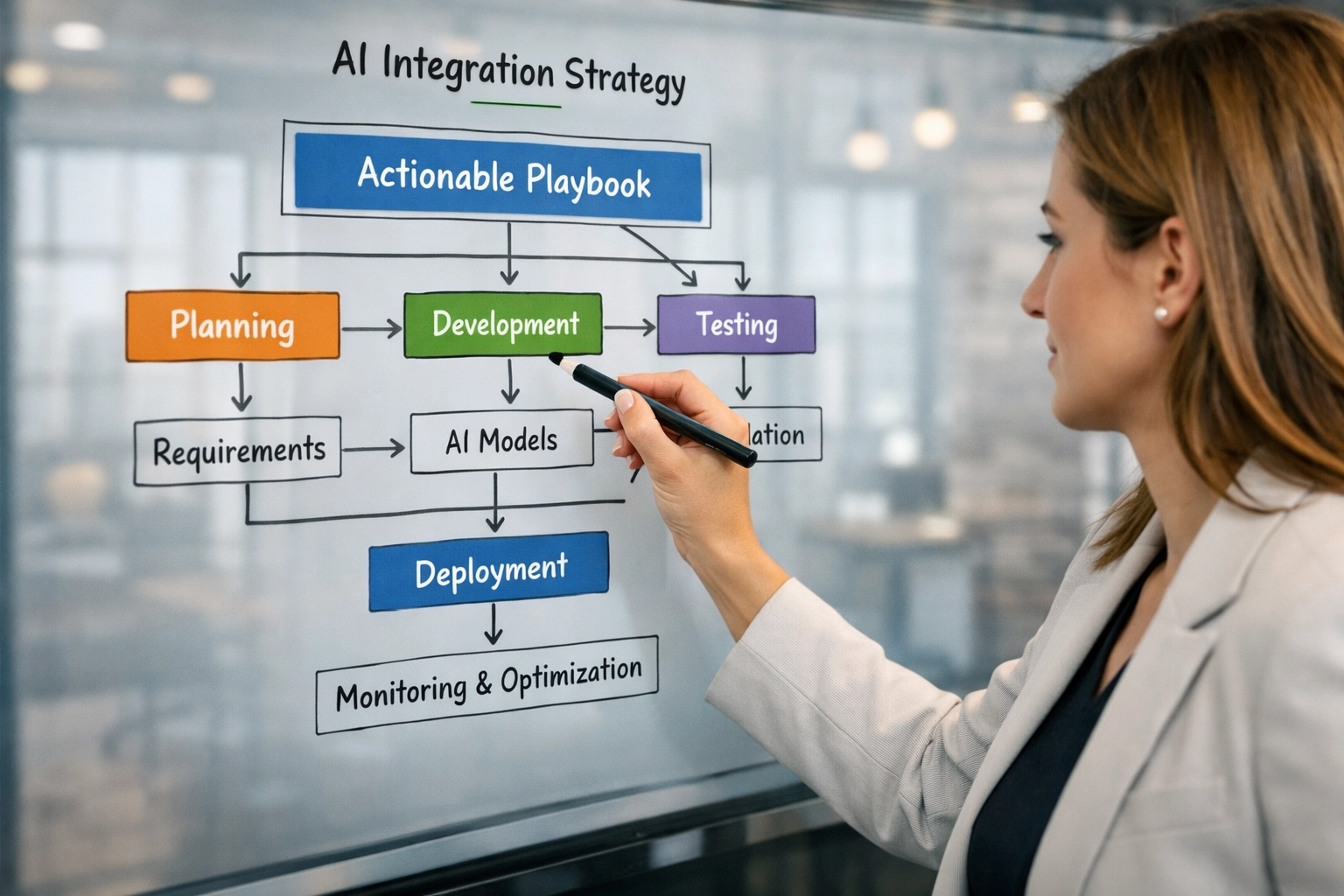
    The Four-Step ROI Framework: SEE, MEASURE, DECIDE, ACT

    To transform your software from a cost center into a profit powerhouse, you need a repeatable playbook. At NV Seeds, we utilize a structured framework to ensure our clients aren't just building: they’re winning.

    1. SEE: The Ecosystem Audit

    Before you can build the future, you have to admit where the past is holding you back. This involves a deep dive into your current tech stack to identify "bottleneck silos." (Witty but true note: If your "AI strategy" depends on an Excel sheet from 2018, we need to talk.)

    2. MEASURE: Instrumentation is Everything

    You can't manage what you don't track. We move beyond simple "cost-per-task" metrics and look at:

    • Agentic Resolution Rate: How many tasks is your AI finishing without human intervention?
    • Cycle Time Reduction: How much faster are you shipping features? (We’re seeing 40% faster cycles with the right enterprise software solutions).
    • Net Present Value (NPV): Calculating the long-term value of the data your software is collecting.

    3. DECIDE: The 30-Day Sprint

    Don't commit to a million-dollar project based on a slide deck. We run structured 30-day pilots to generate "decision-quality data." If the ROI isn't visible in 30 days, we pivot. Period.

    4. ACT: Scale or Kill

    If it works, we hire developers to scale it enterprise-wide. If it doesn’t, we kill it and move the resources to a higher-impact area.

    Modern office interior with a profitability chart on screen, highlighting ROI from custom software development and AI.


    High-Impact Use Cases for 2026

    Where is the money actually hiding? It’s not in "generic chatbots." It’s in specialized, deeply integrated AI agents.

    Customer Service Transformation

    We’ve moved past simple FAQ bots. Modern Gen-AI agent development allows for systems that can handle complex multi-step refunds, technical troubleshooting, and upsells.

    • The Bottom Line: We’ve seen a 40% increase in resolution rates within 60 days for our enterprise clients.

    Intelligent SaaS Platforms

    When we handle SaaS platform development, we aren't just building dashboards. We’re building dynamic pricing engines and predictive churn models that proactively save customers before they even know they’re unhappy.

    • The Bottom Line: This transforms software from a utility into a proactive revenue-protection tool.

    Accelerated Software Development

    By integrating AI into the development lifecycle itself, our dedicated teams are achieving 25-35% higher code coverage with automated test generation. This isn't just "coding faster"; it's building more robust systems for less money.


    Your 2026 AI ROI Playbook Checklist

    If you are a CTO, Product Owner, or Founder, here is your "Cut-to-the-Chase" action plan:

    • Audit the Burden: Calculate how much your team spends "babysitting" your current AI implementations. If the operational cost is higher than the manual cost, kill the project.
    • Define "Success" Metrics: Before starting any custom software development, define exactly what $1 of investment should return in 12 months.
    • Focus on "Unlocking," Not just "Saving": Cost savings are great, but the real ROI in 2026 comes from capability unlocking: doing things your business literally couldn't do two years ago.
    • Modernize the Core: AI is only as good as the data it sits on. Use digital transformation consulting to clean up your legacy architecture before trying to automate it.
    • Pick the Right Partner: Don't hire a "body shop." Hire a strategic partner who understands the financial implications of every architectural choice.

    Frequently Asked Questions

    How long does it take to see actual ROI from custom AI software?

    With a focused pilot, you should see "leading indicators" of ROI (like time saved or error reduction) within 30 to 60 days. Financial ROI usually hits the balance sheet within 6 to 9 months of full-scale deployment.

    Is it cheaper to buy off-the-shelf AI tools or build custom?

    Off-the-shelf is cheaper for generic tasks (like writing emails). However, for core business logic, custom software development provides a 10x higher ROI because you own the IP and the data loop, which prevents competitors from simply buying the same advantage. How much does it cost to develop an app? It depends on the complexity, but the long-term value of custom ownership usually outweighs the "rent" of a SaaS tool.

    What is "Agentic AI" and why should I care?

    Think of regular AI like a calculator: it gives you an answer when you ask a question. Agentic AI is like an employee: it takes a goal (e.g., "Onboard this client") and carries out the necessary steps across different systems to get it done. This is where the real profit transformation happens in 2026.


    The Inflection Point

    We are at a unique moment in the history of technology. The "Golden Age of Implementation" is here. The tools are ready, the infrastructure is stable, and the business cases are proven.

    The only question is: Is your software a line item on your expense report, or is it a powerhouse on your revenue statement?

    At NV Seeds, we don't just write code. We build profit centers. Whether you need a dedicated team to modernize your stack or high-level digital transformation consulting, we are here to ensure your vision results in measurable growth.

    Ready to stop guessing and start measuring? Let’s talk.

    NV Seeds Logo

  • London’s 2026 Software Playbook: From Code to Survival

    London’s 2026 Software Playbook: From Code to Survival

    Let’s cut to the chase: in 2026, building software isn’t about writing code anymore : it’s about survival.

    The “growth at all costs” era is gone. Today’s leaders operate in a world defined by efficiency, resilience, compliance, and measurable ROI. If you are searching for a London software development company, you aren’t looking for someone to simply build an app. You’re looking for a strategic partner who understands one of the most complex tech ecosystems on the planet.

    London is not just another tech city. It is a global command center for finance, AI research, enterprise innovation, and digital transformation. The London software industry now drives solutions used across Europe, North America, and emerging markets alike. Choosing the right London software partner can determine whether your product scales : or stalls.

    London’s Inflection Point: From Digitization to Intelligence

    London has moved beyond digitizing paper workflows. We are now in what experts call the AI Renaissance : a period where software doesn’t just automate tasks but anticipates needs. We’ve shifted from Phase 1 (Standard Digitization) to Phase 2 (Data Interconnectivity) and now firmly into Phase 3: Agentic Intelligence.

    In 2026, software is no longer a tool; it’s the nervous system of modern organizations. Modern London software development focuses on:

    • AI-native architectures: Designing systems where AI is the core, not a plugin.
    • Predictive analytics systems: Moving from "what happened" to "what will happen."
    • Automation-first enterprise platforms: Systems that handle low-level logic autonomously.
    • Secure cloud-native infrastructure: Utilizing sovereign AI frameworks to ensure data stays within regulated borders.
    • Real-time decision engines: Processing petabytes of data to provide instant business insights.

    Businesses across the UK increasingly rely on London software companies to design systems that are proactive rather than reactive. If your software isn't thinking two steps ahead of your user, it’s already obsolete.

    Diverse team of developers collaborating in a London office

    The Geography of Genius: London’s Software Innovation Hubs

    London isn’t a single tech cluster. It’s a network of specialized innovation districts, each shaping a different aspect of the London software landscape.

    Silicon Roundabout (Old Street)

    Often called the birthplace of the modern London startup scene, this area hosts high-growth scaleups and experimental product teams. If your project involves cutting-edge Generative AI, blockchain integration, or disruptive SaaS platforms, many pioneering London software developers operate here. This is the heart of the "fail fast, scale faster" mentality, now tempered by a 2026 focus on sustainable unit economics.

    King’s Cross : The Knowledge Quarter

    Anchored by global tech giants and research institutions, King’s Cross has become synonymous with AI-first software development. London software firms in this district often collaborate with academia to build machine learning systems, robotics platforms, and data-intensive enterprise tools. It is the bridge between theoretical research and commercial software reality.

    Canary Wharf : Fintech Capital

    Canary Wharf remains Europe’s most important fintech hub. London software companies here specialize in:

    • High-frequency trading platforms
    • Open Banking solutions
    • Payment processing systems
    • Compliance-driven financial software
    • Cybersecurity for financial institutions

    For regulated industries, working with a London software provider familiar with FCA requirements and the latest ISO 27001 standards is non-negotiable.

    Industry-Specific London Software Innovation

    Generic software is becoming obsolete. The most successful London software projects now focus on deep domain expertise. (Witty but true note: A generalist developer in 2026 is like a GP trying to perform open-heart surgery: they know the basics, but you really want the specialist).

    1. Fintech: Programmable Money and DeFi Integration

    London remains one of the world’s top financial centers, making fintech the crown jewel of the London software sector. We are seeing a massive shift toward Programmable Money.

    • Cross-border payments in milliseconds: Leveraging new liquidity protocols.
    • Embedded finance platforms: Turning non-financial brands into banks.
    • Digital identity verification systems: Using biometric-backed encryption to kill the password forever.

    2. Healthtech: Connecting the NHS and Private Innovation

    Healthcare technology is undergoing a transformation. The goal is to reduce clinical workload while improving patient outcomes : a mission driving massive investment into custom software solutions.

    • Interoperability: Seamless data flow between private wearable devices and NHS legacy systems.
    • AI-assisted diagnostics: Helping radiologists spot anomalies with 99.9% accuracy.

    3. Retail & E-Commerce: The Headless Commerce Revolution

    High-street brands are abandoning rigid, "all-in-one" platforms in favor of flexible architectures built by London software experts. This is the Headless Revolution. By decoupling the front-end experience from the back-end logic, brands can push updates to a VR headset, a mobile app, and a physical kiosk simultaneously.

    London retail software showing headless commerce integration through a holographic digital experience.

    How to Choose the Right London Software Development Company

    Selecting a London software partner is like choosing a co-founder. The wrong choice leads to delays, technical debt, and lost revenue. Use this checklist to evaluate potential partners:

    Criteria What to Look For Red Flags
    Technical Depth Mastery of vector databases, AI orchestration, and Rust/Go for performance. Relying solely on legacy stacks without an AI roadmap.
    Delivery Speed Weekly sprints, automated CI/CD pipelines, and rapid MVP cycles. "See you in six months" delivery mentalities.
    Regulatory Knowledge In-depth understanding of GDPR, FCA, and UK AI Safety guidelines. Vague answers about data residency and security audits.
    Business Alignment A focus on Cost-per-task and Measurable ROI. Focusing only on "lines of code" or "pretty UI."

    1. Deep Technical Expertise

    Top London software teams go beyond surface-level development. They understand cloud-native architectures and how to optimize GPU memory bandwidth (think of it as the kitchen's ingredient delivery speed: if the delivery is slow, the chef can't cook, no matter how good they are).

    2. Agile and Lean Delivery

    Modern London software companies ship fast. MVPs should arrive in weeks, not quarters. Continuous iteration is the new standard. If you aren't testing with real users by week 4, you're moving too slowly for the 2026 market.

    3. Post-Launch Support

    Software evolves constantly. Leading London software providers offer long-term maintenance, updates, and scaling support. You need a partner who will be there when your user base jumps from 1,000 to 1,000,000 overnight.

    The Talent Advantage: Why London Software Engineers Lead Globally

    London attracts world-class talent through a powerful feedback loop between academia, industry, and government policy. When you hire developers from a London-based firm, you gain access to a diverse team of specialists experienced in global-scale systems.

    In 2026, the best engineers aren't just coders; they are AI Orchestrators. They know how to leverage LLMs to write boilerplate code, allowing them to focus on high-level architecture and complex problem-solving. This isn't just a productivity boost: it's a fundamental shift in how value is created.

    Abstract shapes representing digital transformation and innovation

    2026 Outlook: From Mobile-First to AI-First London Software

    The shift happening now rivals the transition from desktop to mobile computing in the late 2000s.

    AI at the Core
    In modern London software projects, AI is not an add-on : it is embedded into the core architecture. Applications can now generate content, analyze legal documents in seconds, and detect security anomalies in real-time.

    Green Software Engineering
    Sustainability is becoming a competitive advantage. London software companies are adopting energy-efficient coding practices that reduce cloud costs and environmental impact simultaneously. In 2026, a "heavy" app isn't just slow; it's expensive and carbon-intensive.

    Your 2026 London Software Playbook

    If you want to build future-ready systems that don't just function but dominate, follow these steps:

    1. Audit legacy systems for automation opportunities: Where is human time being wasted on repetitive logic?
    2. Prioritize cybersecurity from day one: In 2026, trust is the new attack surface. Protect it.
    3. Invest in intuitive user experience: If a user needs a manual, the software has failed.
    4. Choose a partner with domain expertise: Don't hire a generalist for a specialist's job.
    5. Plan for scalability and AI integration: Build your data foundations now so you can plug in Gen-AI agents tomorrow.

    FAQ: Navigating the 2026 London Tech Scene

    Q: Why is London more expensive than offshore alternatives?
    A: You aren't paying for the code; you're paying for the strategic alignment, regulatory compliance, and time-zone proximity. In 2026, the cost of a failed project or a data breach far outweighs the initial savings of "cheap" offshore development.

    Q: Can we just add AI to our existing app?
    A: You can, but it’s often like putting a jet engine on a horse-drawn carriage. To see real ROI, you usually need to refactor your data layer to be "AI-ready."

    Q: What is the biggest risk in software development today?
    A: Stagnation. Building something that is relevant today but lacks the architecture to adapt to the rapid advancements in AI and automation we expect by 2027.

    Ready to secure your spot in the future? Contact NV Seeds today to discuss how our dedicated teams can turn your vision into 2026-ready code.

  • London’s Software Development: Where Innovation Meets Opportunity in 2026

    London’s Software Development: Where Innovation Meets Opportunity in 2026

    Let’s cut to the chase: in 2026, building software isn’t about writing code anymore — it’s about survival.

    The “growth at all costs” era is gone. Today’s leaders operate in a world defined by efficiency, resilience, compliance, and measurable ROI. If you are searching for a London software development company, you aren’t looking for someone to simply build an app. You’re looking for a strategic partner who understands one of the most complex tech ecosystems on the planet.

    London is not just another tech city. It is a global command center for finance, AI research, enterprise innovation, and digital transformation. The London software industry now drives solutions used across Europe, North America, and emerging markets alike.

    Choosing the right London software partner can determine whether your product scales — or stalls.


    London’s Inflection Point: From Digitization to Intelligence

    London has moved beyond digitizing paper workflows. We are now in what experts call the AI Renaissance — a period where software doesn’t just automate tasks but anticipates needs.

    Modern London software development focuses on:

    • AI-native architectures
    • Predictive analytics systems
    • Automation-first enterprise platforms
    • Secure cloud-native infrastructure
    • Real-time decision engines

    Businesses across the UK increasingly rely on London software companies to design systems that are proactive rather than reactive.

    In short: software is no longer a tool — it’s the nervous system of modern organizations.


    The Geography of Genius: London’s Software Innovation Hubs

    London isn’t a single tech cluster. It’s a network of specialized innovation districts, each shaping a different aspect of the London software landscape.

    Silicon Roundabout (Old Street)

    Often called the birthplace of the modern London startup scene, this area hosts high-growth scaleups and experimental product teams. If your project involves cutting-edge Generative AI, blockchain integration, or disruptive SaaS platforms, many pioneering London software developers operate here.

    King’s Cross — The Knowledge Quarter

    Anchored by global tech giants and research institutions, King’s Cross has become synonymous with AI-first software development. London software firms in this district often collaborate with academia to build machine learning systems, robotics platforms, and data-intensive enterprise tools.

    Canary Wharf — Fintech Capital

    Canary Wharf remains Europe’s most important fintech hub. London software companies here specialize in:

    • High-frequency trading platforms
    • Open Banking solutions
    • Payment processing systems
    • Compliance-driven financial software
    • Cybersecurity for financial institutions

    For regulated industries, working with a London software provider familiar with FCA requirements is essential.


    Industry-Specific London Software Innovation

    Generic software is becoming obsolete. The most successful London software projects now focus on deep domain expertise.

    1. Fintech: Programmable Money and DeFi Integration

    London remains one of the world’s top financial centers, making fintech the crown jewel of the London software sector.

    Key trends include:

    • Cross-border payments in milliseconds
    • Algorithmic trading tools for retail investors
    • Embedded finance platforms
    • Decentralized finance (DeFi) integrations
    • Digital identity verification systems

    London software engineers are building platforms capable of handling enormous transaction volumes while maintaining strict regulatory compliance.


    2. Healthtech: Connecting the NHS and Private Innovation

    Healthcare technology is undergoing a transformation, and London software companies are at the forefront.

    Major focus areas include:

    • Interoperability between private devices and NHS systems
    • AI-assisted diagnostics
    • Remote patient monitoring platforms
    • Electronic health record integration
    • Data privacy and medical compliance

    The goal is to reduce clinical workload while improving patient outcomes — a mission driving massive investment into London software solutions.


    3. Retail & E-Commerce: The Headless Commerce Revolution

    High-street brands are abandoning rigid platforms in favor of flexible architectures built by London software experts.

    Headless commerce enables:

    • Hyper-personalized customer experiences
    • Seamless online-offline integration
    • AR/VR shopping experiences
    • AI-driven recommendations
    • Omnichannel retail systems

    London software agencies are helping brands transform from traditional retailers into digital experience platforms.


    How to Choose the Right London Software Development Company

    Selecting a London software partner is like choosing a co-founder. The wrong choice leads to delays, technical debt, and lost revenue.

    Use this checklist to evaluate potential partners:

    1. Deep Technical Expertise

    Top London software teams go beyond surface-level development. They understand:

    • Cloud-native architectures
    • AI and machine learning pipelines
    • Mobile performance optimization
    • Microservices and APIs
    • Data engineering

    If a vendor cannot discuss advanced topics like vector databases or AI orchestration, they may not be ready for complex projects.


    2. Agile and Lean Delivery

    Modern London software companies ship fast. MVPs should arrive in weeks, not quarters. Continuous iteration is the new standard.


    3. Cultural and Time-Zone Alignment

    Working with a London software firm means real-time collaboration with stakeholders, faster decision-making, and fewer communication breakdowns.


    4. Post-Launch Support

    Software evolves constantly. Leading London software providers offer long-term maintenance, updates, and scaling support.


    5. Regulatory Expertise

    UK businesses face strict data protection and compliance requirements. Your London software partner must understand:

    • GDPR
    • FCA regulations
    • ISO 27001 standards
    • UK AI safety guidelines

    The Talent Advantage: Why London Software Engineers Lead Globally

    London attracts world-class talent through a powerful feedback loop between academia, industry, and government policy.

    Top universities produce elite engineers, while visa programs bring experienced professionals from major tech hubs worldwide.

    When you hire a London software development company, you gain access to a diverse team of specialists experienced in global-scale systems.

    (In fact, check out our guide on Native Vs. Cross-Platform: Which Is Better For Your Mobile App Strategy? to see how we think about it).


    2026 Outlook: From Mobile-First to AI-First London Software

    The shift happening now rivals the transition from desktop to mobile computing.

    AI at the Core

    In modern London software projects, AI is not an add-on — it is embedded into the core architecture. Applications can now:

    • Generate content
    • Analyze documents
    • Automate workflows
    • Provide human-like customer support
    • Detect anomalies in real time

    Green Software Engineering

    Sustainability is becoming a competitive advantage. London software companies are adopting energy-efficient coding practices that reduce cloud costs and environmental impact simultaneously.


    Your 2026 London Software Playbook

    If you want to build future-ready systems, follow these steps:

    ✔ Audit legacy systems for automation opportunities
    ✔ Prioritize cybersecurity from day one
    ✔ Invest in intuitive user experience
    ✔ Choose a London software partner with domain expertise
    ✔ Plan for scalability and AI integration

    FAQs About London Software Development

    What does London software development cost?
    Small projects may start around £50,000, while enterprise platforms can reach several million pounds depending on complexity.

    Why choose London software companies over offshore teams?
    Local expertise ensures better communication, regulatory compliance, and product quality.

    How long does development take?
    AI-assisted tools have reduced timelines significantly. MVPs can be delivered in 8–12 weeks, with full deployments typically taking 6–9 months.

    Do London software firms build mobile apps too?
    Yes. Most offer end-to-end services including web platforms, mobile apps, and cloud infrastructure.


    Final Thoughts: London Software Is a Competitive Weapon

    London’s technology ecosystem is not just thriving — it is redefining how modern software is built.

    Whether you are launching a fintech startup, transforming healthcare delivery, or reinventing retail, the right London software development company can turn your vision into a scalable digital platform.

    In 2026, software is no longer optional. It is the foundation of business success.

    And London remains one of the best places on Earth to build it.

  • Native Vs. Cross-Platform: Which Is Better For Your Mobile App Strategy?

    Native Vs. Cross-Platform: Which Is Better For Your Mobile App Strategy?

    Stop looking for a “winner.” In the 2026 mobile landscape, the debate between Native and Cross-Platform development isn’t about which technology is objectively superior, it’s about which one aligns with your specific business velocity and unit economics.

    If you are still following 2022 advice, you are likely overspending on development or underserving your users. We have reached a technical Inflection Point where the performance gap has narrowed to milliseconds, yet the strategic gap between these two approaches has never been wider.

    At NV Seeds, we see founders agonize over this choice daily. They fear the “wrong” decision will lead to a complete rebuild in eighteen months. Let’s cut through the vague industry standards and look at the “useless-to-useful” transformations that actually impact your ROI.

    The Evolution: From “Janky” to “Seamless”

    To understand where we are, we have to look at how we got here. Mobile development has moved through three distinct phases:

    • Phase 1 (The Wild West): Native was the only way to get a smooth UI. Hybrid apps were essentially websites wrapped in a container, slow, buggy, and frustrating.
    • Phase 2 (The Framework Boom): React Native and Flutter emerged, promising “Write Once, Run Anywhere.” They were great for MVPs but often struggled with complex animations or deep hardware integration.
    • Phase 3 (The Renaissance): This is where we sit today. Modern cross-platform frameworks are powerhouse solutions that leverage hardware acceleration, while Native development has become more streamlined with declarative UIs like SwiftUI and Jetpack Compose.

    The Native Powerhouse: When Compromise Isn’t an Option

    Building native means writing separate codebases for iOS (using Swift) and Android (using Kotlin). Think of it like a custom-built kitchen where every drawer is measured to the millimeter for your specific utensils. It is perfectly optimized for the environment it lives in.

    Why Native Still Reigns Supreme for High-Performance

    1. Direct Hardware Access: If your app relies heavily on the latest LiDAR sensors, complex Bluetooth handshakes, or advanced Gen-AI agent development running on-device, Native is your only choice. It bypasses the “interpreter” layer that cross-platform tools require.
    2. The “First-Day” Advantage: When Apple or Google releases a new OS feature at their annual conferences, Native developers can implement it immediately. Cross-platform frameworks often require a waiting period for community plugins to catch up.
    3. Unmatched Smoothness: For compute-intensive applications, think high-end photo editors or real-time data visualization, Native provides a frame rate stability that cross-platform struggles to maintain during heavy processing.

    The Cross-Platform Renaissance: Efficiency as a Competitive Edge

    For 85% of business applications, the “Native is faster” argument is now a technical ghost story. Modern frameworks like Flutter and React Native provide performance that is indistinguishable from Native to the human eye.

    At NV Seeds, our dedicated teams often recommend cross-platform for clients who need to dominate the market quickly without doubling their engineering headcount.

    The Strategic Wins of Cross-Platform

    • Unified Codebase: You maintain one set of logic. When you find a bug, you fix it once. When you want a new feature, you build it once.
    • Lower Total Cost of Ownership (TCO): You don’t just save money on the initial build; you save on every update for the next five years. You don’t need two separate teams of specialized iOS and Android engineers.
    • Synchronized Launches: Nothing kills a marketing campaign like “Available now on iOS… and coming soon to Android.” Cross-platform ensures your entire user base gets the same experience at the same time.

    The Comparison Matrix: A 2026 Reality Check

    Feature Native (iOS/Android) Cross-Platform (Flutter/React Native)
    Development Cost High (2 separate teams) Moderate (1 unified team)
    Time to Market Slower Fast
    Performance Best (99th percentile) Excellent (90-95th percentile)
    UI/UX Consistency Platform-specific feel High brand consistency
    Maintenance Complex (Two codebases) Simple (One codebase)
    Hardware Access Full / Immediate Very High / Plugin Dependent

    The Hidden Complexity: The Talent Shortage

    One factor often overlooked in the “Native vs. Cross-platform” debate is the human element. If you choose Native, you are essentially doubling your hiring requirements. You need to hire developers who are experts in Swift and developers who are experts in Kotlin.

    In a market where top-tier talent is scarce, managing two separate engineering cultures can become a management nightmare. Cross-platform allows for a more cohesive service delivery, where the entire team understands the entire product.

    The Hybrid Middle Ground: Kotlin Multiplatform (KMP)

    If you’re caught in the middle, 2026 has brought us a “Best of Both Worlds” contender: Kotlin Multiplatform.

    KMP allows you to share the “brains” of the app (the business logic, data handling, and networking) while keeping the “face” (the UI) entirely native. It’s like sharing the engine between two different car models. You get the performance of Native UI with the efficiency of a shared codebase.

    The “Bottom-Line” Playbook: How to Choose

    If you are currently planning your mobile strategy, use this checklist to stop the “analysis paralysis.”

    Choose Native If:

    • Your app is a high-end game or heavy multimedia editor.
    • You are building a “system-level” utility (like a custom keyboard or security suite).
    • You have an unlimited budget and require the absolute latest OS features on Day 1.
    • Your industry requires specialized on-device encryption that is only available via native APIs.

    Choose Cross-Platform If:

    • You are building a CRUD app (Create, Read, Update, Delete) like an e-commerce platform, social network, or business tool.
    • You need to get to market in under 4 months.
    • You want to keep your development team lean and agile.
    • Your UI is highly branded and needs to look identical on both platforms.

    The NV Seeds Verdict

    Choosing your tech stack isn’t just a coding decision; it’s a financial one. We’ve seen companies burn through their seed funding because they insisted on Native development for a simple delivery app. Conversely, we’ve seen startups hit a “performance wall” because they tried to build a real-time AR tool using a basic hybrid wrapper.

    The “Right” choice is the one that allows you to scale without the tech stack becoming an anchor. Whether you need a content transformation of your current mobile strategy or a fresh build from scratch, focus on the maintenance-to-innovation ratio

    Frequently Asked Questions

    Is cross-platform development cheaper in the long run?
    Generally, yes. You save roughly 30-40% on initial development costs and significantly more on long-term maintenance since you are only updating one codebase.

    Will my users know if my app is cross-platform?
    In 2026, the answer is almost certainly “No.” Modern frameworks provide 60fps+ performance and access to all standard haptics and gestures that make an app feel “right.”

    Can I switch from Cross-Platform to Native later?
    It’s not a “switch”; it’s a rewrite. While you can reuse your backend and API logic, the mobile front-end would need to be rebuilt. This is why getting the strategy right at the start is vital. You can view our case studies to see how we’ve helped others make this transition successfully.

    Which framework is winning in 2026?
    Flutter and React Native remain the “Big Two,” with Kotlin Multiplatform rapidly gaining ground for enterprise solutions that demand native performance with shared logic.

    Ready to build? Contact us today to discuss which mobile strategy will drive the highest ROI for your vision.

  • Quest App: The AI-Powered Gig Platform Revolutionizing How We Get Things Done

    Need someone to pick up groceries, create content for your brand, or help with event staffing? Quest is the Singapore-based app that’s reimagining the gig economy by connecting “Citizens” who need tasks done with “Heroes” who can do them – all powered by AI matching.

    Quest is an AI-driven marketplace with 385,000 users that matches people needing tasks done with local freelancers across categories from errands to creative work.

    What Makes Quest Different
    Unlike traditional freelance platforms that focus on long-term projects, Quest specializes in immediate, local tasks. Quest Inc describes it as “an AI assistant that finds the right Hero for every task, so you can sit back and relax.”

    The platform covers everything from simple errands to professional services across categories like:

    Errands & Odd Jobs
    UGC & Social Media Content
    Part-time & Event Staffing
    Home Services
    Overseas Purchases
    Care Services
    The Numbers Tell the Story
    Google Play Store reports that “as of 2025, Quest has a whopping 385,000 users, and we are still constantly growing every single day, with hundreds of quests posted daily.”

    This growth is particularly impressive given Singapore’s history with gig platforms. Vulcan Post notes that “a decade ago, when TaskRabbit was known to be the go-to platform for hiring individuals to run errands, the city-state saw an influx of similar businesses in Singapore, but these local versions eventually fizzled out.”

    How It Actually Works
    For Citizens (Task Posters):

    Post your quest with details and budget
    AI matches you with relevant Heroes
    Review offers and choose your Hero
    Pay securely through the app
    Get your task completed
    For Heroes (Service Providers): Quest Inc explains their “Gen AI-powered matching algorithm is designed to connect you with the perfect quests. Simply share your skills, set your availability, location, earning goals, and preferences, and we will notify you when the perfect opportunity arises.”

    Real User Experience
    Lemon8 shares a user’s honest review: “I really liked the app interface and it was quite easy to post a quest. Pleasantly surprised by the AI features that help to generate” quest descriptions.

    The user, a freelance florist, found Quest helpful when she needed extra hands but felt “paiseh to ask” friends and family for repeated favors. The app provided a guilt-free way to get help while compensating people fairly.

    Safety and Trust Features
    App Store emphasizes that “your safety is our number one priority. To ensure smooth transactions, you make or receive payments through the app. All Quest users are verified and authenticated.”

    Key safety features include:

    Verified user profiles
    In-app payment system
    Rating and review system
    Customer support team monitoring
    The Business Side
    Quest isn’t just for individuals. Quest for Business offers enterprise solutions with features like:

    Multi-hire capabilities for events
    Pre-vetted talent pools
    Dedicated account managers
    Priority support
    Pricing starts at $30 per post or $120/month for unlimited access.

    Recognition and Growth
    The platform’s success hasn’t gone unnoticed. Vulcan Post reports that “just a month ago, Quest’s founders were listed under the Forbes 30 Under 30 Asia 2025 list—a major milestone for the homegrown startup.”

    Founded in June 2021 by SMU undergraduates Craig Choy, Evan Chow, and Matthew Wu, Quest has grown from a university project to a major player in Southeast Asia’s gig economy.

    What Users Are Saying
    Paid From Surveys confirms that “it is legitimate, based on my testing, as you can actually earn money from the jobs found inside the app.”

    The App Store shows a 3.9-star rating with 435 reviews, while Google Play reports 4.5 stars from 37.7K reviews – indicating solid user satisfaction across platforms.

    The AI Advantage
    What sets Quest apart is its intelligent matching system. LinkedIn describes it as “an AI-driven marketplace reimagining on-demand services. By intelligently matching users with service providers—from home tasks to personal errands—we deliver fast, tailored experiences for all.”

    This AI matching reduces the time spent browsing through irrelevant listings, making the platform more efficient for both sides.

    Frequently Asked Questions
    Q: How does Quest’s AI matching work? A: Quest Inc explains that Heroes share “skills, availability, location, earning goals, and preferences” and the AI notifies them about matching opportunities. Citizens get matched with relevant Heroes based on their quest requirements.

    Q: Is Quest safe to use? A: Yes. App Store confirms “all Quest users are verified and authenticated” with payments processed securely through the app. There’s also a rating system and customer support monitoring.

    Q: What types of tasks can I post on Quest? A: Quest covers errands, odd jobs, creative work, care services, delivery, overseas purchases, education, home services, and event staffing. Basically anything legal that can be done locally.

    Q: How much does it cost to use Quest? A: For individuals, posting quests is free – you just pay the Hero’s rate. Quest for Business shows business plans starting at $30 per post or $120/month for unlimited access.

    Q: How quickly can I get help? A: App Store mentions “Citizens who need urgent help have the option to select the quest completion date to ‘Immediately’” for urgent tasks.

    Q: Can I earn good money as a Hero? A: Paid From Surveys confirms “you can actually earn money from the jobs found inside the app.” Heroes set their own rates and work on their own terms.

    Q: Is Quest only available in Singapore? A: While Quest started in Singapore and has strong local presence, the app is available in other regions. Check your app store for availability.

    Q: What if something goes wrong with my quest? A: Quest has customer support and a rating system. Since payments go through the app, there’s protection for both parties. You can contact support for disputes or issues.

    Q: Do I need special skills to be a Hero? A: Not necessarily. Quest has tasks ranging from simple errands (no special skills needed) to specialized work like content creation or home services. You choose what matches your abilities.

    Q: How is Quest different from other gig platforms? A: Quest focuses on immediate, local tasks rather than long-term projects. The AI matching is more intelligent than keyword-based systems, and it’s designed specifically for the Southeast Asian market.

    Q: Can businesses use Quest for hiring? A: Yes. Quest for Business offers enterprise features like multi-hire, pre-vetted talents, and dedicated account managers for businesses.

    Q: What’s the typical turnaround time for tasks? A: Depends on the task complexity and urgency. Simple errands can be completed same-day, while specialized work might take longer. You set the timeline when posting your quest.

    The Bottom Line
    Quest succeeds where previous gig platforms failed by focusing on three key areas: AI-powered matching, local community building, and comprehensive safety measures. It’s not trying to be everything to everyone – instead, it excels at connecting people for immediate, local tasks.

    Whether you need help with daily errands or want to earn extra income on flexible terms, Quest offers a modern solution to age-old problems. The 385,000+ user base and Forbes recognition suggest they’re onto something significant.

  • Happenstance AI: The Smart Way to Turn Your Network Into Your Superpower

    Ever felt like you’re drowning in connections but can’t find the right person when you need them? You’ve got thousands of LinkedIn contacts, Gmail threads, and Twitter followers, but when you need to find “that AI startup founder in SF” or “a fintech PM in NYC,” you’re stuck scrolling endlessly through profiles.

    Happenstance AI solves exactly this problem with AI-powered network search that actually understands what you’re looking for.

    What Makes Happenstance Different
    Instead of forcing you to remember names or use clunky keyword filters, Happenstance lets you search your network like you’d ask a friend. Type “data scientist with startup experience” and it delivers relevant matches instantly.

    Happenstance transforms your scattered contacts across Gmail, LinkedIn, and Twitter into one searchable, AI-powered database.

    The platform connects to your existing accounts – Gmail, LinkedIn, Twitter/X – and uses large language models to understand your search intent. Medium highlights how it “prioritizes transparency by providing a detailed breakdown of its matching process, including filters, traits, keywords, and even the underlying SQL query.”

    Core Features That Actually Work
    Natural Language Search: No more Boolean operators or exact keyword matching. Ask for “AI founders in SF who went to Stanford” and get exactly that.

    Multi-Platform Integration: Pulls data from Gmail, LinkedIn, Twitter, and soon Outlook. Your entire professional network in one place.

    Team Network Sharing: Combine networks with colleagues to expand your reach. Perfect for sales teams or recruiting.

    Warm Connection Mapping: Shows mutual connections and introduction paths, making outreach feel natural instead of cold.

    Workflow Integration: Slack bot and email agent let you search without leaving your daily tools.

    Who This Is Built For
    Automateed notes it’s “designed to help salespeople, recruiters, and entrepreneurs find valuable contacts effortlessly.”

    Founders: Find potential co-founders, advisors, or investors within your extended network.

    Sales Teams: Identify warm paths to prospects instead of cold outreach.

    Recruiters: Discover candidates through mutual connections for better response rates.

    Business Development: Map relationships to potential partners or clients.

    The Transparency Factor
    What sets Happenstance apart is showing you why it matched someone. You see the reasoning, confidence levels, and even the underlying search logic. No black box AI – you understand how it reached its conclusions.

    “The service prioritizes transparency by providing a detailed breakdown of its matching process” — Medium

    Pricing and Access
    AI Mode reports it “operates on a freemium model, offering a generous free tier that allows most users to get started with core search functionality.”

    The free tier covers basic searches across your synced networks. Paid plans unlock unlimited searches, CSV exports, team collaboration, and advanced automation features.

    The Real-World Impact
    Automateed shares a user experience: “Once set up, I was amazed at how naturally the AI understood my search criteria. Instead of manually scrolling through profiles, I just described the type of person I was looking for, and Happenstance delivered relevant matches instantly.”

    This isn’t just another CRM or contact manager. It’s about unlocking the hidden value in relationships you already have but can’t easily access.

    Why This Matters Now
    Professional networking has become paradoxically harder despite being more connected than ever. Junaid Network puts it well: “We are more connected than ever before, accumulating thousands of followers… Yet, when a critical need arises… navigating this massive web of contacts feels like searching for a needle in a digital haystack.”

    Happenstance fixes this by making your network actually searchable and useful.

    The Bottom Line
    If you’re tired of having a massive network you can’t effectively use, Happenstance is worth trying. The free tier gives you enough functionality to see if it fits your workflow, and the natural language search genuinely feels like the future of professional networking.

    Your network is already your biggest asset – Happenstance just makes it accessible.

    Q: How does Happenstance access my contacts?

    A: You connect your accounts (Gmail, LinkedIn, Twitter/X) through secure OAuth integration. Happenstance only reads contact information and public profiles – it doesn’t access private messages or sensitive data.

    Q: Is my data safe?

    A: Yes. Oreate AI notes that it “leverages advanced machine learning algorithms that analyze vast amounts of data while ensuring privacy and security.”

    Q: What’s included in the free tier?

    A: The free version gives you core search functionality across your synced networks with basic results. You can test the natural language search and see how it works with your contacts.

    Q: How accurate are the search results?

    A: Happenstance shows confidence levels for each match and explains its reasoning. The AI gets better as it learns from your network patterns, but like any AI tool, results improve with more specific queries.

    Q: Can I use this for my team?

    A: Yes. Paid plans include team features where you can combine networks with colleagues, share searches, and collaborate on finding the right connections.

    Q: Does it work with Outlook?

    A: Outlook integration is coming soon. Currently supports Gmail, LinkedIn, and Twitter/X.

    Q: How is this different from LinkedIn’s search?

    A: LinkedIn limits searches and uses keyword matching. Happenstance understands natural language, searches across multiple platforms simultaneously, and shows warm connection paths you might miss.

    Q: What if I have a small network?

    A: Team sharing helps here – combine your network with colleagues to expand your reach. Even smaller networks become more useful when you can search them intelligently.

    Q: Can I export my search results?

    A: CSV export is available on paid plans, making it easy to integrate findings into your CRM or outreach tools.

    Q: How long does setup take?

    A: Automateed reports: “Connecting my Gmail, LinkedIn, and Twitter accounts was quick and straightforward.” Usually takes just a few minutes.

  • Remaker AI: The All-in-One Platform Revolutionizing Digital Content Creation

    Face swaps, AI-generated avatars, video enhancement, and background removal – all in one browser-based platform. That’s the promise of Remaker AI, a comprehensive content creation tool that’s making professional-grade editing accessible to everyone.

    Remaker AI combines face swapping, image generation, video editing, and enhancement tools in a single web platform – no downloads or technical expertise required.

    What Makes Remaker AI Different
    Unlike traditional editing software that requires downloads and steep learning curves, Remaker AI operates entirely in your browser. The platform combines multiple AI-powered tools that would typically require separate applications.

    Fritz AI spent over 80 hours testing the platform and found it “combines AI image and video generation, face swaps, batch background removal, and even 4K upscaling into a single web interface, no downloads required.”

    https://youtube.com/watch?v=Or6is8ERQdc%3Fsi%3DOAwtE32LfWcZlMeZ

    Core Features That Actually Work
    Face Swapping Technology: The platform’s flagship feature lets you swap faces in photos and videos with just a few clicks. SaasPedia notes it offers “single image swaps, multiple image swaps, and even video swaps.”

    AI Content Generation: From LinkedIn headshots to custom avatars, the platform generates professional-quality images. FirmSuggest highlights features like “AI Avatar Generator, LinkedIn Profile Picture Tool, and AI Portrait” creation.

    Video Enhancement: Transform static images into dynamic videos, upscale to 4K resolution, and add professional effects.

    Batch Processing: Handle multiple images simultaneously – perfect for e-commerce sellers or content creators working at scale.

    How It Works
    The process is surprisingly simple. Remaker AI Face Swap breaks down the workflow:

    Upload Your Content: Drag and drop images or videos directly into the browser
    Select Your Tool: Choose from face swap, enhancement, generation, or editing options
    Customize Settings: Adjust parameters based on your needs
    Process and Download: AI handles the heavy lifting while you wait
    “Simply upload your original and target images, hit the ‘Swap’ button, and easily download your creatively altered photos” — SaasPedia

    Who’s Using This
    Content Creators: Social media managers creating engaging posts and viral content

    E-commerce Businesses: Product photography enhancement and batch background removal

    Marketing Teams: Professional headshots, branded content, and campaign visuals

    Educators: Creating engaging visual materials and presentations

    Entertainment Industry: Remaker AI mentions applications in “Film and TV Production” for special effects and actor replacement.

    The Technology Behind It
    Remaker AI leverages advanced deep learning and generative AI models. DevTechnosys explains it uses “deep learning and generative” AI for “realistic face swaps, voice cloning, and video translation with lip-sync functionality.”

    The platform includes multiple AI models, from basic enhancement to sophisticated 4K upscaling, ensuring quality results across different use cases.

    Pricing That Makes Sense
    Fritz AI reports “pricing is based on one-time credits (starting at $5.99), with no official subscription required.” This pay-as-you-go model works well for occasional users who don’t want monthly commitments.

    The free tier lets you test core functionality before investing, while paid credits unlock unlimited processing and advanced features.

    Real-World Performance
    AI Tools Info shares user feedback: “Thousands of people already using it and taking benefit out of it. Remaker AI is really a powerful tool for transforming your content into engaging content.”

    The platform’s strength lies in its accessibility – professional results without professional complexity.

    Quality and Limitations
    Remaker AI emphasizes their “advanced algorithms ensuring that the final result is both realistic and of the highest quality.” However, Fritz AI notes the platform “suffers from occasional downtime and weak customer support.”

    For best results, users should upload high-quality source material with proper lighting and clear facial features.

    Privacy and Security
    Remaker AI states they “employ stringent measures to protect your data, ensuring peace of mind as you utilize our services.” The browser-based approach means no software installation, reducing security risks.

    The Bottom Line
    Remaker AI succeeds where many AI tools fail – it’s genuinely useful without being overwhelming. The combination of powerful features, browser-based convenience, and flexible pricing makes it accessible to both casual users and professionals.

    OutRight CRM sums it up well: “In today’s technologically advanced world, dynamic visual content has become a crucial part of content creation and audience engagement.”

    Whether you’re creating social media content, enhancing product photos, or just experimenting with AI-powered creativity, Remaker AI delivers professional results without the professional learning curve.Welcome to WordPress. This is your first post. Edit or delete it, then start writing!